
European foul brood is a notifiable brood disease of honey bees. All suspicious cases must be reported to the inspector who, where appropriate, determines the remediation measures in accordance with the official guidelines.
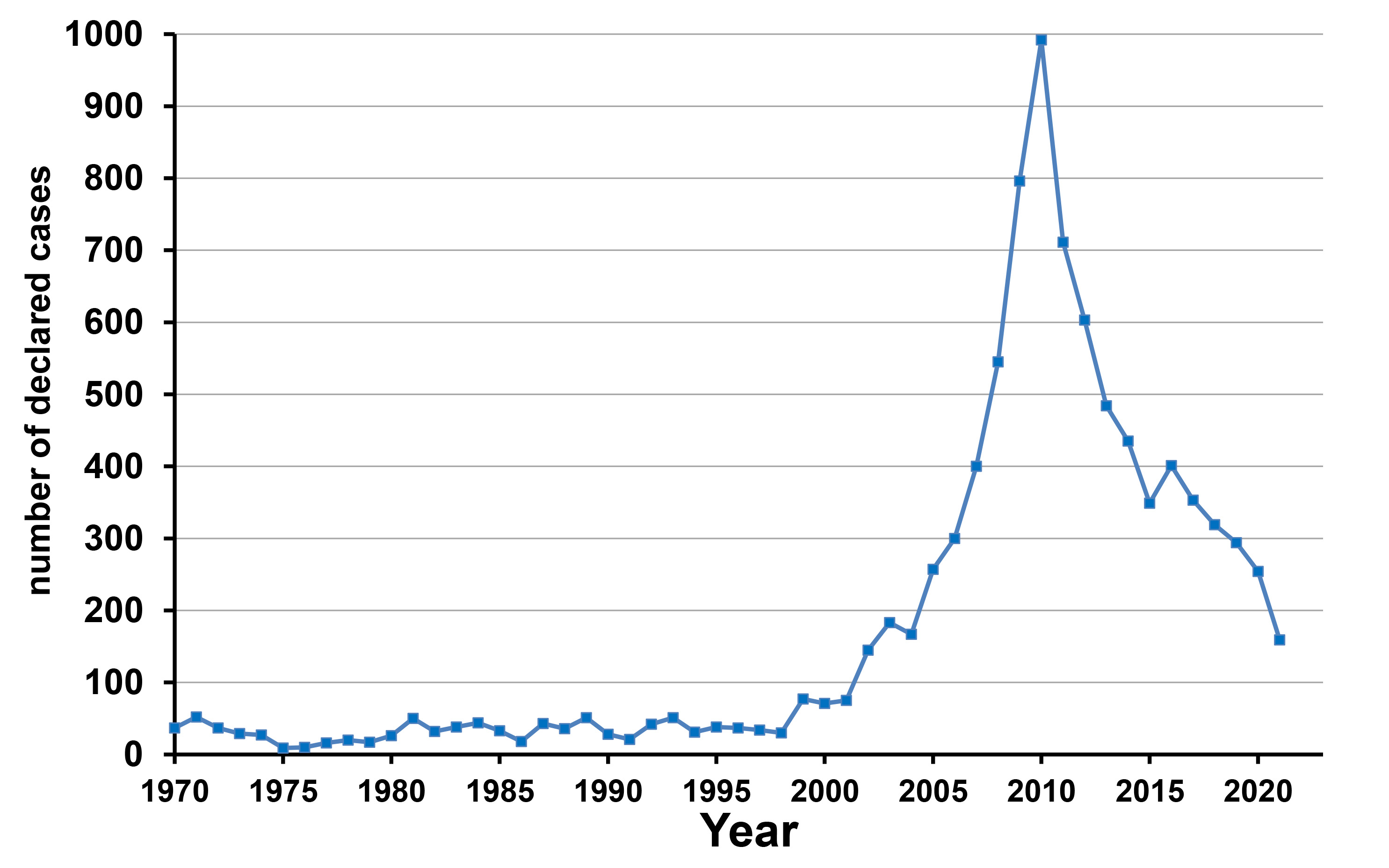
Between 2000 and 2010, the disease reached epidemic proportions. From 1970 to 1998, only 20 to 50 hives infected with European foul brood were identifed per year. Since 1999 there has been an upsurge in the number of cases, climaxing in a maximum of almost 1000 hives affected in 2010. Most other countries have been spared these dramatic infection rates. The measures consequently implemented to combat the disease have apparently borne fruit, since the number of declared cases has since decreased.

European foul brood is caused by the Melissococcus plutonius bacterium. Only the brood is affected. Adult bees may be carriers of the pathogen and a vector of the disease, but do not become infected themselves. Melissococcus plutonius is found in two forms: as replication-competent bacteria (cocci) in the gut of the larvae, and as resistant capsules that form when conditions are unfavourable. As with American foul brood, in which the spores are infectious, with European foul brood it is also the latent form (capsules) that triggers the infection. Ingestion of the capsules with the food causes the onset of the disease in the young larvae. The mode of action of the bacteria is not known. Detailed information on the biology and diagnosis of European foul brood can be found in our Guide to Bee Health.
.JPG.jpg)
The use of antibiotics is not permitted in Switzerland; moreover, no other medication exists to combat European foul brood. Hives with symptoms must therefore be destroyed in order to limit the outbreak, and the contaminated material must be sanitised. Since prevention is the best cure, early detection is desirable. Numerous studies have been undertaken and documents have been created at the Swiss Bee Research Centre and elsewhere to draw the attention of beekeepers to these problems and inform them about the causes and the control measures to be implemented.
.jpg)
Our studies have contributed to the improved diagnosis of European foul brood. The methods developed at the Swiss Bee Research Centre are applied at national level to confirm suspicious cases and instigate official remediation measures where necessary.They are also used at international level in research.
We also study the distribution of cases over Swiss territory, the effect of the bacterium on the physiology of the larvae, the virulence of the bacterium, and the role of secondary infections caused by other bacteria. At the level of control methods, we test and certify disinfection products, test potential medication, and study the resistance of certain breeding lines to this pathogen with the aim of stemming the progression of this disease in Switzerland and elsewhere.
Differences in virulence of M. plutonius
European foulbrood is a bacterial brood disease caused by Melissococcus plutonius. In this article, the virulence of 16 different M. plutonius isolates was tested in a standardized in vitro infection assay on honey bee larvae. Three of the tested isolates from Switzerland showed increased virulence. In the genome of these three highly virulent isolates previously the gene for the production of a toxin was identified. This gene might therefore be an important virulence factor of M. plutonius.