Newsroom Environment and Resources
Topic Environment and Resources | Newsroom
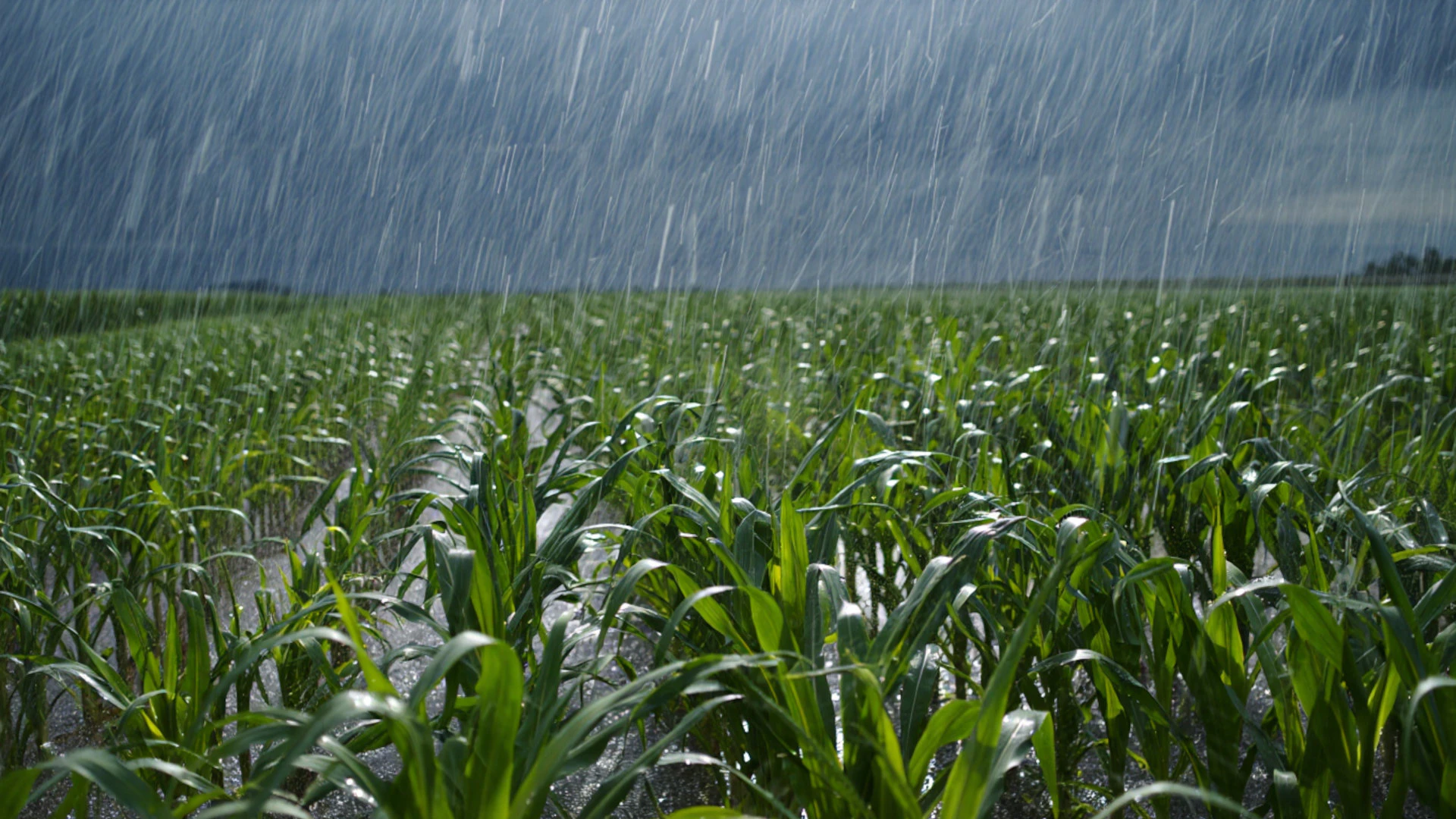
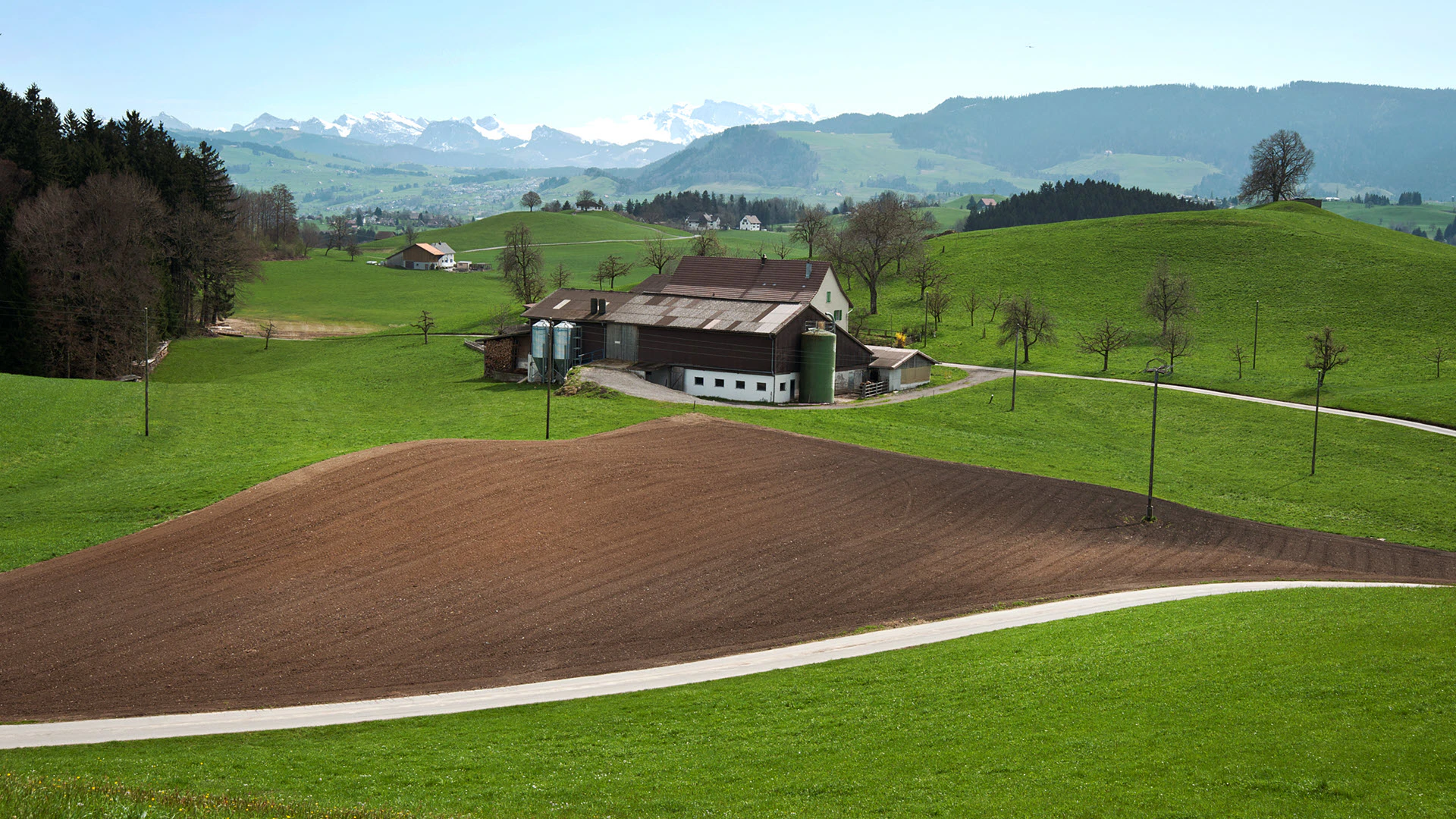
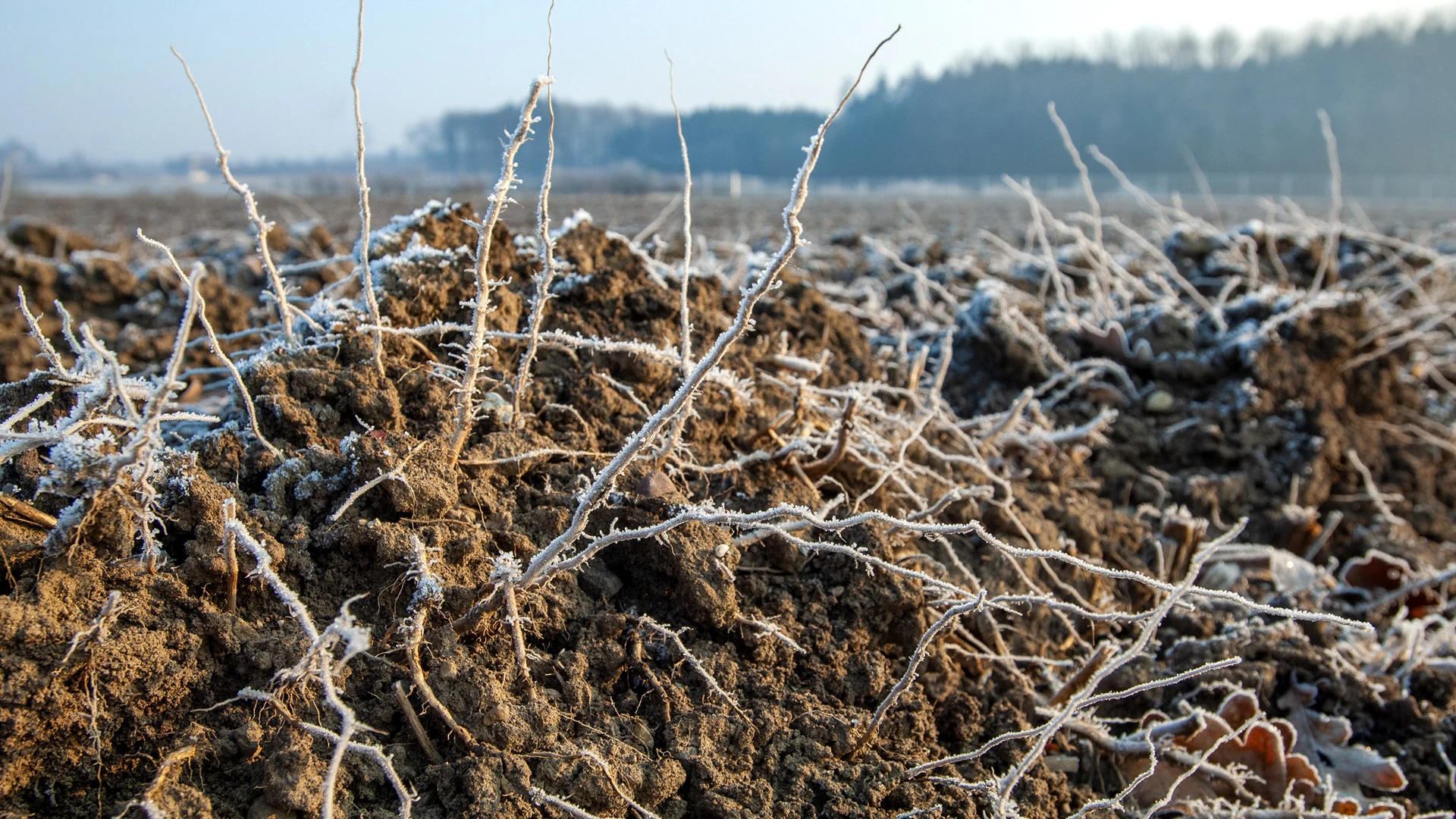
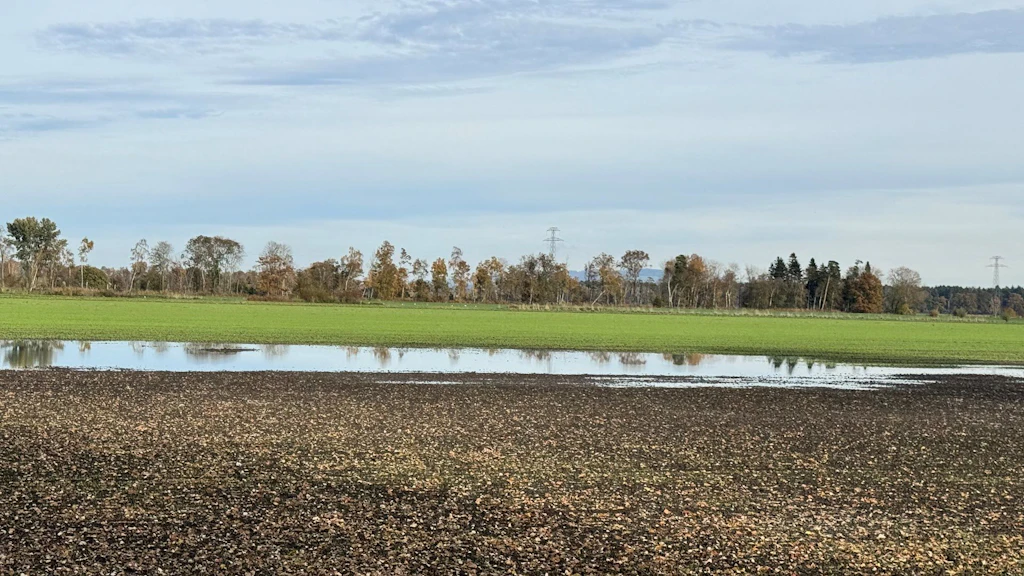
Decision-making Tool for Wet Arable Land Using Cantonal Geodata
Agroscope has expanded the decision-making tool for wet arable land: the QGIS tool now directly incorporates the latest cantonal geodata, with the evaluation of wet arable land thereby gaining in simplicity, efficiency and comparability.
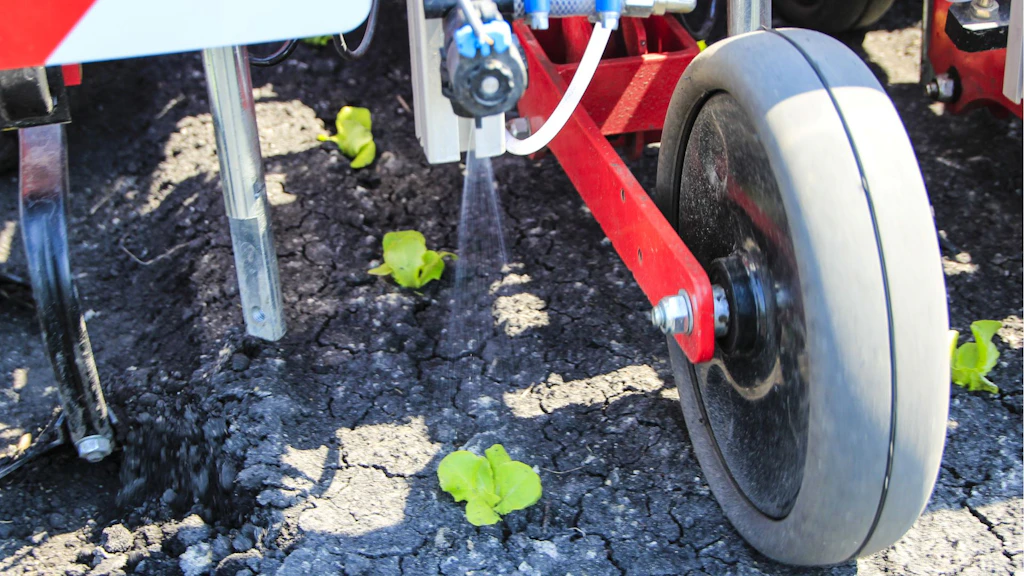
Spot-Spraying in Vegetable Crops: Targeted Plant Protection for the Future
Camera-guided spot-spraying enables targeted application of plant-protection products on individual plants in a crop. At the media conference of the Association of Swiss Vegetable Producers on October 15, Agroscope researchers show how the method functions.
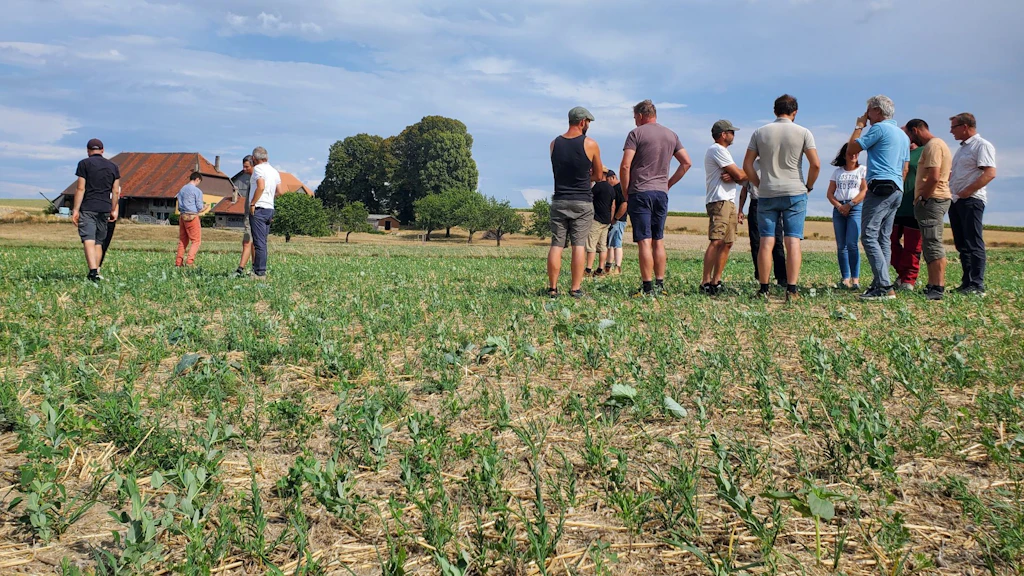
Soil Quality and Soil Cover: Science, Practice and Advisory Service working hand in hand
Further information is available in the following languages: German, French, Italian
What Buried Underpants Reveal about the Soil
Five years ago, volunteers throughout Switzerland buried cotton underpants to measure soil-life activity. The results of this experiment now show that soil-life activity is above all influenced by type of land use.
Recycle4Bio Project Closing Event: Register now
Further information is available in the following languages: German
Hand-over of keys to Agroscope’s new laboratory building in Posieux: a milestone for the national research campus
On Friday 14 August 2026 the canton of Fribourg officially handed over the keys to Agroscope’s new laboratory building in Posieux to the Swiss Confederation. The ceremony was attended by President of the Swiss Confederation Guy Parmelin and delegations from the Fribourg State Council and the Agroscope executive board as well as the Federal Offices for Agriculture (FOAG) and Buildings and Logistics (FOBL). Thus the centrepiece of Agroscope’s new site strategy is now ready for use.
Viticulture and Oenology Experimental Station: Interim Results
Further information is available in the following languages: German, French, Italian
Using Sheep and Heifers to Keep Dwarf Shrubs in Check
A pilot project is turning to sheep and heifers to slow the spread of dwarf shrubs on alpine pastures. The aim is to curb scrub encroachment and improve biodiversity as well as the quality and quantity of forage.
Trials with Drought-Resistant Forage Crop Mixtures
The development of drought-resistant forage crop mixtures for the mountain regions is moving foward in five cantons. Results from 2024 and 2025 show that two species play a particularly vital role in maintaing yields during droughts.
The Experimental Station for Nutrient Flows provides comprehensive data on farms in the Canton of Lucerne
Further information is available in the following languages: German, French
Insights from the field Benjamin Gasser
Further information is available in the following languages: German, French.
Insect Diversity in a Changing Switzerland: Differences between Species Groups
How has the world of insects in Switzerland changed in the last 90 years? For the first time, a new study gives comprehensive answers to this question – and paints a mixed picture.
Reference Values for the Environmental Impacts of Eight Swiss Foods at a Glance
Agroscope researchers have developed and applied a method for determining reference values for the environmental impacts of eight frequently consumed foods produced in Switzerland. The results are published and freely available.
Possible Effects of Sustainability Goals on the Agriculture and Food Sector
De plus amples informations sont disponibles dans les langues suivantes:allemand, italien, anglais.
Experience Agroscope Research on 24 June
Join us in a deep dive into selected topics from Agroscope’s research at our ‘Soup & Science’ public event on 24 June. The event kicks off at 5.15pm at Agroscope’s Zurich-Reckenholz site. Registration by 10 June please.
Field Trial with Cisgenic Potatoes: Sustainable Disease Resistance Sought
Agroscope is testing the use of new breeding technologies by cultivating a late blight-resistant potato cultivar in the field. Authorised by the Federal Office for the Environment (FOEN), the field study serves as a basis for researching potato varieties containing no foreign DNA. These so called ‘cisgenic’ varieties reduce the need for plant-protection products and can better withstand extreme weather conditions.
Decision-making tool for growing crops on wet arable land
Farmers interested in growing alternative crops on wet arable land can now find all the information they need in a decision-making table and fact sheet.
Fertilisation Recommendations for New Vegetable Types and Processing Vegetables
Further information is available in the following languages:German, French, Italian
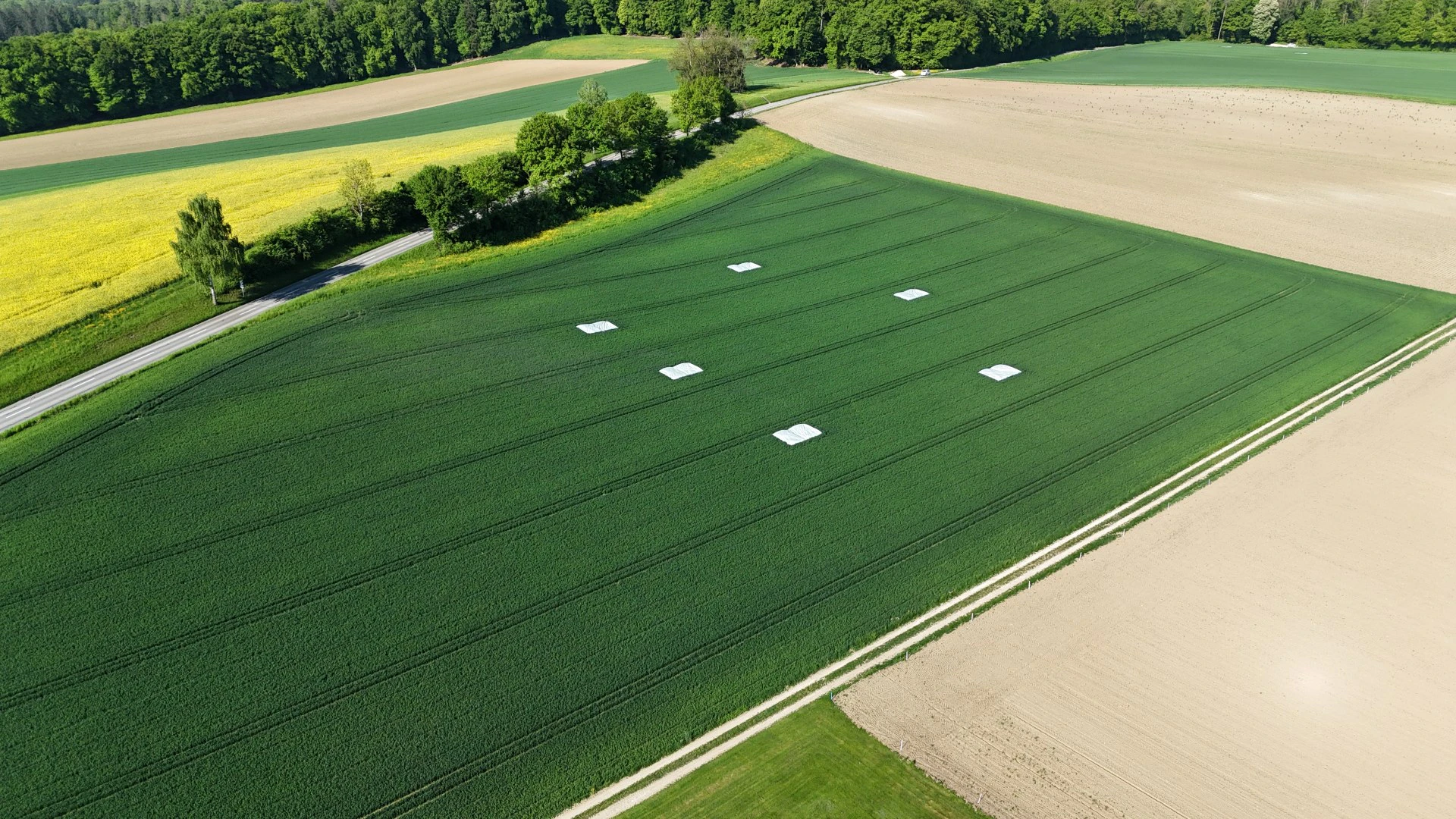
‘Counting’ Wild Bee Nests with Camera Drones
Most wild bees nest in the ground and are important crop pollinators. Agroscope has shown that it is possible to detect their nests using camera drones – marking a major step forward in the effective monitoring of wild bee populations.
Unique Experimental Station for Improving the Quality of Agricultural Soils
Further information is available in the following languages: German, French, Italian.
Supporting Ground-Nesting Wild Bees for the Benefit of Crop Pollination
A new Agroscope factsheet offers tips on how to support ground-nesting wild bees on one’s own farm with relatively little effort. This will help boost the populations of the primary insect pollinators of agricultural crops.
Agroscope Presents Seven New Resistant Grape Varieties
Further information is available in the following languages:German, French, Italian
Agroscope benefits from European collaboration on nitrogen in plant production
Being part of an extensive network creates opportunities to make significant advances in research. The aim is to develop solutions to better quantify and manage nitrogen fluxes in agricultural soils.
Research with a Focus on Impact and Practical Benefits
Agroscope’s New Work Programme 2026-2029 Places a Greater Focus on Impact and Practical Benefits. Areas such as plant protection, plant breeding, climate-change adaptation and economic efficiency will also be strengthened.
Competence Network for Fruit and Berries: Webinar on ‘Climate Change: Threat or Opportunity’
Further information is available in the following languages: German, French.
Less Nitrogen Losses, Stable Yields: Success of the Smart-N Project
Further information is available in the following languages: German, French, Italian.
Important Barto Data for Agri-Environmental Monitoring
Further information is available in the following languages: German, French, Italian
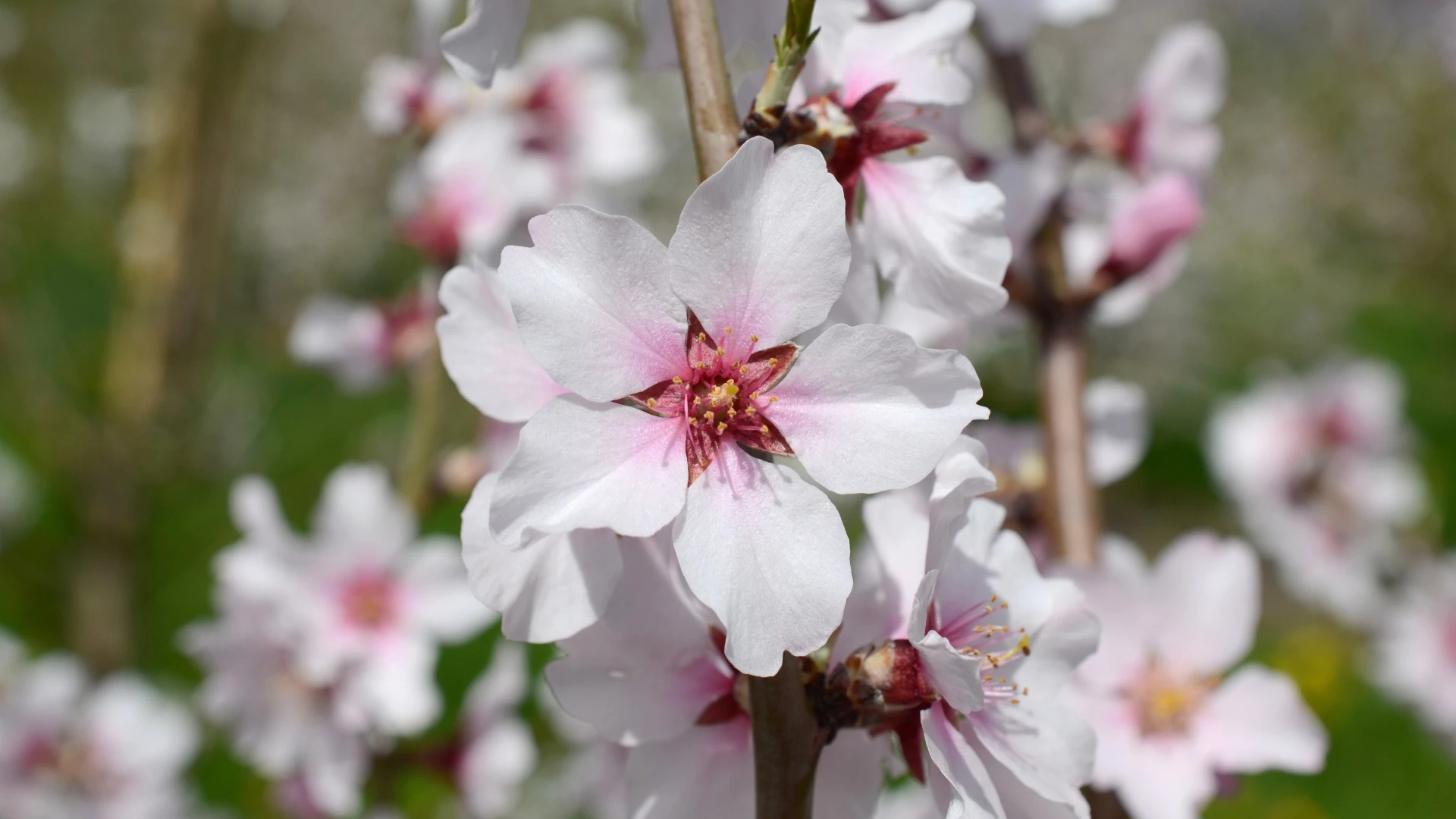
Almond Farming in Switzerland: Multifunctional Use as an Opportunity
Further information is available in the following languages: German, French, Italian.
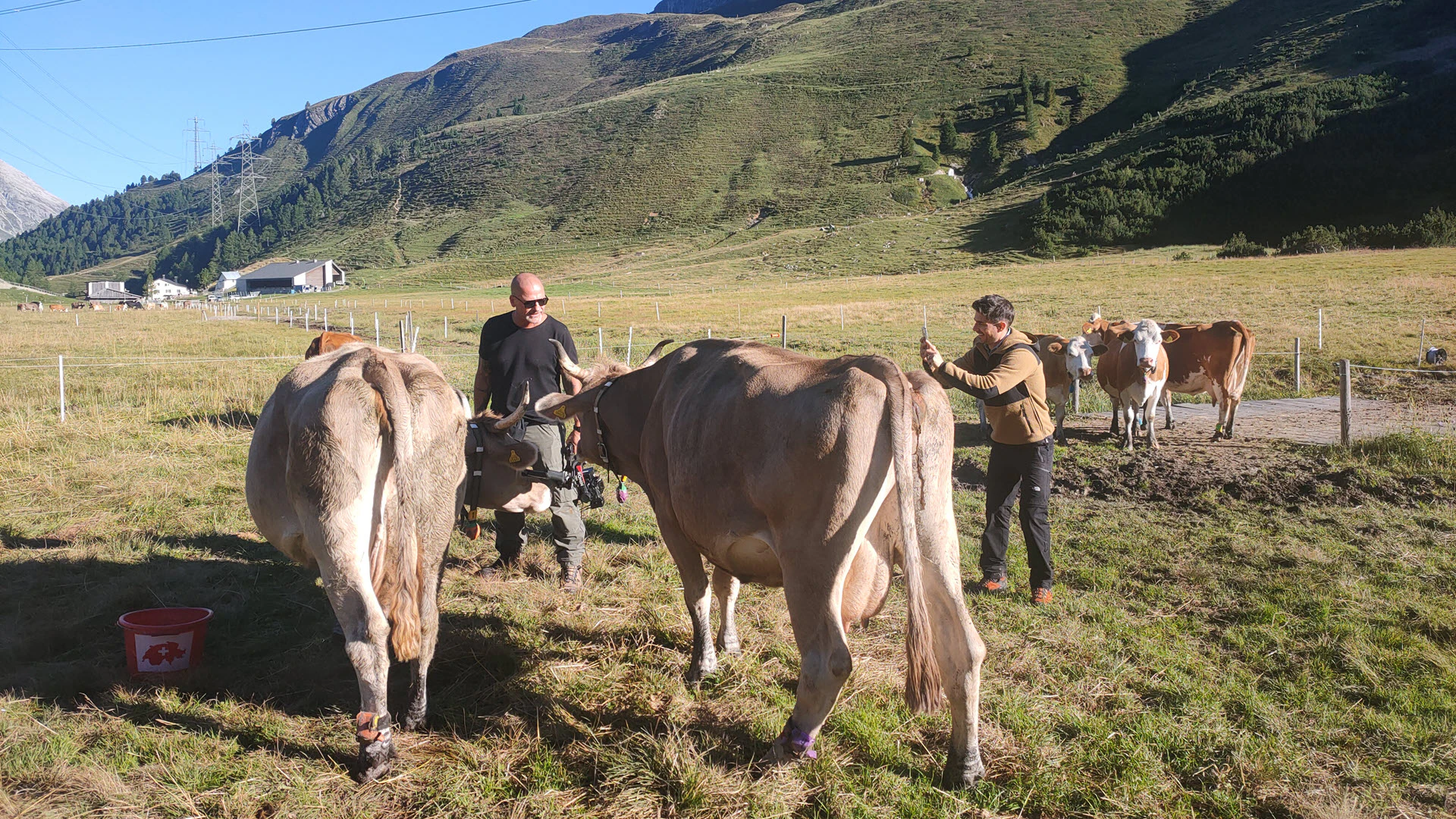
Agroscope Looking for Suitable Cattle Breeds to Maintain Alpine Pastures
When mountain pasture use is sub-optimal, scrub runs rampant and biodiversity is lost. In this SRF Einstein broadcast of 23/10, Agroscope researcher Caren Pauler talks about her search for cattle breeds that maintain alpine pastures.
New Guide for Reducing Food Waste
Around 90 kg of food is wasted in Swiss households per person and year. Part of the waste could be avoided, which would be a win for both the pocketbook and the environment. Agroscope has produced a guide for reducing food waste.
Trifluoroacetic Acid and Other PFAS in Groundwater: the Role of Plant Protection Products
The occurrence of per- and polyfluoroalkyl substances (PFAS) is widely documented in soils, water bodies, drinking water and foods. An analysis by Agroscope ranks the contribution made by plant-protection products and other sources to groundwater contamination with PFAS.
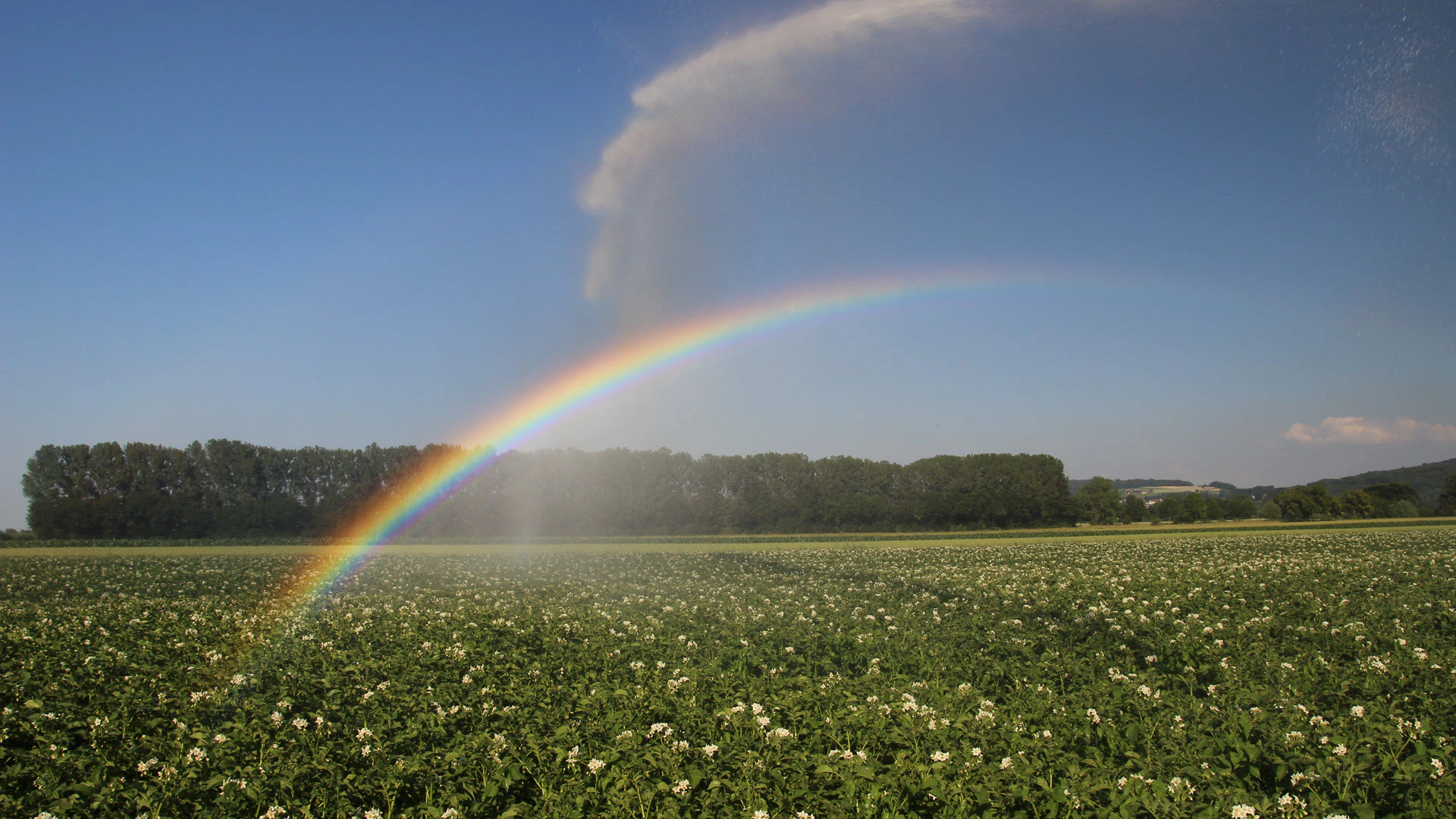
How Much Water Does the Swiss Agricultural Sector Need for Irrigation?
To date, figures on agricultural water use for irrigation in Switzerland have been quite patchy. In response, Agroscope has developed a method for estimating consumption volumes on behalf of the Federal Office for the Environment.
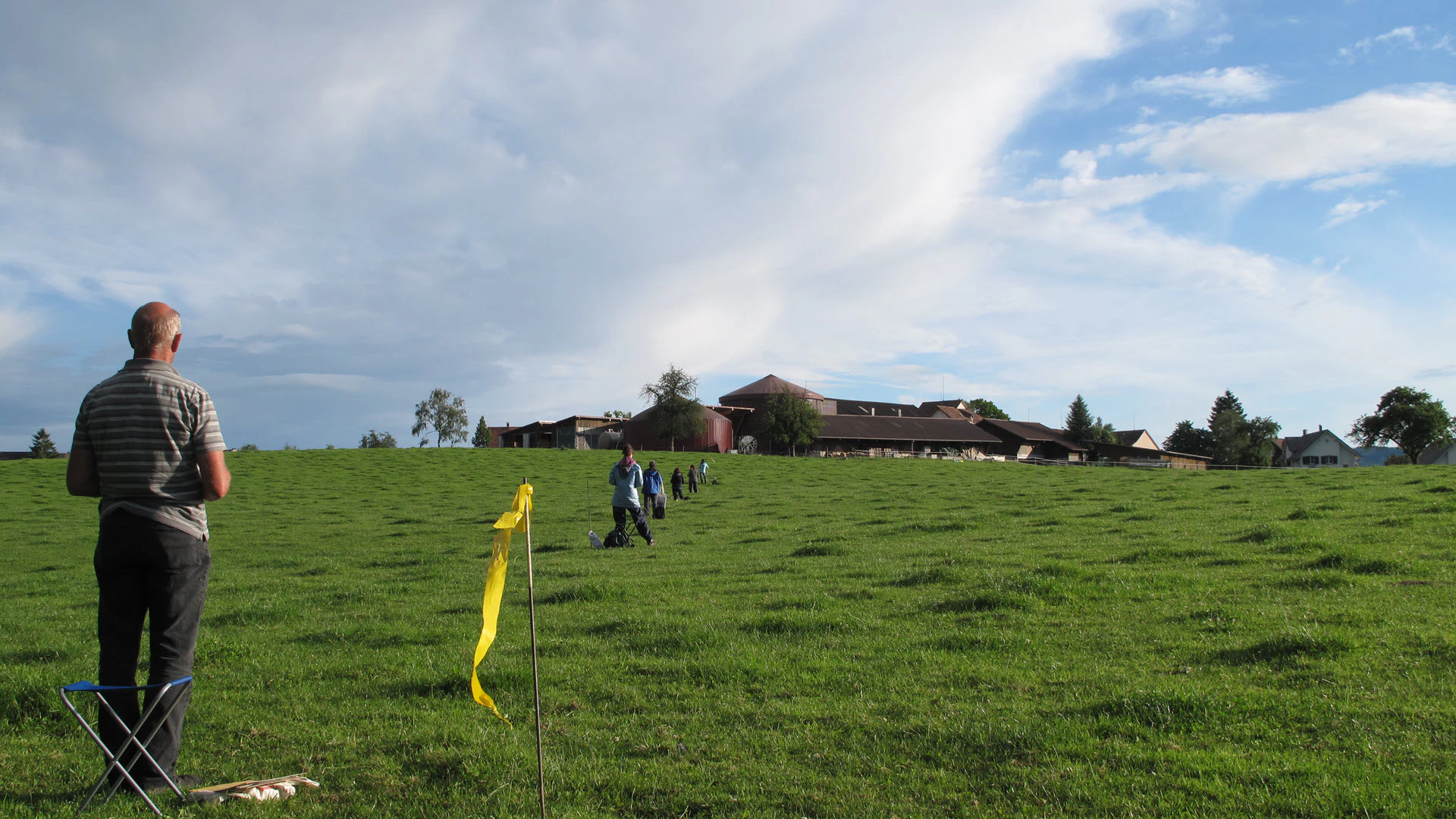
Can Odour Impacts Be Reliably Determined by Assessors?
Livestock husbandry poses challenges in determining odour impacts due to the heterogeneity and spatial extent of its odour sources. Agroscope and Empa have refined a method using trained assessors and validated it with tracer gases.
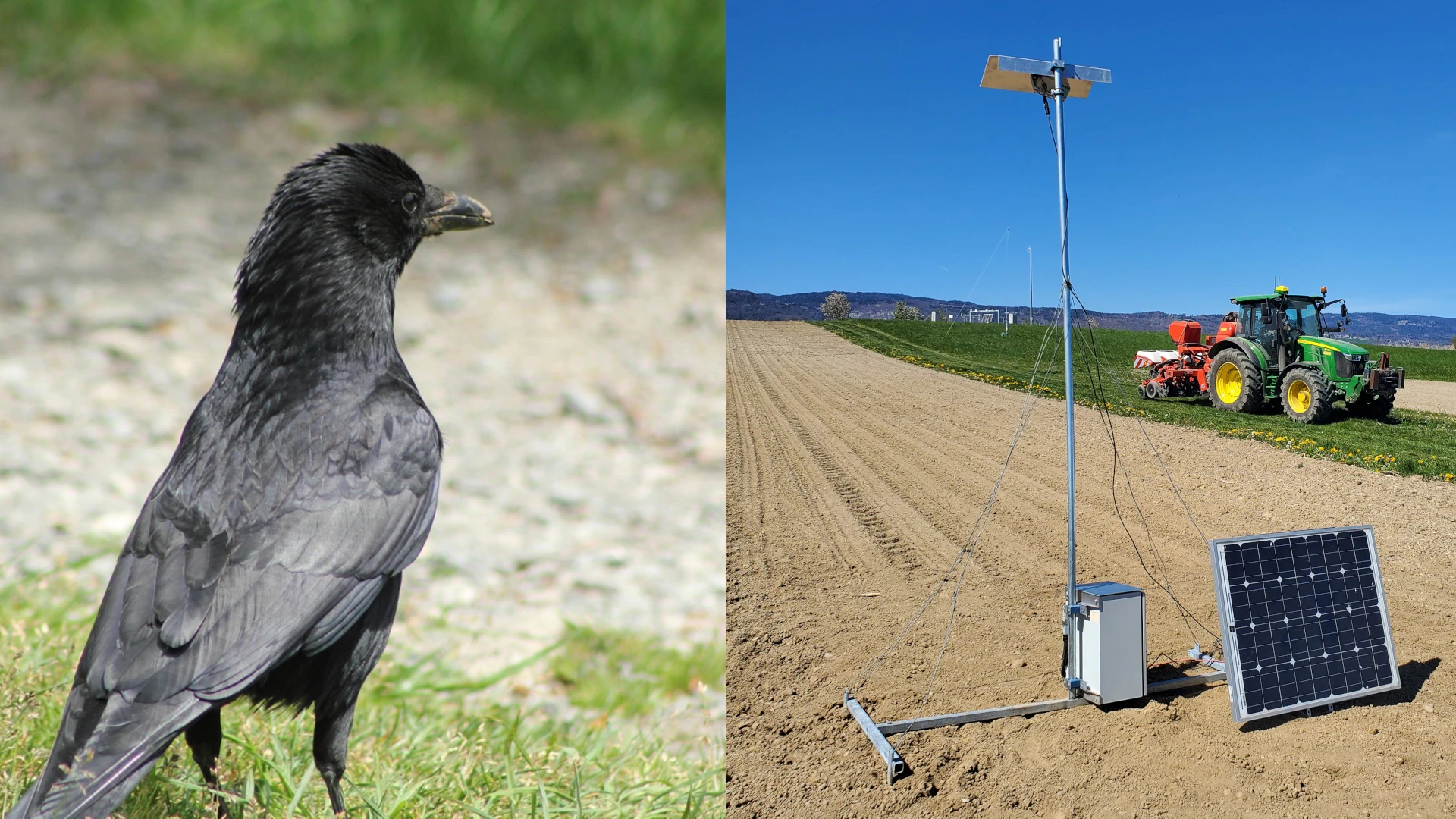
Artificial Intelligence vs Corvid Intelligence
Will AI outsmart corvids to protect crops? Agroscope is currently testing a system for detecting and scaring away these birds. The aim is to make the system intelligent and adaptive via an interdisciplinary project to be supported by the FOAG from 2026.
Simulated Drought at Altitude: Climate-Proof Forage Mixtures
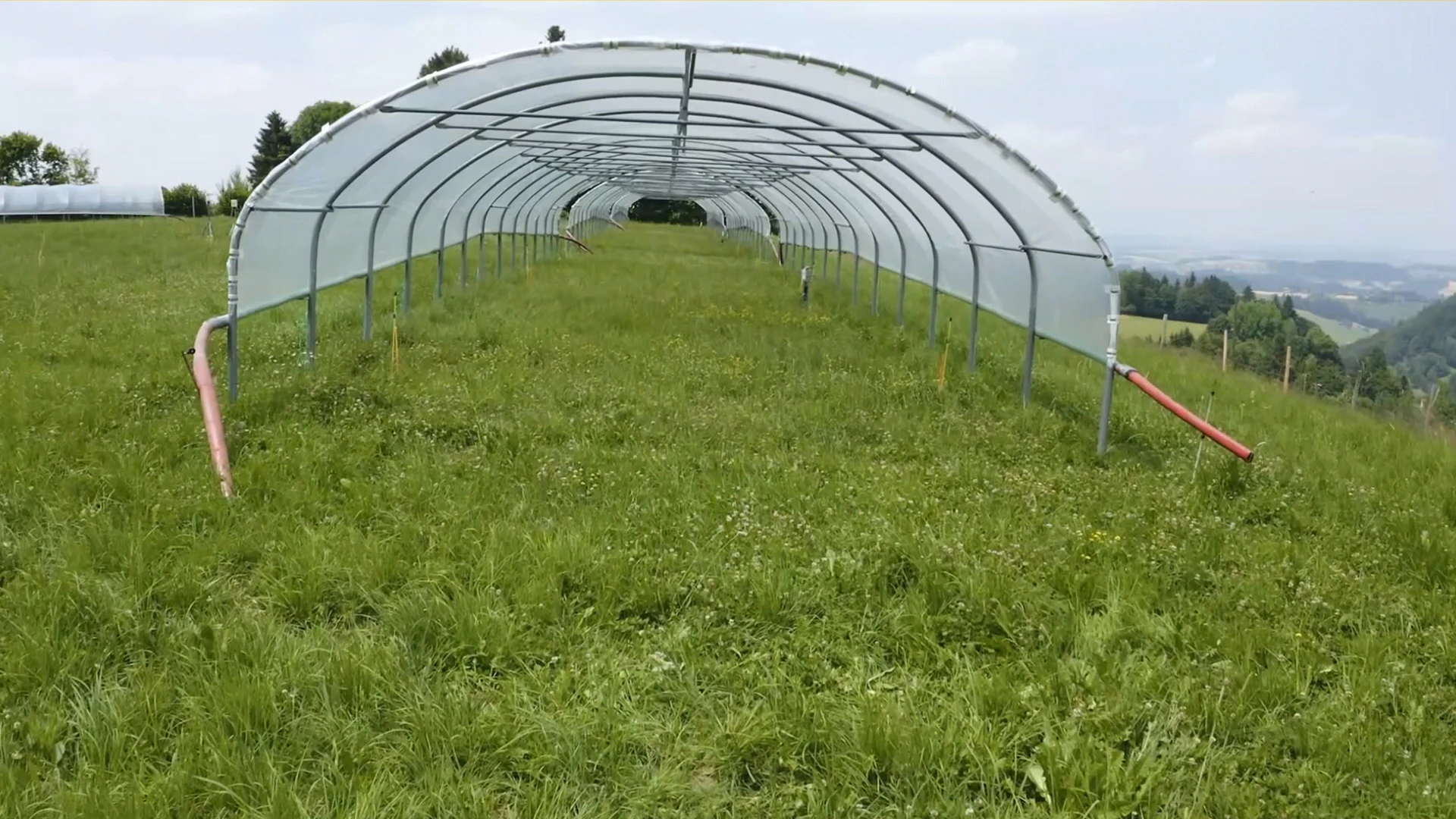
On Bernese grasslands at over 1000 metres of altitude, unusual polytunnels simulate summer drought. Their aim is to compare the performances of drought-resistant forage mixtures in normal conditions and in a water deficit situation.
DOK Trial Has Been Comparing the Growth of Organic and Conventional Crops for Two Generations
Further information is available in the following languages: German, French.
Targeted greening to control track-side vegetation
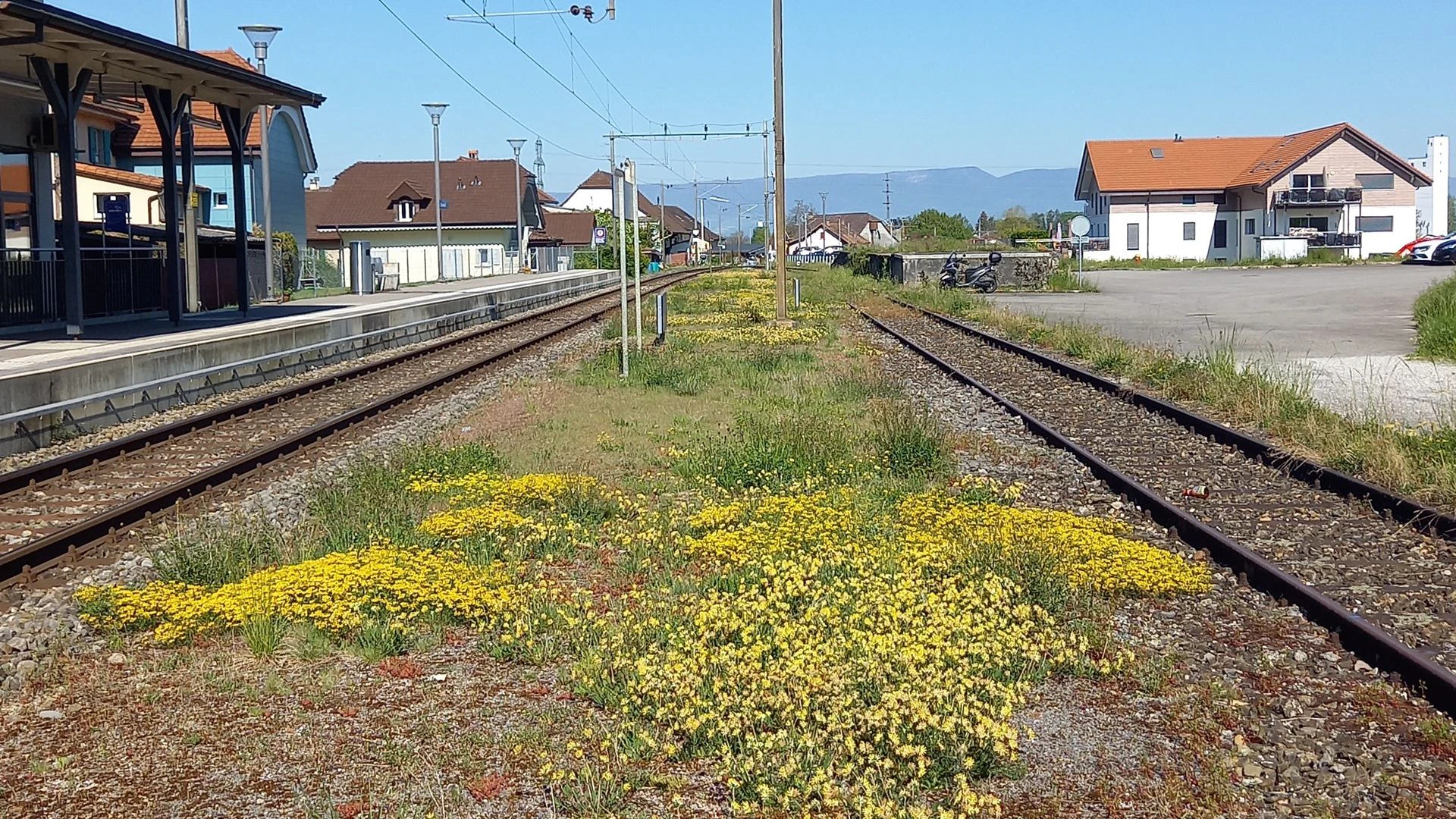
To reduce the use of herbicides to control track-side vegetation, the Swiss Federal Railways (SBB) commissioned Agroscope and HEPIA to develop a low-growing plant mix for the track area.
Current Suisse-Bilanz Tool as an Environmental Indicator: Good for Phosphorus, Unsuitable for Nitrogen
An Agroscope study shows that the Suisse-Bilanz nutrient-balance calculation tool could serve as an environmental indicator for sustainable nutrient use – but only for phosphorus, not for nitrogen.
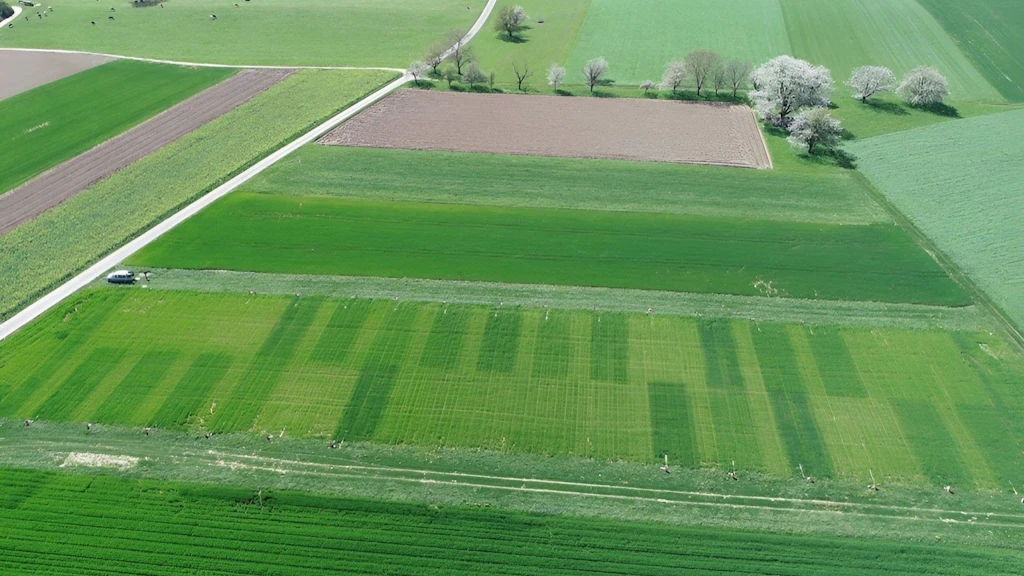
Targeted Use of Soil Maps for Soil Samples, Field Classification and Fertilisation
New factsheets show how practitioners, extension workers and the enforcement sector can benefit from precise soil information.
Needs-based Fertilising of Plants
Targeted nitrogen fertilisation optimises yields while protecting the environment. A new Agroscope factsheet introduces site-specific fertilisation and gives an overview of the advantages, drawbacks and requirements of the main systems.
Rake or Hay Blower – It Makes No Difference for the Vegetation
The rake is increasingly being replaced by the hay blower for the hay harvest on mountain pastures. A long-term trial conducted by Agroscope researchers provided no evidence of any significant effects on vegetation of this management trend.
How Does Soil Health Affect Plant Productivity?
A team of international researchers has conducted a pan-European study to investigate the links between soil health and plant productivity in woodlands, grasslands and croplands. The results show that soil health is a particularly important factor in agricultural land.
Feeding Pigs According to Their Nutrient Requirements Reduces Nutrient Losses
The protein and phosphorus requirements of pigs change according to life phase. Optimised phase feeding can improve nutrient efficiency and reduce the import of feedstuffs. New Agroscope factsheets highlight how this can be achieved and examine trade-offs.
Site-Specific Fertilisation Ensures Yields and Reduces Nitrogen Surpluses.
Further information is available in the following languages:German, French, Italian.
Nitrogen Fertilisation: Calculation Methods And Recommendations Vary in Europe
Differences of up to 100 kg nitrogen per hectare, depending on the country: fertilisation recommendations are not the same throughout Europe.
Updated Recommendations for Berry Fertilisation
The principles of fertilisation (GRUD) are of great importance for agricultural practice and extension. Agroscope has now updated the module ‘Fertilisation of Berry Crops’.
Adapting Fruit and Berry Cultures to Climate Change
Die Anpassung der Obst- und Beerenkulturen an den Klimawandel stand am 12. November im Mittelpunkt der Diskussionen in Bern. Die Veranstaltung (FuturLab) wurde vom Kompetenznetzwerk Obst und Beeren (KOB) organisiert.
Report on the Nutrient Balance of Swiss Agriculture
The annual nutrient balance report produced by Agroscope on behalf of the Swiss Federal Office for Agriculture highlights the nitrogen and phosphorus surplus trends from 1975 to 2022. Since the 2014/2016 period these surpluses have fallen by almost 10%.
Principles of Fertilisation in Transition
The Swiss fertilisation recommendations have developed impressively: from a simple application table in 1938 to comprehensive recommendations for all crops in 2017. Digitalisation is opening up new challenges and opportunities.
Flower Diversity Protects Wild Bees from Virus Transmission
An article recently published in the journal Nature Ecology & Evolution investigated the risk of virus transmission from honeybees to wild pollinators and between different wild pollinator species.
Mit Far-UV-C- (222 nm) gegen Echten Mehltau bei Erdbeeren
Agroscope führt einen innovativen Versuch mit einem Gerät durch, das UV-C-Licht mit einer Wellenlänge von 222 Nanometern emittiert und Echten Mehltau und Spinnmilben in Erdbeerkulturen bekämpfen soll. Der Prototyp wird derzeit am Standort Conthey in einem Folientunnel getestet.
Indigenous Parasitoids for the Control of an Exotic Grapevine Leafminer
The alien leafminer moth Aspilanta oinophylla is causing growing damage in the vineyards of Ticino. Agroscope's ‘Neobiota’ Competence Centre endeavours to promote natural interactions between the pest and indigenous parasitoids.
Grazing Dairy Cows Adapt their Behaviour to Heat Stress
Heat stress is a growing threat to the welfare, health and productivity of dairy cows, especially on the pasture. Commercial farms need simple indicators that enable farmers to detect heat stress at an early stage.
Alpine and Mountain Agriculture: Adapting to a Rapidly Changing World
For three years now, the Alpine and Mountain Agriculture Experimental Station has been helping farms at higher altitudes deal with increasingly demanding production conditions. In a meeting of tradition and technology, ongoing trials and initial results were presented to the media on 2 July in the Canton of Graubünden. Below, some information on the projects.
Limiting the Amount of Concentrates and Crude Protein Content Reduces Nitrogen Losses
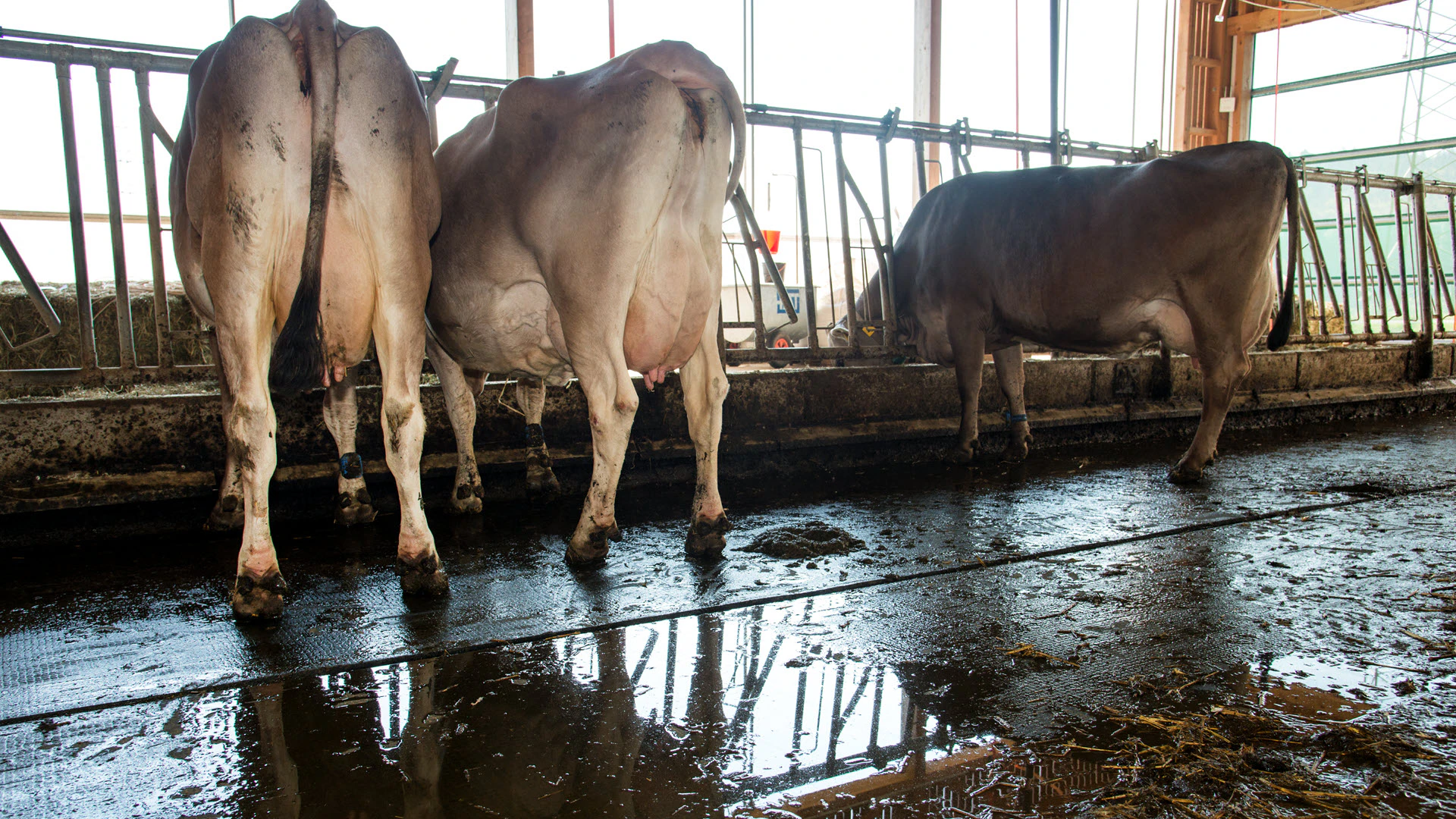
Agroscope has calculated that limiting concentrates to 365 kg per cow and year and a maximum concentrate crude protein content of 18% could make a positive contribution to the nitrogen reduction path without negatively impacting profitability.
Free e-Learning Course on Sustainable Agriculture
Farmers are faced with the challenge of producing in both a cost-efficient and environmentally friendly manner. Researchers from three research institutions investigated how this challenge can be met and where the limits lie. Their results have been made available in a free e-learning tool.
Study on Climate-Resilient Arable Farming
On behalf of Schweizer Hagel, fenaco and the Swiss Farmers’ Union, Agroscope has established a study on climate-resilient arable farming in 2035, with the topic of drought at the centre of the study.
Predictable yield increases thanks to mycorrhizal fungi inoculation in maize
Researchers were able to show that inoculating maize fields with mycorrhizal fungi can increase harvest yields. In addition, indicators were found for predicting the success of the measure. The findings were published in the scientific journal Nature Microbiology.
The Challenge of Nutrient Losses – Agroscope Supports Agricultural Practitioners
Over the next few years, nitrogen and phosphorus losses from agriculture must be substantially reduced. With a new series of factsheets, Agroscope is helping farmers improve nutrient efficiency and thereby reduce nutrient losses to the maximum extent possible.
Recycling Wood Residues for Sustainable Agricultural Systems
This project aims to store soil organic matter, restore the fertility of agricultural soils and control weeds by recycling wood residues. The residues are incorporated or spread on the surface in a field trial. The effects of wood residues on soils, oilseed rape, wheat crops as well as on weeds are studied
Measuring Soil Fertility Directly in the Field
Soil samples can be measured directly in the field by means of spectroscopy. Agroscope researchers have tested mobile devices and shown how to make the best use of them.
Ground-Nesting Bees as Soil Ecosystem «Engineers»
Scientists from Agroscope and two partner universities used X-ray imaging to provide new insights into the underground life of ground-nesting bees. The results highlight the locally important role of ground-nesting bees as soil ecosystem “engineers” improving soil health.
Agroscope and ecoinvent Renew Partnership
Agroscope and ecoinvent are committed to advancing sustainable practices in the agriculture and food sectors through their collaboration.
Growing Sorghum in Switzerland – Interdisciplinary Research in the Year of Millets
The United Nations has declared 2023 the ‘International Year of Millets’. Millets have advantages over other cereal species and forage plants: they are undemanding, drought-resistant, rich in minerals and gluten-free. For several years now, Agroscope has been researching the millet species sorghum, among others.
The Right Varieties for Successful Baking
Agroscope researchers are investigating which grain varieties are best suited to backing Swiss Christmas cookies (Guetzli) or bread. The Swiss wheat variety ‘Dilago’ was specially bred for baking Guetzli.
AgroPV and Greenhouse Crops: Pilot Project
To utilise useful light for the vegetables grown in the greenhouse whilst producing electricity: this is possible thanks to the startup Voltiris's agri-photovoltaic system. Agroscope is currently testing this solution for vegetable crops requiring especially high levels of light at its Conthey site.
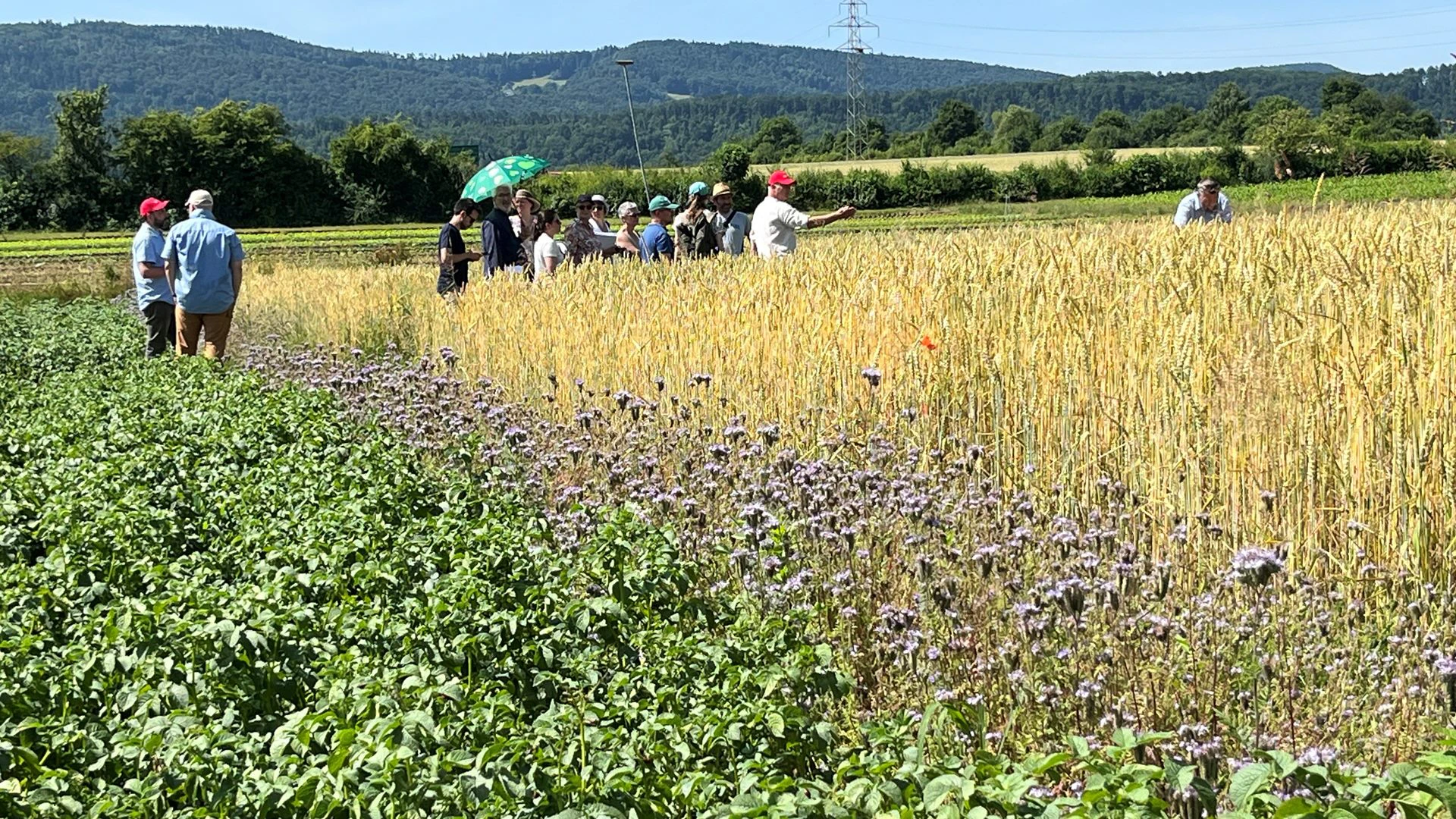
Buried Underwear Shows that Humus Promotes Soil Life and Pro-tects against Drought
The aim of the ‘Proof by Underpants’ project was to obtain exten-sive information on the soil quality of gardens and farms, for the first time with the help of the general population. Initial results show that humus plays a key role in the soil, helping it cope better with climate-induced drought.
Smart ‘Home Garden’ at Agroscope
Agroscope has set up a ‘Home Garden’ pilot plant on its Conthey site to transfer its expertise in indoor-farming research (greenhouse and vertical farming) to the ‘Home Garden’ system developed by the Zurich-based company Pleasant Plants.
A Food Challenge, Seasoned with Agroscope Knowledge
How can we feed ourselves in the most climate- and environmentally friendly way possible? The Swiss TV channel SRF’s ‘Einstein’ show explores this issue in two programmes, on 10 and 17 February 2022 – with the participation of experts from Agroscope.
Researching in the System and with Practice
Agroscope’s new 2022–2025 Work Programme aims to strengthen system research and co-create more research with farmers. It is also increasingly guided by the principles of agroecology.
More Cherries and Bigger Apples from Optimal Pollination
Certain crops in Switzerland can benefit from more-species-and-individual-rich wild-bee communities. An Agroscope report shows how this could be achieved.
Measuring and Optimising Environmental Impacts
Easy-to-use and informative metrics are essential to allow farmers to measure and optimise the environmental impacts of their farming activity for themselves. The recently launched Agroscope research programme ‘Indicate’ aims to develop these metrics.
Recognising the Potential of Climate Protection Measures
IP-SUISSE and Agroscope have developed a point system whose aim is to show what climate protection measures farmers can implement effectively on their farms.



.JPG?rect=0%2C0%2C1920%2C1080&w=1024&auto=format)


.jpg?rect=0%2C0%2C1920%2C1080&w=1024&auto=format)