
Using Sheep and Heifers to Keep Dwarf Shrubs in Check
A pilot project is turning to sheep and heifers to slow the spread of dwarf shrubs on alpine pastures. The aim is to curb scrub encroachment and improve biodiversity as well as the quality and quantity of forage.
.JPG?w=1024&auto=format)
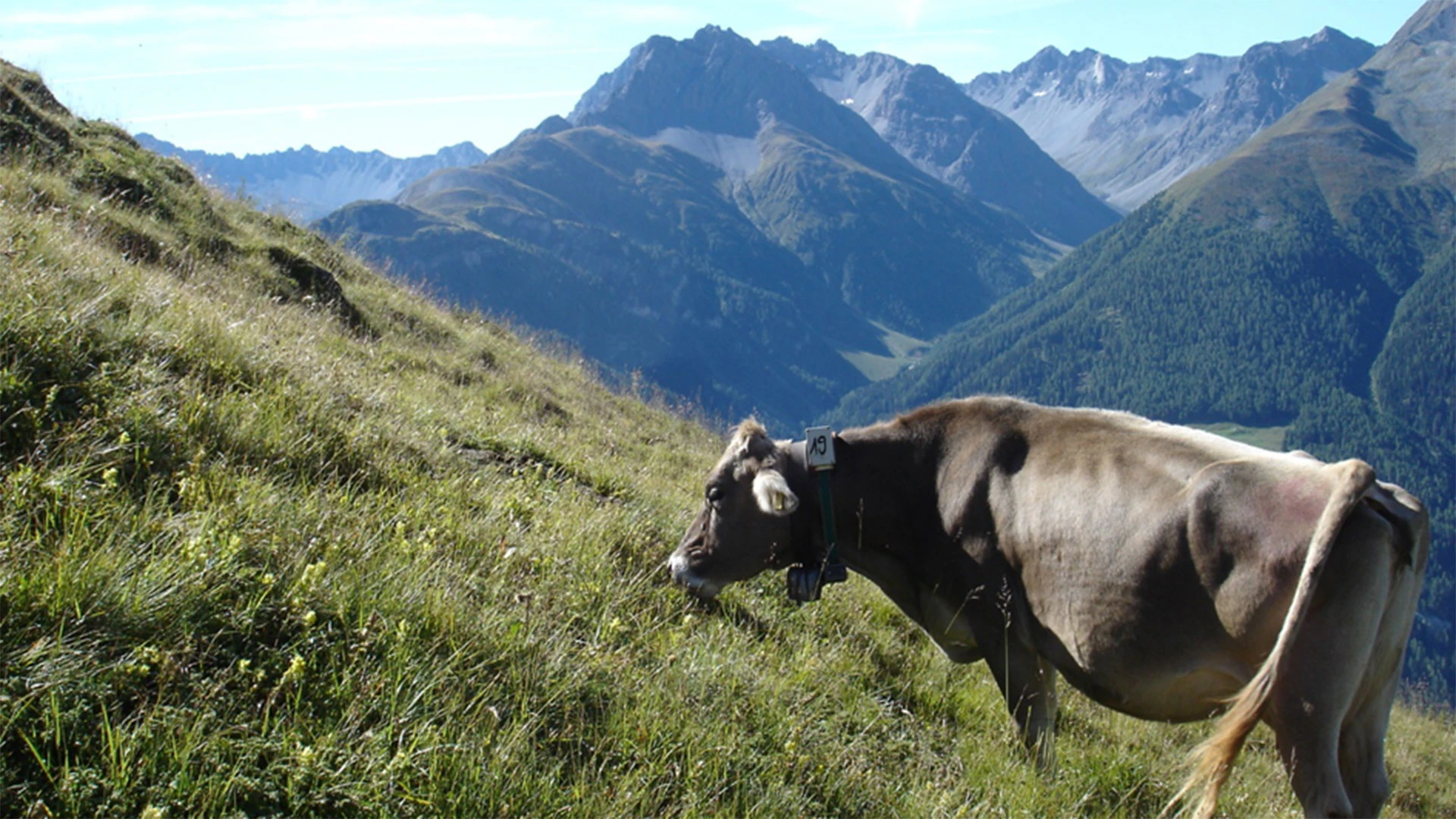
In this International Year of Rangelands and Pastoralists, the Experimental Station for Alpine and Mountain Farming is launching a new project in support of the alpine economy. The aim of the project is to curb the spread of dwarf shrubs such as rhododendron, blueberry, juniper and heather, which are progressively encroaching on alpine pastures. The spread of these shrubs jeopardises biodiversity, the quantity and quality of forage, and the aesthetic value of the landscape. The project is turning to the use of Holstein-Friesian and Brown Swiss heifers as well as Black-Brown mountain sheep to address the problem.
Grazing duration and intensity
The experimental herds arrived at the AgroVet Strickhof / ETH Zurich-owned Alp Weissenstein (Canton of Graubünden) on 23 June 2026, and will remain until August, grazing several paddocks of varying sizes. The impact of the grazing and trampling of the herds on the dwarf shrubs will be studied in association with different grazing durations and intensities.
Extensive data collected
The project will be launched in summer 2026 on Alp Weissenstein and will run through 2028 (final vegetation surveys in 2029). The grazing experiment and data collection will take place yearly between June and August. Researchers will be monitoring vegetation development and composition, the proportion of shrubs and forage quality. The animals’ weight and movements as well as their role in seed dispersal via their pelt or dung will also be studied.
The collected data will aid in determining the optimal stocking rate for stabilising – or ideally, reducing – shrub cover, and will serve as a scientific basis for developing site-adapted pasture management strategies.
Index
Read more

Regulierung von Zwergsträuchern durch gezielte Beweidung
Die zunehmende Verbuschung durch Zwergsträucher ist ein wachsendes Problem in alpinen und subalpinen Zonen des Alpgebiets. Arten wie Alpenrosen, Heidelbeeren, Wacholder oder Heidekraut breiten sich insbesondere in schwer zugänglichen Lagen aus und führen zu einem Rückgang der Biodiversität, der Futtermenge und Futterqualität sowie des Landschaftswerts. Vor diesem Hintergrund untersucht das Projekt, wie sich diese Verbuschung durch gezielte Beweidung regulieren lässt.
Versuchsstation Alp- und Berglandwirtschaft
Die Versuchsstation Alp- und Berglandwirtschaft entwickelt praxisorientierte Lösungen für die aktuellen und zukünftigen Herausforderungen der Betriebe im Berggebiet. Besonderes Augenmerk liegt auf den strukturellen, organisatorischen, ökonomischen und klimatischen Unterschieden zwischen den Regionen. Fünf Kantone (BE, GR, TI, UR, VS) sowie die Branche und die Beratung sind beteiligt.

WhatsApp channel for practitioners
Aimed at agricultural practitioners, the information is shared on our WhatsApp channels 'Agroscope_fr' (French) and 'Agroscope_de' (German).