
Insect Diversity in a Changing Switzerland: Differences between Species Groups
How has the world of insects in Switzerland changed in the last 90 years? For the first time, a new study gives comprehensive answers to this question – and paints a mixed picture.
Researchers from Agroscope, the Swiss Federal Research Institute for Forest, Snow and Landscape WSL, info fauna, the University of Zurich and the Swiss Ornithological Institute Sempach evaluated 1.2 million records from info fauna, the Swiss Faunistic Records Centre. They reconstructed how the distribution ranges of 811 insect species – 216 butterfly and 595 saproxylic beetle species – changed between 1930 and 2021.
Their findings reveal a decline in the mid-20th century for both groups, followed by highly divergent trends. Species with certain requirements such as specific habitats or a cooler climate declined more steeply, whilst others recovered.
Butterflies: decline without recovery
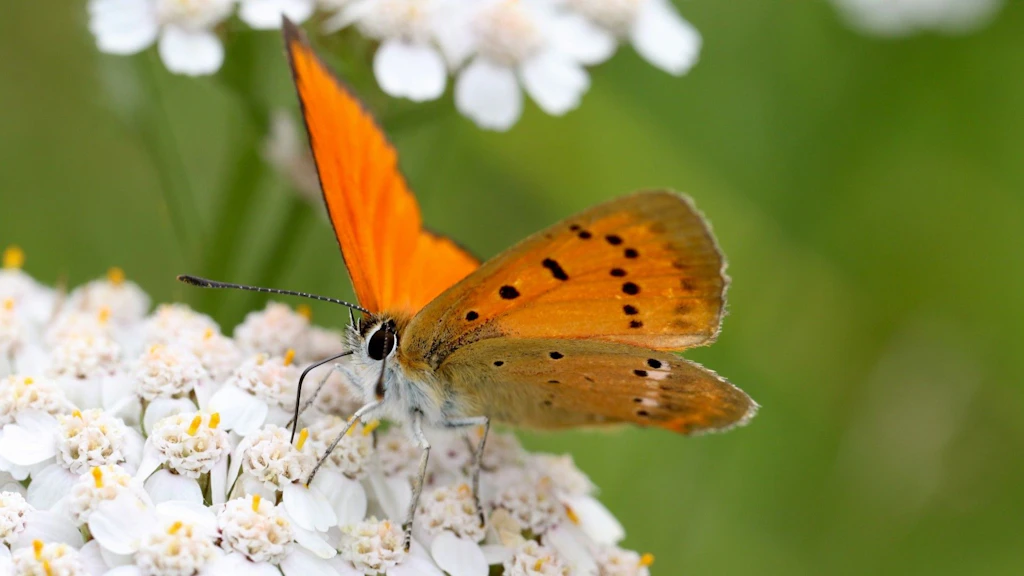
Diurnal butterflies have been declining since 1930. Particularly between 1950 and 1980 – the heyday of agricultural intensification – their populations collapsed. The reasons for this were manifold: agriculture became more homogeneous, species-rich grasslands disappeared and greater use was made of both fertilisers and plant-protection products. Since then there has been no recovery. In present-day Switzerland, butterflies are on average around 12% less species-rich than in 1930 – a figure that actually rises to 29% on the Swiss Central Plateau and 13% in the Northern Prealps.
Specialised species are particularly hard-hit: butterflies that are dependent on specific plants or habitats lost up to 41% of their distribution ranges. Small species, which can only open up new territories for themselves slowly, declined more sharply (-26%) than larger, more mobile species (+ 14%). And cold-adapted species face an additional problem, with climate change constricting their habitats further (-30%).
Saproxylic beetles: decline followed by turnaround
Beetles that are dependent on deadwood initially experienced similar declines. More-intensive forestry meant fewer old trees, less deadwood, and therefore a smaller range for these species.
However, from the 1960s onwards the situation stabilised, and since the Noughties saproxylic beetles have actually been increasing again. Overall, their current distribution range is similar to that of 1930.
Several factors have worked to their benefit here: many warm-adapted saproxylic beetle species benefit from climate change, with rising temperatures favouring their spread. In addition, major storm events such as Vivian (1990) and Lothar (1999) created massive amounts of deadwood at a stroke, and with this new habitats. Moreover, today’s more biodiversity-friendly forest management is likely to have contributed in no small measure to this recovery.
Nevertheless, the more-specialised saproxylic beetle species declined more precipitously and lost up to 17% of their distribution range, whilst cold-adapted species have not benefited from the climate change of recent decades.
Cautious optimism
There have been positive effects since the 1990s. Today’s biodiversity-friendly approach to forest management leaves more old and dead wood in situ. In addition, agri-environmental programmes and ecological focus areas create refuges for endangered species. These measures are beginning to show a positive impact, even if the previous degree of species diversity – particularly for specialised and cold-adapted species – is far from being achieved.