
BioBio - Indicators for Biodiversity in Organic and Low Input Farming Systems
The objective of the research project BioBio was to identify a set of biodiversity indicators which are (i) scientifically sound, (ii) generic at the European scale and (iii) relevant and useful for stakeholders.
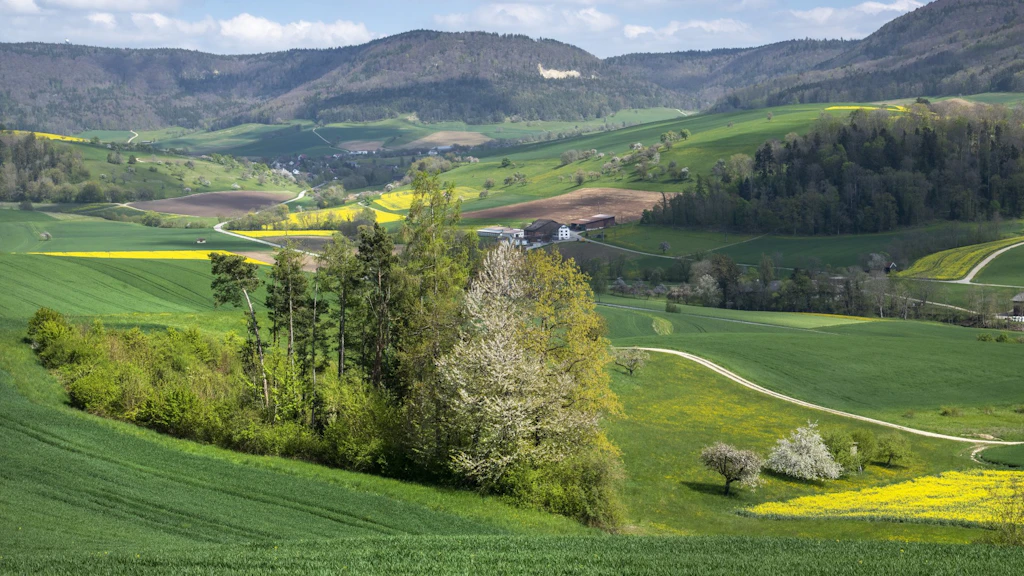
Organic and low-input farming systems provide habitat for wildlife. Prominent examples include the Black Vulture in the Spanish Dehesas or orchids in extensively managed mountain grassland. These farming systems also make use of old breeds, such as Welsh Black Cattle. Thus, they contribute significantly to the maintenance of biodiversity in Europe.
The objective of the research project BioBio (Biodiversity indicators for organic and low-input farming systems, EU FP7, KBBE-227161, 2009-2012) was to identify a set of biodiversity indicators which are
- scientifically sound
- generic at the European scale and
- relevant and useful for stakeholders.
Outcome
The guidelines 'Biodiversity Indicators for European Farming Systems' constitute the main outcome of the BioBio project.
They consist of:
- A printed brochure with background information on the indicators download
- 23 factsheets on the individual indicators
- An extended summary of 20 pages which is available in 12 languages.
Publications
Guidelines
The guidelines 'Biodiversity Indicators for European Farming Systems' constitute the main outcome of the BioBio project. They consist of:
A printed brochure with background information on the indicators:
23 factsheets on the individual indicators:
An extended summary of 20 pages in all 12 project languages:
Project Deliverables
Scientific publications
Assessing the costs of measuring biodiversity: methodological and empirical issues, Food Economics
Targetti S., Viaggi D., Cuming D., Sarthou J. and Choisis J. P. 2012
Characterization and elements for a definition and an analysis of low input farming system in EU-27, 10th European IFSA symposium
P. Pointereau, J-L. Bochu and S. Doublet. 2012
Organic Farming Benefits Local Plant Diversity in Vineyard Farms Located in Intensive Agricultural Landscapes. Environmental Management
J. Nascimbene, L. Marini and M. G. Paoletti. 2012
Environmental Impact of Different Agricultural Management Practices: Conventional vs. Organic Agriculture Critical Reviews in: Plant Sciences, 30:95/124.
Tiziano Gomiero, David Pimentel and Maurizio G. Paoletti. 2011 Copyright Taylor & Francis Group, LLC
COMPETING PERCEPTIONS ON BIODIVERSITY AND ITS BENEFITS: THEORETICAL AND METHODOLOGICAL IMPLICATIONS OF A FOCUS GROUP STUDY. 9th International Conference of the ESEE, Istanbul, 2011
E. Kelemen, K. Balázs, J.P. Choisis, N. Choisis, T. Gomiero, E. Kovács, G. Nguyen, M. Paoletti, L. Podmaniczky, J. Ryschawy, J.P. Sarthou. 2011