
Agroforestry as a New Land-Use Form
Modern agroforestry systems combine the cultivation of arable crops with trees, are managed using modern agricultural engineering methods, and are economically attractive.
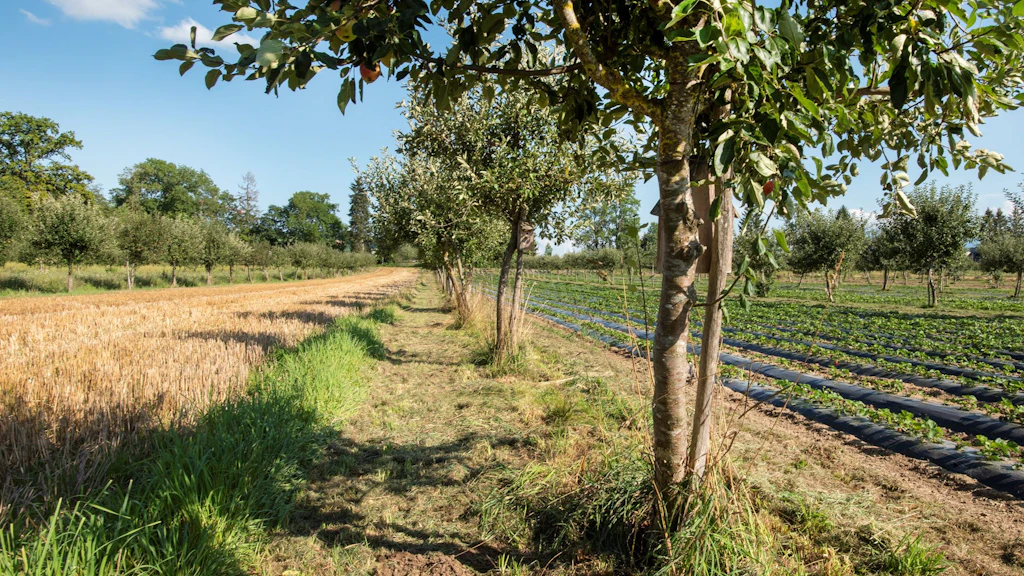
Swiss farmers show how this can look in practice (Hotspot 38/18), supported by the latest results of the European project ‘Agroforestry for Europe’ (AGFORWARD)’.
Further information for farmers on:
www.agroforst.ch / www.agroforesterie.ch.
AGROMIX
To actively shape this change, AGROMIX brings together participants from agriculture, research and politics. They aim to explore agro-ecological solutions for more resilient land use in Europe and to develop tools to implement these practices.

Climate protection thanks to agroforestry
Agroforestry on 9% of Europe's agricultural land could mitigate up to 43% of agricultural greenhouse gas emissions.
Overview of environmental deficits at the national level
Impact on the agricultural landscape and on environmental services
After just seven years, the agroforestry system in central Switzerland (apple trees and arable crops) had brought about a substantial humus enrichment of 18 per cent compared with the cultivated area, not only in the topsoil, but down to a depth of 60cm.
By contrast, no root competition was found between arable crops and tree strips in an eight-year-old agroforestry system (sown meadow, apple and pear trees). Owing to tillage of the arable land, the trees rooted exclusively in the tree strips as well as in deeper soil layers.
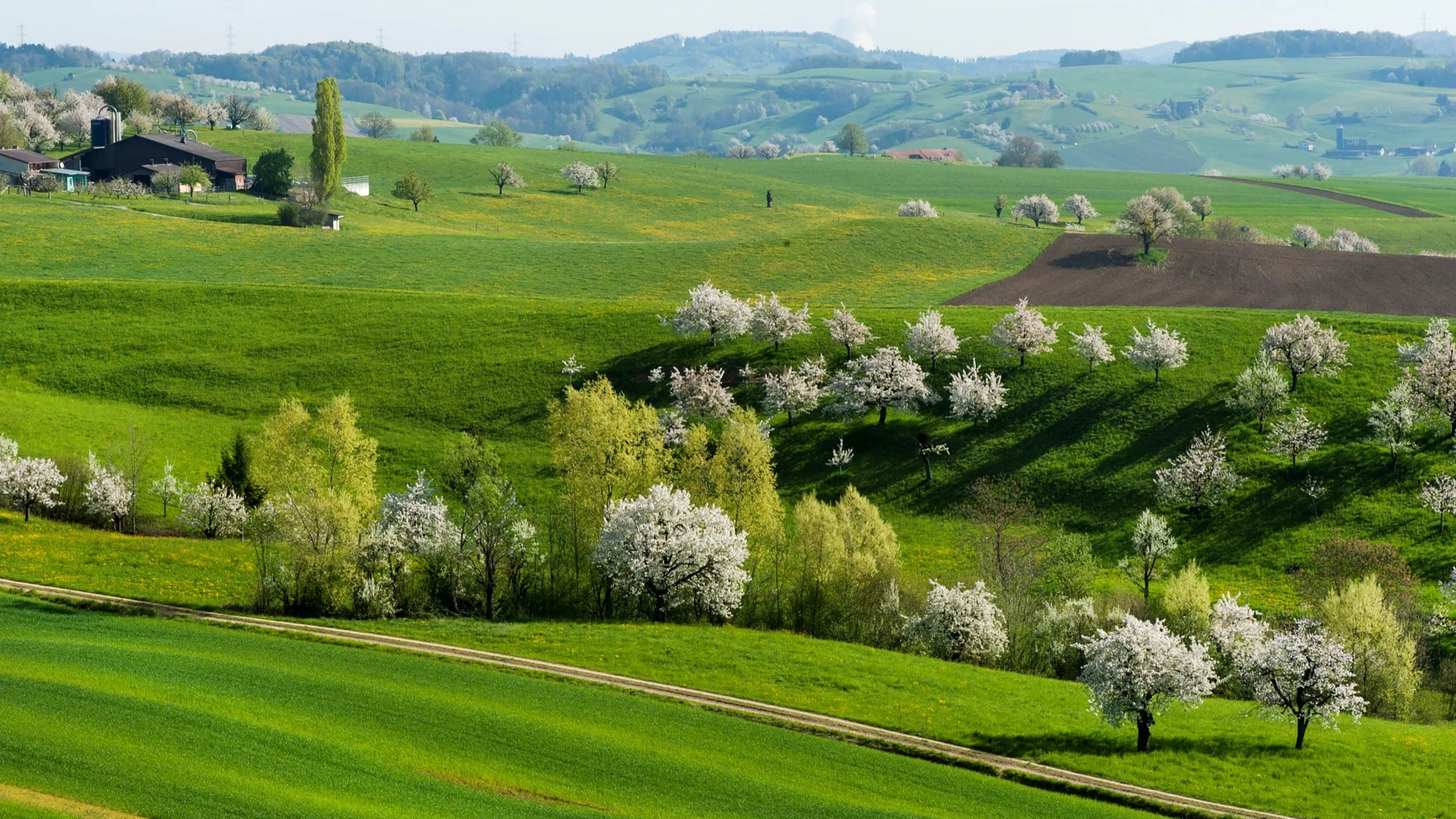
It was found that traditional agroforestry systems – irrespective of type, region or composition – have the potential to make an important contribution to soil, climate and water protection – i.e. to deliver regulatory environmental services.
Social and economic values
Agroforestry systems can also be worthwhile in economic terms. As an example, the production of high-quality wood from wild cherry (Prunus avium) or walnut (Juglans regia) can represent a good long-term investment.
In the assessment of overall economic performance, once account is taken of the previously unmarketable environmental services in addition to the marketable services (fruit and wood), agroforestry landscapes are superior to agricultural landscapes.
Moreover, we humans also perceive agroforestry systems (positively). Using Web-based maps (ppGIS), the population of the Franches-Montagnes district (canton of Jura), among others, was questioned on the environmental services in their surroundings. According to this survey, a varied and diversified landscape offered the most perceived benefits.
Interviews on the topic of "vitiforestry in Switzerland" with Swiss winegrowers, experts and viticultural consultants show that promotion of biodiversity and landscape aesthetics are the principal reasons for planting trees in vineyards, along with economic diversification. However, the study also shows that little is currently known about the economic and ecological advantages and disadvantages of vitiforestry systems.
Further Information

Index
Read more
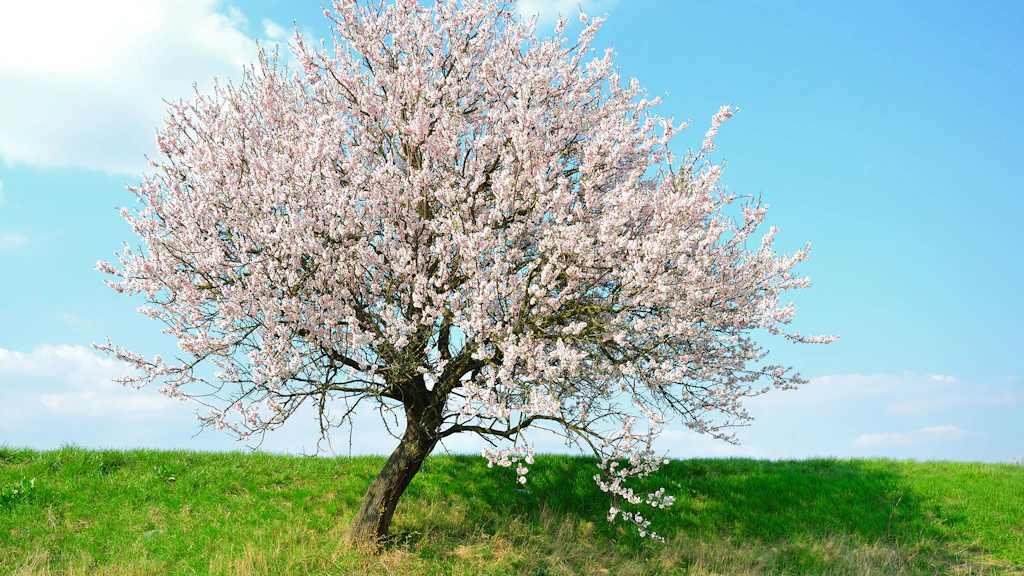
Growing Almonds in Switzerland
A pre-project funded by the Fondation Sur-la-Croix showed that Swiss almonds are perceived as a worthwhile option for the future by both farmers and the customer market; however, Swiss producers find it difficult to choose an appropriate almond variety and a suitable cultivation system.
Leitfaden für das Monitoring von Agroforst-Systemen
Agroforstsysteme sind sehr vielfältig, je nach Standort und Bepflanzung. Deshalb unterscheiden sie sich in ihren Umweltwirkungen. Wie diese systematisch gemessen werden können, zeigt ein neuer Leitfaden von Agroscope auf.
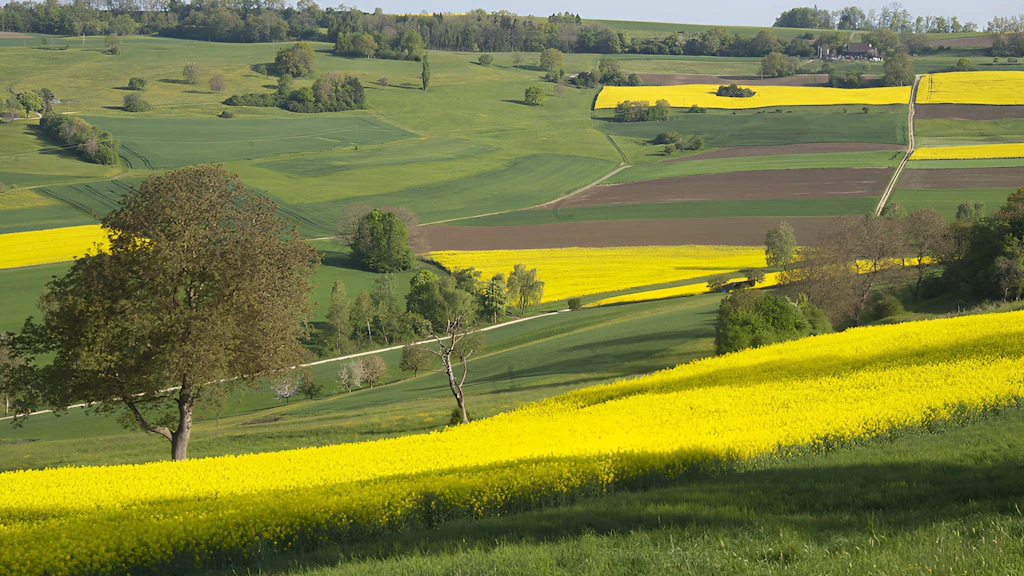
Agricultural Landscape
Using (among others) computer-assisted spatial analyses, Agroscope investigates how land use impacts the landscape.