
Varroa
Varroa destructor is a parasite of the Asian honey bee, Apis cerana. Thanks to international trade, it has found a new host in Apis mellifera, our European honey bee. The varroa mite first arrived in Switzerland in 1984, where - as in all the other countries it has invaded - it kills affected colonies in 1 to 3 years. It is therefore necessary to treat these colonies annually in order to ensure their survival. The vast majority of colonies that are inadequately treated, or not treated at all, are doomed to die.
The Swiss Bee Research Centre has been gathering knowledge on the biology of the varroa mite, with a view to implementing effective control methods. Intensive research has led to the development of new alternative control strategies adapted to central European conditions. These research programmes continue with a view to developing ever-more-effective control methods. To enable beekeepers to apply these methods with success, it is essential that they be taught how to use the applied active substances - a service which we provide in collaboration with the Bee Health Service.
Bienengesundheitsdienst (German, French and Italian)
Propagation
Varroa destructor lives in balance with its original host Apis cerena, which is found in southern Asia and as far west as eastern Russia. In the latter area and towards the end of the 19th century, a change in host occurred: the varroa mite invaded the colonies of Apis mellifera imported to contribute to the subsistence of the inhabitants of this region. Through trade and the subsequent exchange of colonies, the mites have propagated over almost all of the planet. Only Australia and certain regions of central Africa and northern Europe have not yet fallen prey to varroatosis.Behaviour
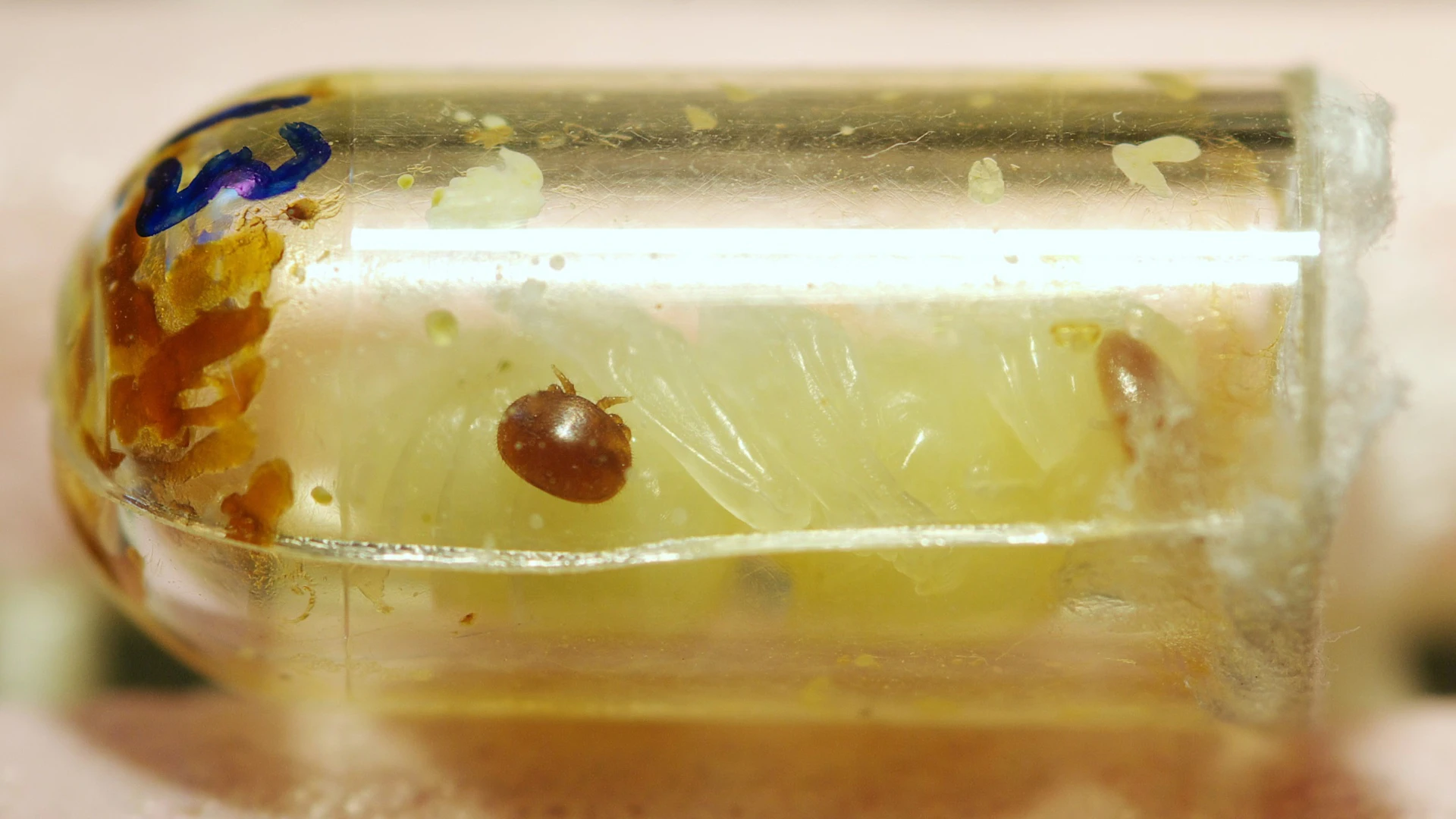
Varroa reproduce exclusively in the sealed brood cells of honey bees. Using transparent cells, Gérard Donzé was able to observe the entire reproductive cycle of the Varroa mite, which he described in two articles dealing with the reproduction and mating of the parasite.Mathias Rickli and Gérard Donzé have filmed the key events in the life of a varroa mite family.
The film, which is in German or French, can be obtained from:
Geschäftsstelle BienenSchweiz, Jakob Signer-Strasse 4, CH-9050 Appenzell, Switzerland.Having no eyes and living in the darkness of the colony and cell, varroa mites must rely on their sense of smell to navigate. This faculty was studied in detail at the Swiss Bee Research Centre to identify attractive substances - specifically, those produced by the brood - as a basis for control methods. The 'nose' of the Varroa mite is found on its legs, and the capabilities of this olfactory organ have been examined down to the cellular level. The possibility of trapping varroa mites during their search for a brood to infest was studied in the beehive.
Movements of the digestive tract of a Varroa destructor nymph
Time lapse recording of the melanisation process triggered by wounding a honey bee pupa with an insect pin. The same immune reaction results from a Varroa destructor bite.
An adult Varroa destructor slithered between the abdominal tergites of a honey bee. The mite drills a hole in the tegument joining the cuticular plates and sucks the underlying hemolymph (blood)
A Varroa destructor nymph looks for the feeding site (indicated by an arrow) on a honey bee pupa. Once she found the hole in the host’s cuticula, she starts feeding. Peristaltic movements of her digestive tract are visible through her cuticula.
Resistance
Because of different defence mechanisms - for example, cleaning activity and the high susceptibility of the worker brood - varroa mites can only reproduce in Apis cerana in the drone brood, and only in limited numbers. Consequently, mite control in the colonies is not necessary with this honey bee species. Occasionally, hives of Apis mellifera also survive infestation with this parasite, even without treatment. We are studying several of these populations in order better to understand their capacity for resistance. The information gleaned from our study could be used to breed honey bees that are resistant to this parasite.
Control of varroa
Annual control of varroa mites is essential in order to prevent the withering away of infested colonies. To avoid problems with residues and resistance associated with the use of acaricides from the group of the pyrethroids (Apistan and Bayvarol) or the phosphoric acid esters (Perizin), the Swiss Bee Research Centre developed a so-called 'alternative' control method in cooperation with European partners. The method is based on the use of organic acids (formic and oxalic acids) and essential oils (thymol).Our studies served as a basis for the development of a treatment concept that was incorporated into the current recommendations of the Bee Health Service.
EU Project FAIR CT97-3686 Final Consolidated Report
Bienengesundheitsdienst - Varroakonzept (German, French and Italian)
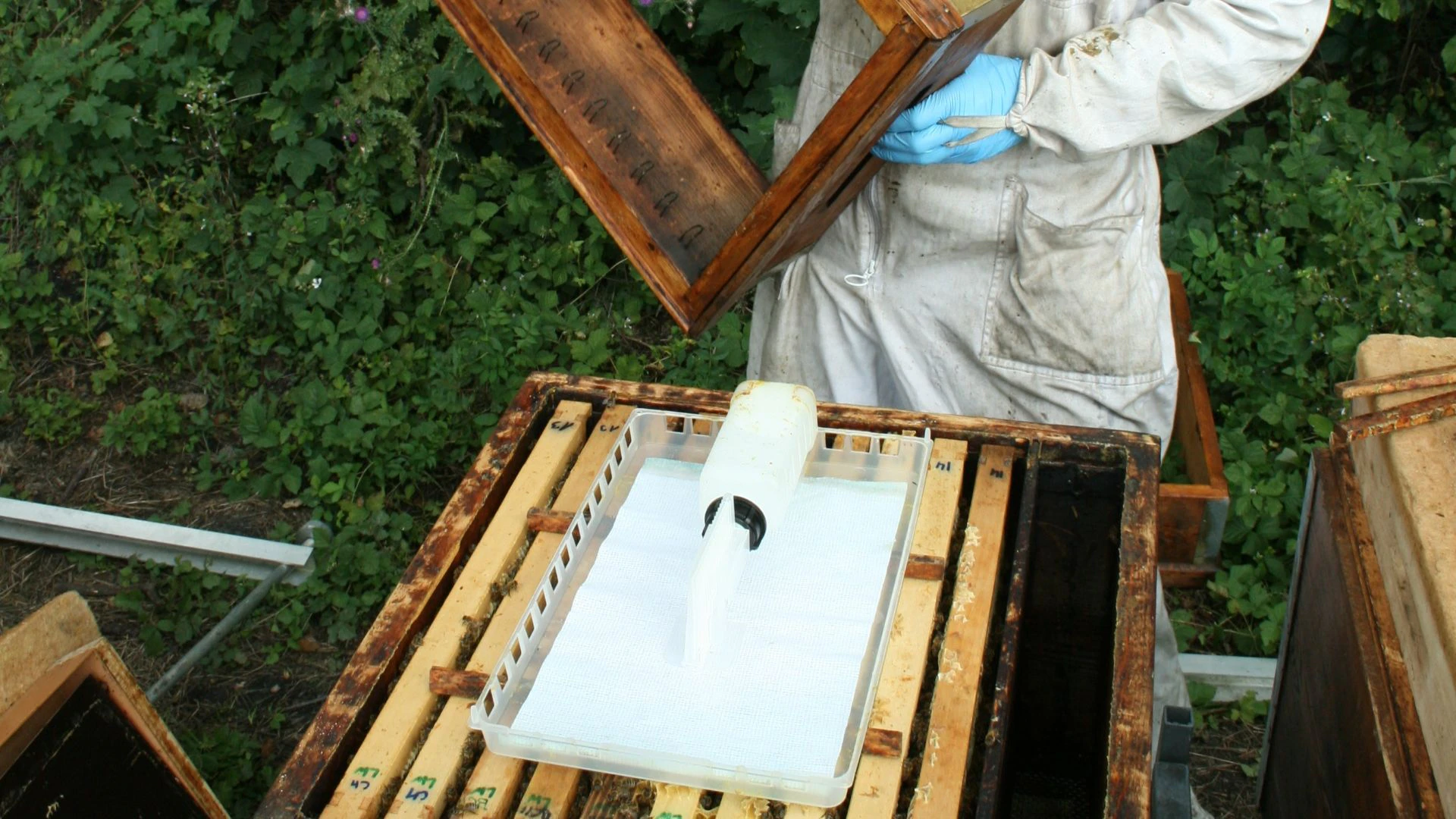
Formic acid can be applied in the form of a flash treatment1 or a long-term treatment2. Depending on the application method used, the air in the hive will have a high concentration of formic acid for several hours, or a lower concentration over several days.
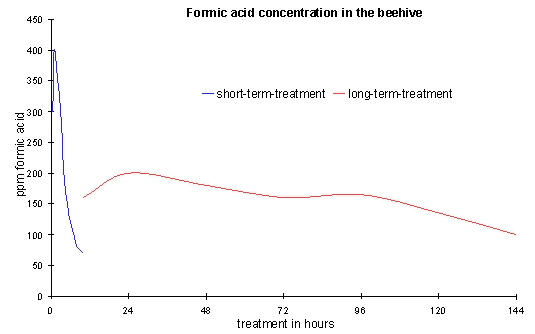
Formic acid not only destroys varroa mites on the adult bees, but also those developing in the sealed brood cells. Despite this, formic acid alone is often not enough to sufficiently reduce the numbers of this parasite. A more comprehensive approach to control must therefore be implemented.
Various effective devices3 for long-term formic acid treatments are currently available on the market. Our research centre has developed the FAM dispenser4. This dispenser is produced under licence and marketed by Andermatt Biovet AG, Strahlermatten 6, 6146 Grossdietwil, Switzerland.
Attention! Since 2013, only formic acid approved by Swissmedic can be used to fill formic acid dispensers.Oxalic acid is a highly effective substance for controlling the varroa mite in hives without brood. With correct utilisation and dosage, the three application techniques utilised to date - viz., spraying, trickling and sublimation - offer an acaricidal effect of over 95% whilst being well tolerated by the bees. Our tests have shown that an oxalic acid treatment the previous autumn does not leave residues in spring honey.
There are various types of evaporators of varying effectiveness. We advise making a choice based on the results of our tests6. Moreover, we have tested a new aerosol-based distribution principle in Swiss hives, with good results.
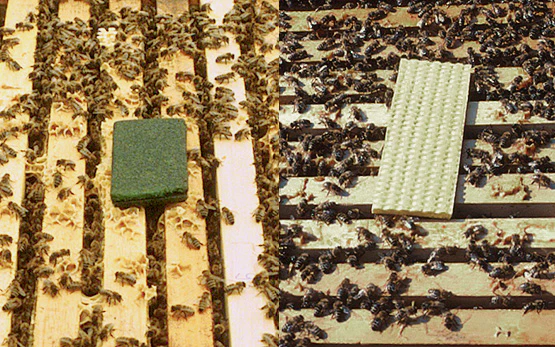
In the 1990s, the Bee Research Centre took part in a screening programme testing the potential effectiveness of over 100 essential oils and essential oil components against the varroa mite. Although sage, hyssop and thyme oils proved interesting, only thymol has been used in acaricide products. Thymol treatments require little effort, and there are a variety of preparations on the market. The advantages and drawbacks of thymol use are listed in the articles "Apilife VAR: A new varroacide with thymol as the main ingredient" and "THYMOVAR for Varroa control".
Although the use of thymol leads to residues in the wax and honey, these are negligible from a toxicological viewpoint. Since about 2008 the use of thymol-based products has been declining in Switzerland, and beekeepers making use of these products have tended to experience greater winter losses than those using e.g. formic acid.
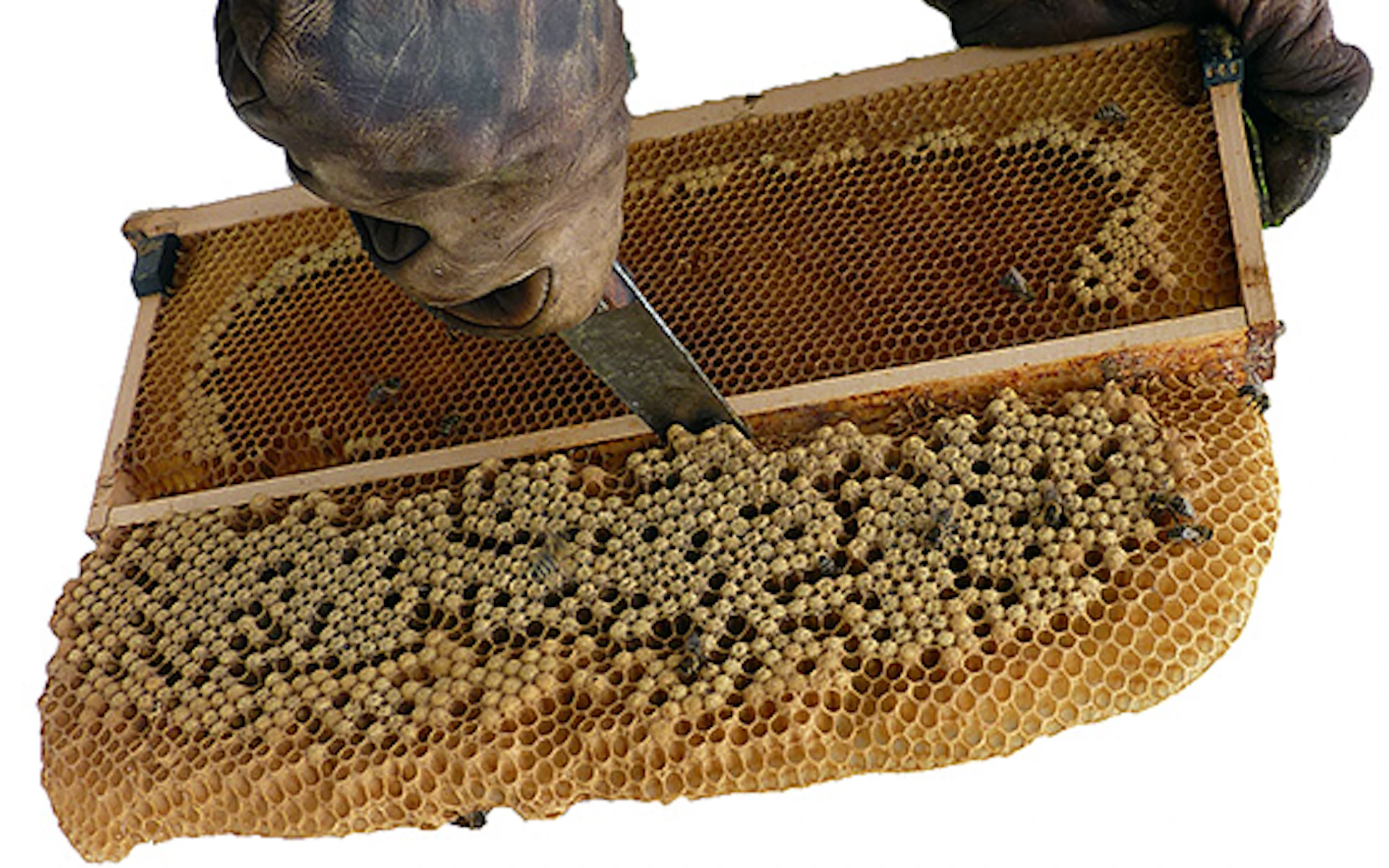
Biotechnical methods, which do not require the use of chemical agents, can also help reduce the varroa mite populations in hives before the harvest. These methods are an integral part of the recommended alternative control concept. We distinguish between the cutting out of the drone brood, which is particularly attractive to the parasite, and the formation of splits, which interrupts parasite reproduction owing to the temporary suspension of egg-laying by the queen.
Bienengesundheitsdienst - Varroakonzept (German, French and Italian)
If a fairly large bee population were left untreated, natural selection could ultimately lead to varroa-resistant hives. However, letting nature take its course in order to obtain resistant colonies would extract a high price, since the majority of the bee colonies, which are vulnerable to the parasite, would disappear. We therefore draw on examples of naturally resistant populations in Africa, Asia and Europe in order to understand the mechanisms necessary for survival in the event of a varroa mite infestation. The identification of these mechanisms could allow for their deliberate selection in our local bees.
Swarming in honey bees (Apis mellifera) and Varroa destructor population development in Sweden
I. Fries, H. Hansen, A. Imdorf, P. Rosenkranz (2003)
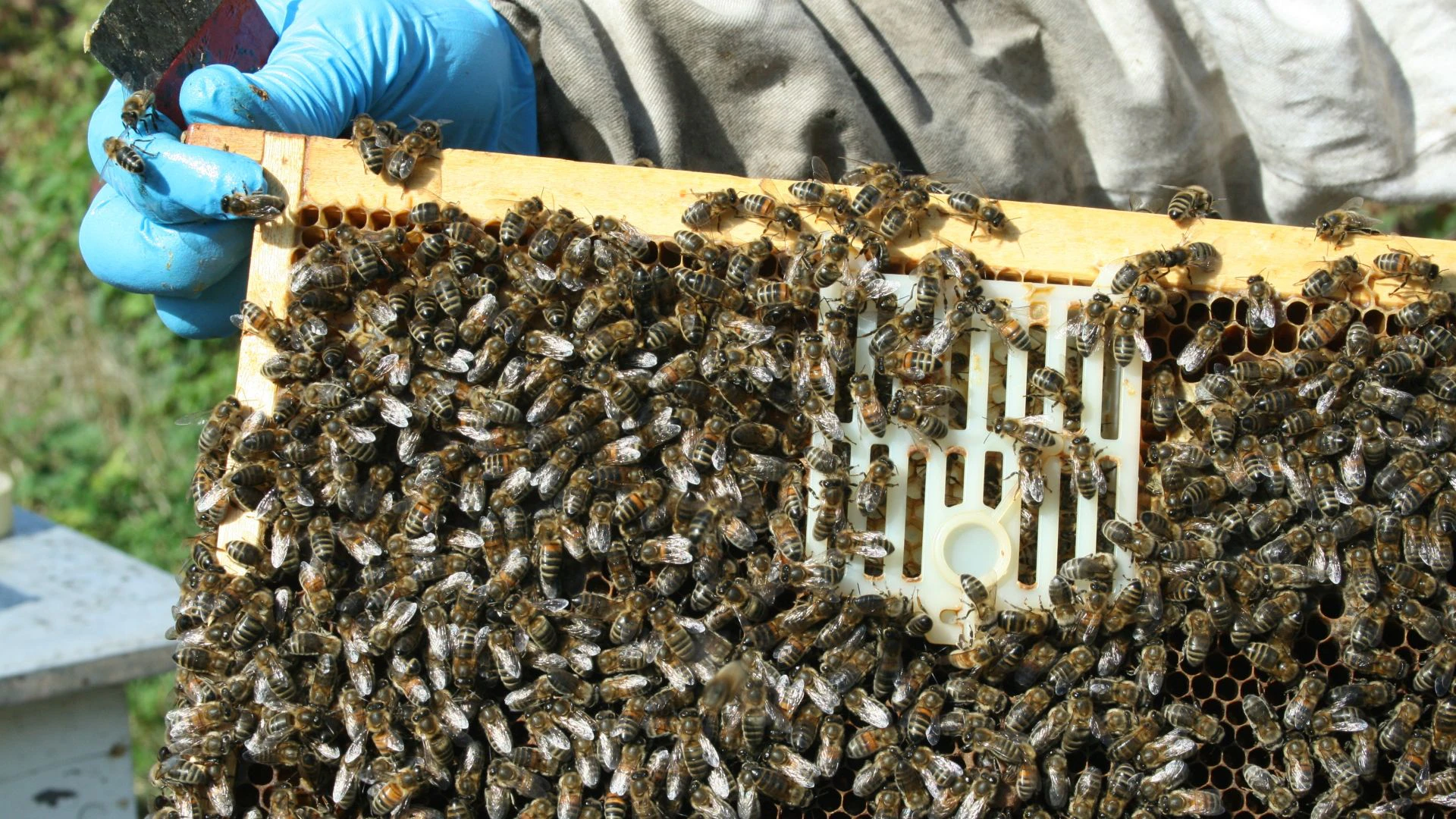
Our research strategy for varroa mite control solutions is based on short-, medium- and long-term approaches. Short-term solutions aim to improve already existing control methods. As an alternative to the formic acid treatment, for example, the use of oxalic acid combined with the caging of the queen is being tested. The search for new organic acaricide products is a medium-term approach that aims to supplement the arsenal of available control techniques.Whereas these methods are meant more or less as stop-gaps, the long-term aim is to make our honey bees resistant. Resistant colonies would eliminate the need for treatments, which would in turn eliminate the risk of residues in hive products and of resistance to treatments on the part of parasite.
Several of our research projects are carried out in cooperation with the Institute for Bee Health of the University of Bern, as well as the Bee Health Service. The projects developed with the Institute for Bee Health lie at the interface between basic and applied research. One project, for example, deals with resistance mechanisms to the varroa mite. Cooperation with the Bee Health Service focuses on projects that are more practice-oriented, such as the comparison of the efficacy of different formic acid dispensers, or the testing of new varroacides recently introduced on the market.