
The STYCS Trials – Another Soil, Another Fertilisation Approach
Besides fertilisation, the nutrient supply of arable crops depends strongly on soil and climate conditions. The STYCS trials are designed to investigate the influence of site characteristics on the soil nutrient content necessary for optimal yields on seven sites in Switzerland. The findings contribute to the improvement of fertilisation recommendations.
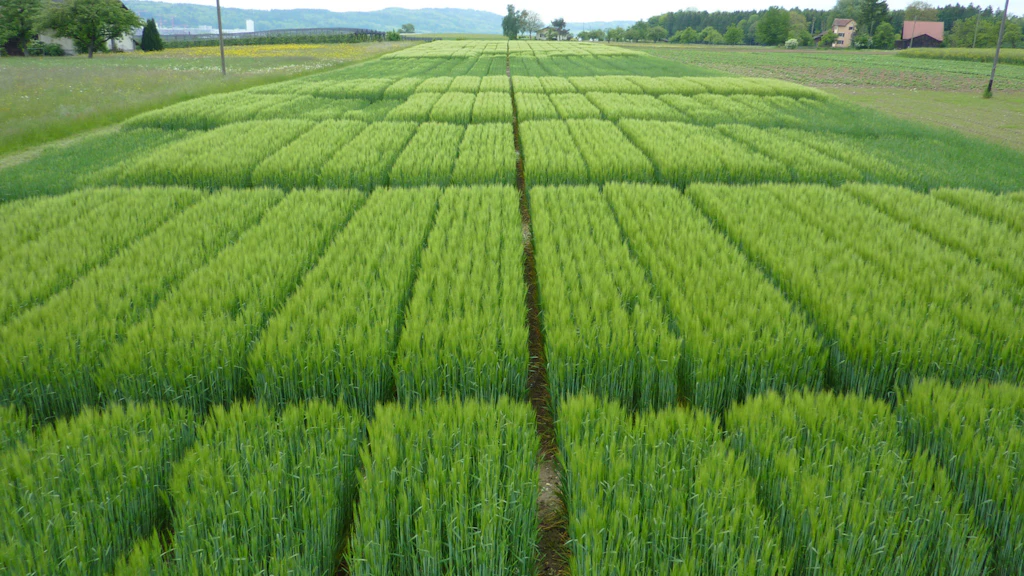
Imbalanced fertilisation can lead to an undersupply of plants with essential nutrients as well as to the pollution of water bodies with leached nutrients. The nutrient supply necessary for sustainable production is highly dependent on climate and soil properties. The STYCS (‘Soil Testing and Yield Calibration for Switzerland’) trials were set up in order to test yield responses of different crops to soil nutrient content depending on site conditions. They enable us to check the suitability of soil extraction methods and to develop appropriate interpretation schemes for soil nutrient content. These serve as a basis for fertilisation recommendations and environmental monitoring.
Trial Design
From 1989 to 1992, fertilisation trials for phosphorus, potassium, magnesium and lime were set up on six field sites in Zurich-Reckenholz (ZH), Rümlang-Altwi (ZH), Oensingen (SO), Ellighausen (TG), Cadenazzo (TI) and Grabs (SG) (the Grabs trial concluded in 2012). The soils are subtypes of Cambisol, Gleysol or Fluvisol. On all sites, phosphorus and potassium are both applied at six levels from 0 to 167% and magnesium at four levels from 0 to 150% of the theoretical crop nutrient off-take. The effect of liming is also tested at three sites (Oensingen, Ellighausen, Cadenazzo) in six treatments (0-4 t ha-1 CaO). The crop rotation consists of silage maize – sugar beet – winter wheat – rapeseed. In addition, the effects of combined phosphorus and potassium fertilisation on yield and botanic composition had been studied on a grassland site in Vaz Muldain until 2021. The treatments on all sites are spatially replicated four times.
Measurements
The topsoil (0-0.2 m) is sampled bi-annually after harvest of the main crop, the subsoil (0.2-0.3 m and 0.3-0.5 m) every four years. Available nutrients in the soil are determined by means of extraction with CO2-saturated water (phosphorus, potassium), CaCl2 (magnesium) and AAE10 (phosphorus, potassium, magnesium). Crop yields, nutrient content of the main and by-products and crop-specific quality parameters are recorded, which are in turn used to calculate nutrient removals and budgets.
Crop yields in the phosphorus series differ only slightly between treatments, which is indicative of large phosphorus reserves in the soils. After 30 years of zero-fertilisation, phosphorus-sensitive crops in particular (potatoes, barley) show yield losses. Critical soil phosphorus concentrations for optimum yields vary considerably between different crops, but site-specific pedoclimatic conditions have a significant influence on how strongly yields respond to soil phosphorus.
Further information
Index
Read more

Publications Long-Term Trials
You’ll find publications on this topic here.
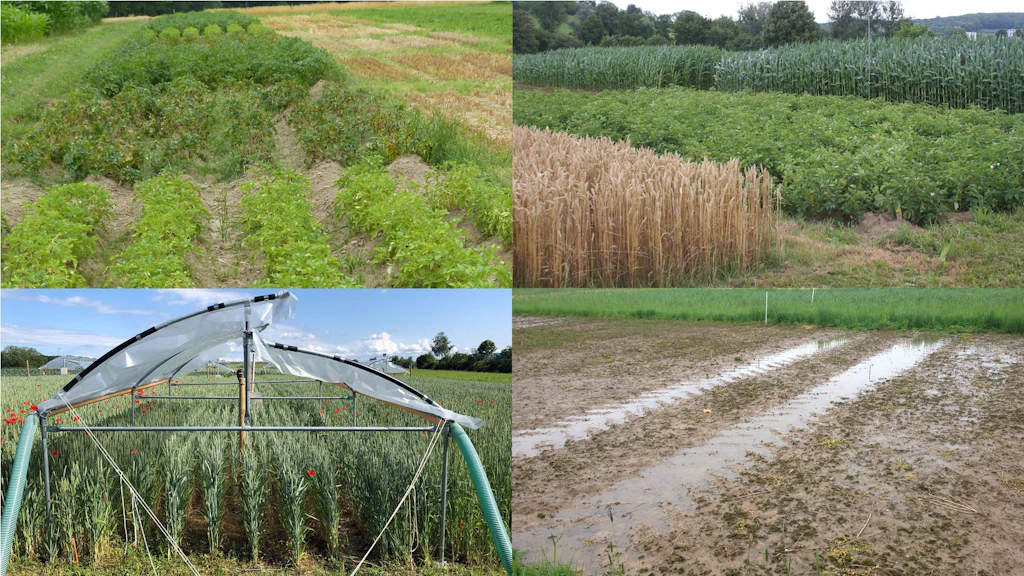
Long-Term Trials – What We Can Read Between the Lines
Agroscope maintains and supervises several long-term trials in Switzerland to enable the investigation of longer-term changes in soil quality and in the soil functions that depend on these.

Principles of fertilisation of agricultural crops in Switzerland
Fertiliser application in plant production is of vital importance for agricultural practitioners and advisers. With the new ‘Principles of Agricultural Crop Fertilisation in Switzerland’ (GRUD/PRIF 2017), Agroscope has for the first time combined fertilisation recommendations for all crops grown in Switzerland in a single interpretative document.