
Plant Breeding
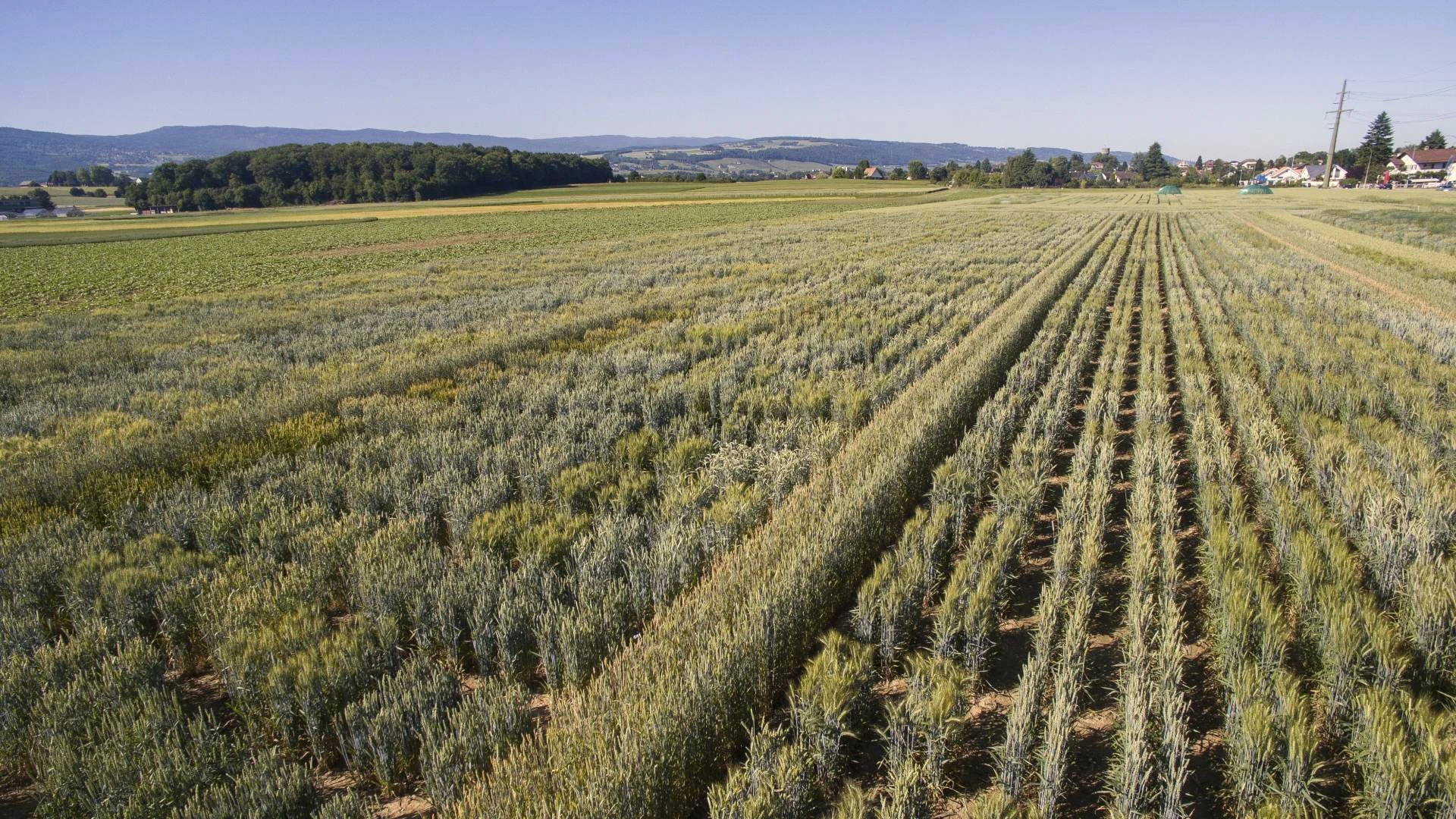
High-performing, site-adapted varieties are the basis for a successful, sustainable plant production. Agroscope breeds new varieties of wheat, soya, forage plants and fruit, with a view to their commercial success, environmentally sound cultivation, and their use in the production of high-quality, safe products. Ecotypes, in-house breeding material, and domestic and foreign cultivars and varieties are the bases for these breeding programmes. These genetic resources are preserved for future generations.
Combining many different traits in a single variety is time-consuming. To further boost the success and efficiency of its work, Agroscope researches the latest molecular methods jointly with the ETH and the University of Zurich. The best methods are incorporated in the breeding process.
On behalf of the federal government, Agroscope also researches the benefits and risks of genetically modified plants and of the latest breeding technologies. In this way, know-how is developed in Switzerland and the current moratorium on the commercial cultivation of genetically modified plants is used in order to make the information obtained available to policy-makers, the agricultural sector and society.
Head
Deputy
Research Groups
Index
Field-Crop Breeding and Genetic Resources
High-performing, resistant varieties adapted to local conditions are the basis here for sustainable and resource-conserving production. In collaboration with its partner DSP AG, the ‘Field-Crop Breeding and Genetic Resources’ Research Group develops competitive breeding programmes for wheat and soybean. It also maintains the national gene bank for cereal species and numerous other species.
Fruit Breeding
New, innovative fruit varieties combine the highest quality aspirations of producers, the downstream stages and consumers with high productivity and robustness. Fruit breeding at Agroscope pursues these ambitions and organises breeding accordingly together with its partner organisation Varicom. In this context, Agroscope carries out and develops programmes for the breeding of apples, apricots, and now pears.
Fodder-Plant Breeding
High-performing varieties of grasses and clover form the basis for the efficient production of roughage, and hence also for a sustainable meat and dairy sector. For the development and provision of varieties adapted to Swiss conditions, the ‘Fodder-Plant Breeding’ Group runs a breeding programme encompassing several types of grasses and legumes.
Breeding Research
The ‘Breeding Research’ Research Group develops new, innovative methods for breeding resistant, high-quality varieties for a sustainable and locally adapted agricultural sector.
Crop Genome Dynamics
The ‘Crop Genome Dynamics’ Research Group investigates how plants can adapt rapidly to climate change at a genetic and epigenetic level. These basic findings support the development of new breeding methods and approaches, which then should help make our crops more ‘climate-ready’ faster. For this, the Research Group uses genomic and epigenomic bioinformatics tools.