
Agroecology and Environment
The agricultural use of natural resources and ecosystem services adversely affects the environment. Agroscope records and models these influences, and describes the need for action to minimise them. Agricultural environmental indicators, inventories and monitoring activities are developed to this end.
Flows of nutrients and harmful substances, greenhouse gases, biodiversity and soil contamination situations are analysed to derive measures for the protection of waters, the closing of materials cycles, and the protection and site-appropriate use of species and habitat diversity as well as soil functions. Examining the interaction between soil biodiversity and beneficial plants will enable cultivation systems to be more resource-efficient.
The Research Division contributes to the federal government’s climate strategy by assuming responsibility for climate reporting and developing measures that will allow the agricultural sector to reduce its contribution to climate change, whilst adapting to it.
The risks of new agricultural technologies are evaluated to protect ecosystem services. LCAs and sustainability assessments allow us to weigh up options for the future focus of agriculture.
Head
Deputy
Research Groups
Index
Climate and Agriculture
The ‘Climate and Agriculture’ Research Group explores options for reducing agricultural greenhouse-gas emissions from soils and fertilisers and through carbon sinks. The Group investigates the opportunities and risks posed by climate change for plant production and evaluates options for adaptation. It is also responsible for the Swiss Agricultural Greenhouse Gas Inventory.
Water Protection and Substance Flows
The ‘Water Protection and Substance Flows’ Research Group conducts research into nutrient management, nutrient flows and nutrient dynamics in agricultural ecosystems and the environment, and links topical knowledge with advice for practitioners and policy-makers. The associated 'Earthwatch’ team develops spatial, non-destructive methods in the context of remote sensing to support these and other future Agroscope tasks.
Soil Quality and Soil Use
The ‘Soil Quality and Land Use' Research Group is dedicated to understanding the impact of agricultural management on soil quality. A main focus is on soil structure and its role in the soil system and soil functions. Other key topics are the development of soil quality indicators and long-term soil monitoring.
Agricultural Landscapes and Biodiversity
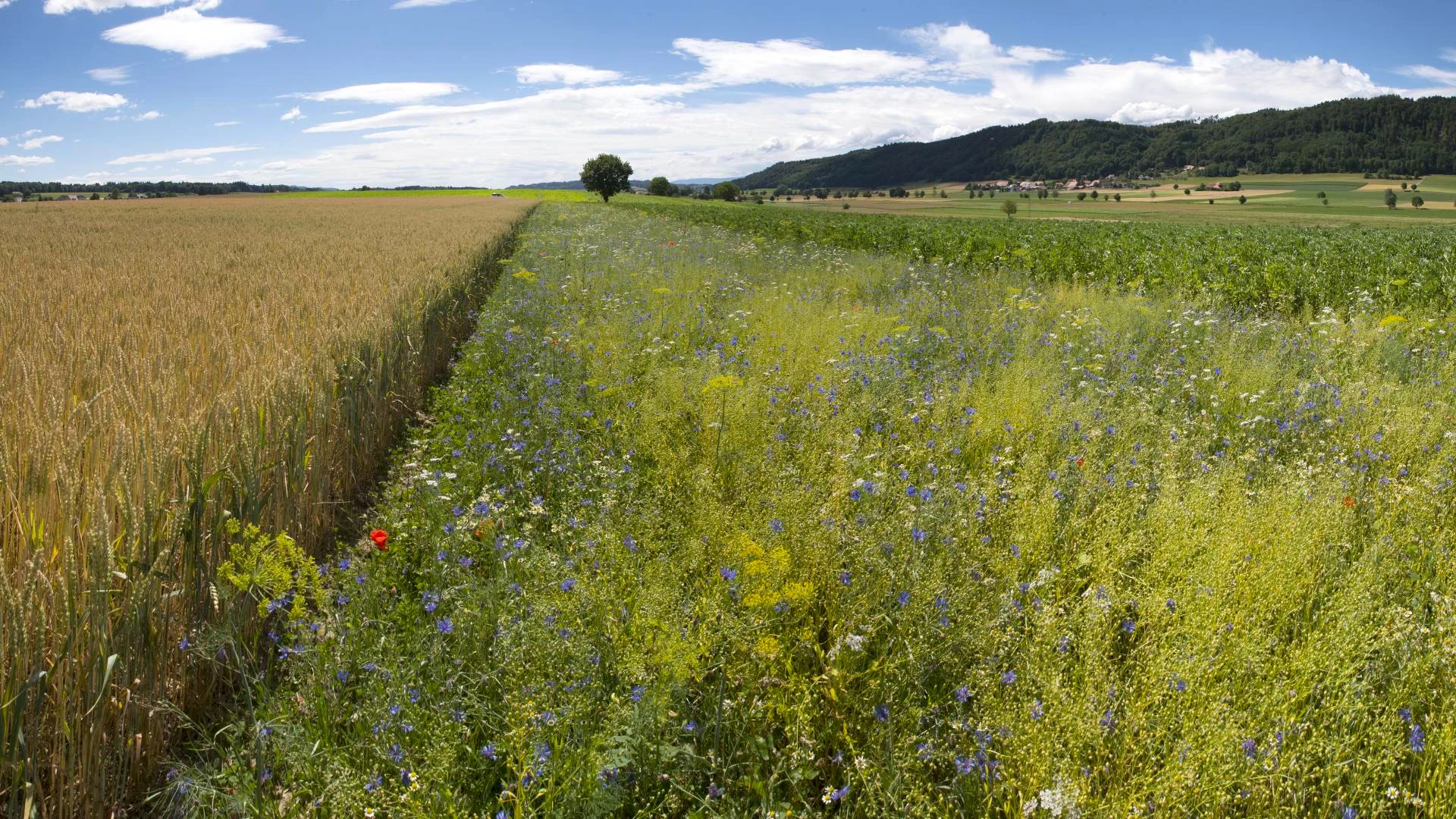
The ‘Agricultural Landscape and Biodiversity’ Research Group examines ways of reconciling the protection of biodiversity with a productive agricultural sector.
Biosafety
The ‘Biosafety’ Research Group investigates the environmental impacts of agricultural technologies on biodiversity and arthropods. The topics addressed encompass genetically modified plants, macroorganisms for plant protection, invasive species, pesticides and (micro)plastics. In addition to experimental research in the laboratory, greenhouse and field, concept studies are developed to assess the opportunities and risks posed by various technologies.
Integrative Agroecology
The 'Integrative Agroecology' Research Group coordinates and pools the know-how of various groups in order to calculate a range of agri-environmental indicators and forms the heart of the new Swiss agri-environmental monitoring programme (MAUS). The group has great expertise in collecting, plausibility-checking and managing agricultural data. In addition, the group coordinates major EU partnership programmes for the whole of Agroscope.