
Sorghum (Sorghum bicolor (L.) Moench)

Originating in Africa, Sorghum bicolor (L.) Moench (also called ‘durra’, ‘jowari’ or ‘milo’) is still a relatively unknown crop in Switzerland. Because of changing climatic conditions, however, the distinctive characteristics of this plant could make it part of the solution to impending challenges. Like maize, sorghum is a C4 plant and adapted to dry conditions. Boasting a high biomass potential, it is suitable both as animal feed and as food for humans. Since its grains contain no gluten, they can be eaten without restriction by people with coeliac condition.
In specific situations, sorghum can certainly be a viable alternative to maize. For one thing, it is more drought-tolerant than maize; for another, it is never, or only rarely, infested by the European corn borer (Ostrinia nubilalis), as well as being completely immune to the predations of the Western corn rootworm (Diabrotica virgifera). It is also less often eaten by rooks after sowing, or damaged by boars, since the seeds are smaller and the plant forms panicles rather than ears.
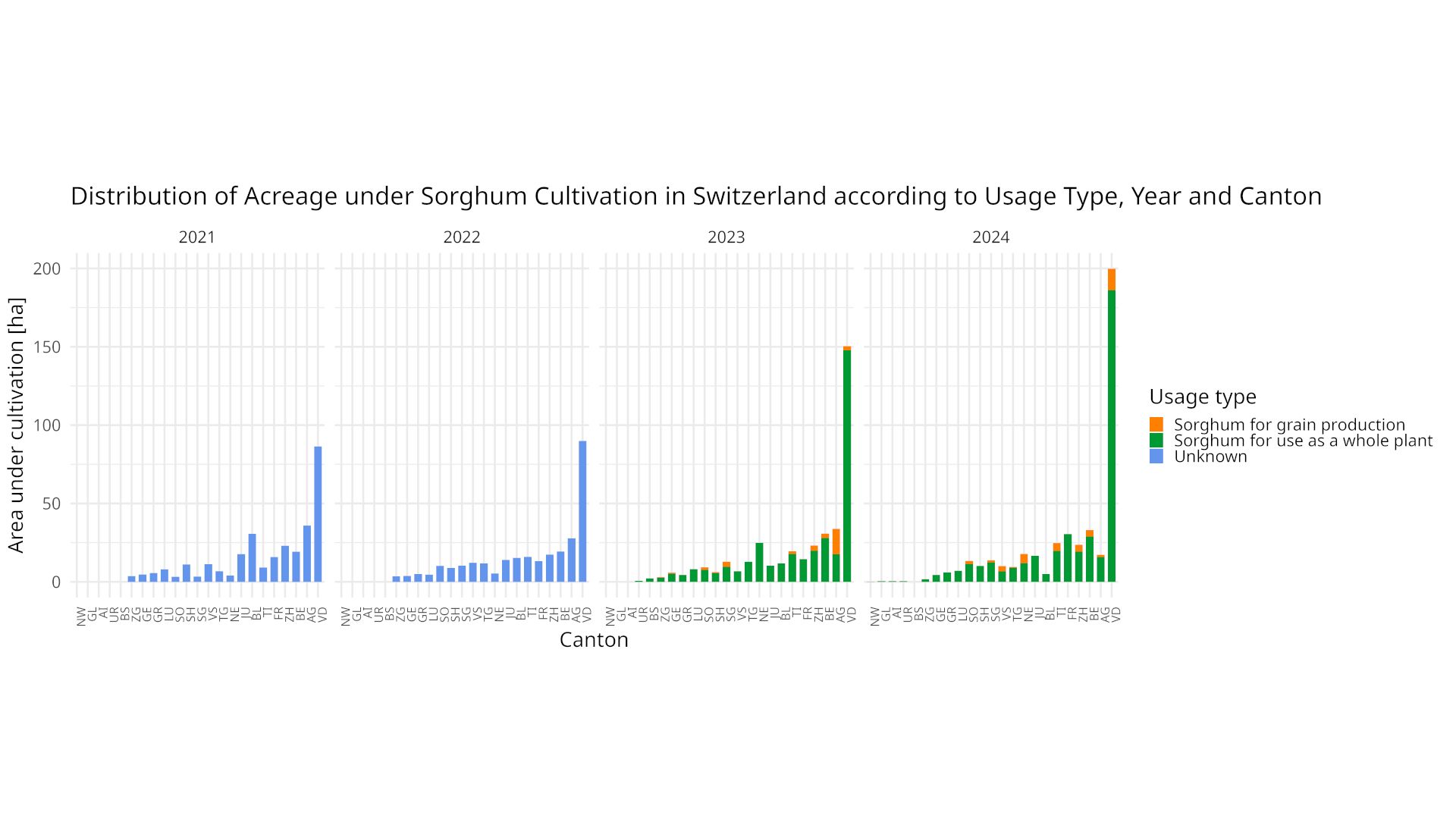
Area under sorghum cultivation in Switzerland
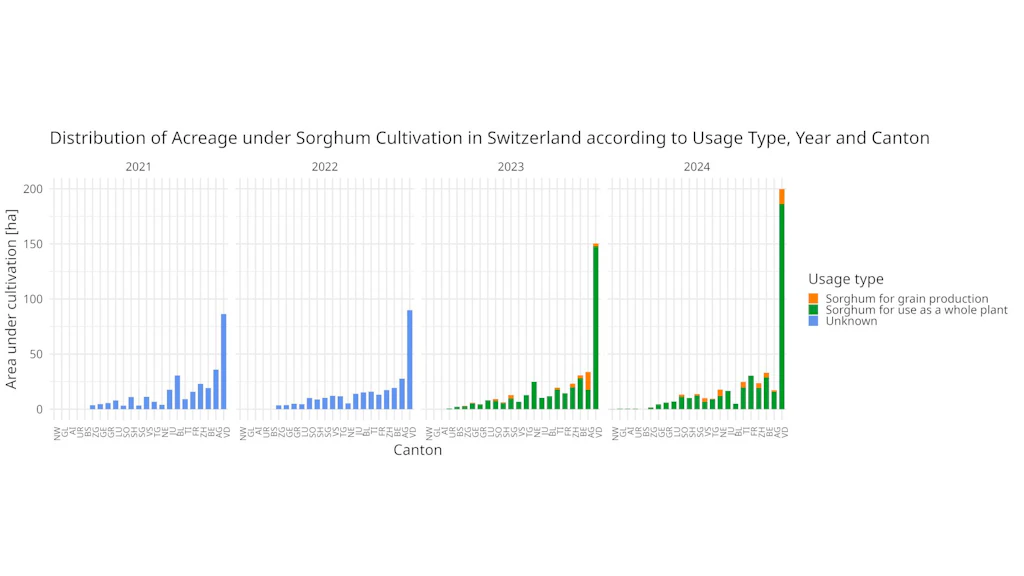
In recent years, interest in sorghum as a feedstuff has depended primarily on summer weather conditions and on feed stocks. In many cases farmers did not grow sorghum for several years, but fluctuation in producers was comparatively high. The acreage devoted to this crop in Switzerland has been relatively small (446 ha in 2024). Sorghum is predominantly used as a whole plant as animal feed (around 90.6% of the acreage used for feed in 2024), whilst the use of the grains, particularly for human nutrition, has only played a minor role to date.
Sugar sorghum (2022 to present)
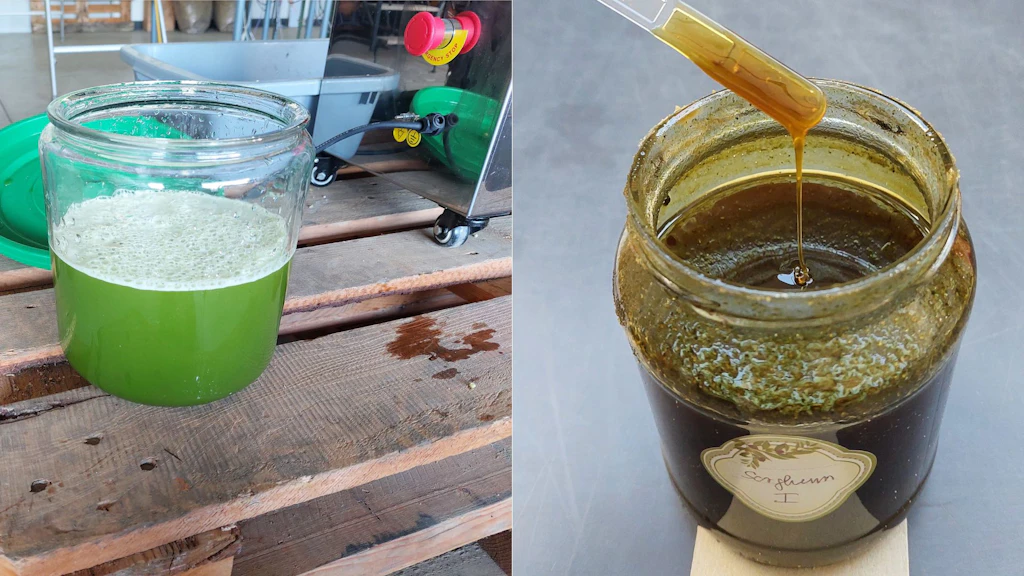
Used to produce molasses, sugar sorghum can also be distilled into alcohol. In a preliminary experiment, different varieties of sugar sorghum were pressed and either processed into raw juice or into concentrated juice for sorghum spirits. The distillates produced from the concentrated juice exhibited organoleptic similarities to rum.
Spannende Zukunftspflanze - Kleinbrennerei
Eine Alternative zu Rum - Kleinbrennerei
Forage sorghum cultivation technique tested in a field trial (2022-2024)
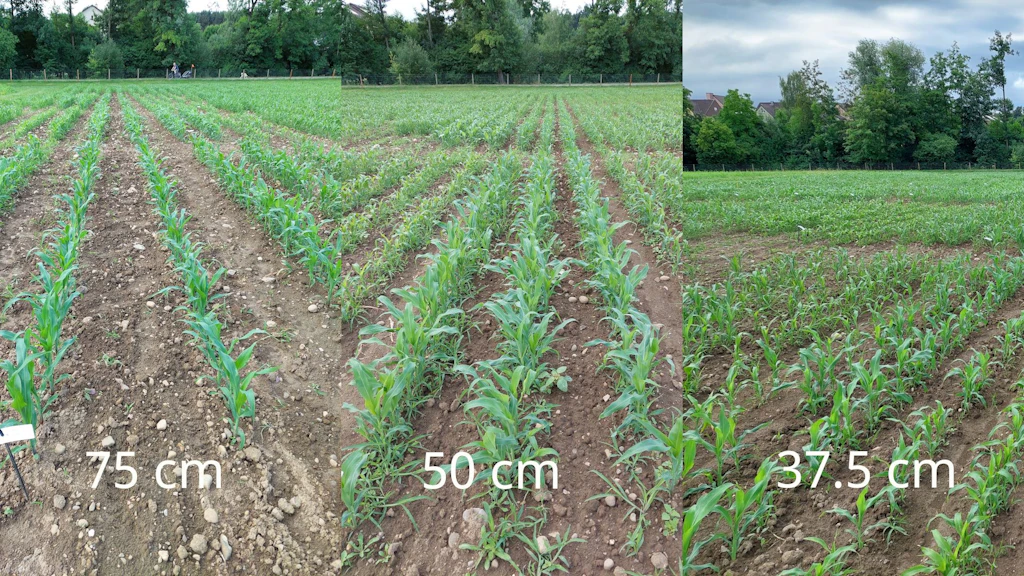
In this project, trials were conducted with four sorghum varieties, one maize variety and a sorghum-maize mixture. These were cultivated at three row spacings (37.5, 50 and 75 cm, see images) and two different sowing densities. In addition to agronomically relevant parameters such as lodging during the growing season, (whole-plant) yield and DM content at the time of harvest were recorded and feed quality then examined.
Single-cut sorghum variety trial (2018-2021)

Variety trials were conducted from 2018 to 2021 in order to flesh out the sparse information available on feed-sorghum cultivation in Switzerland. Fully randomised block trials were set up in Zurich Affoltern to evaluate commercially available sorghum varieties in terms of their agronomic characteristics and fodder quality and compare them with maize varieties. A sorghum-maize mixture was also included in the trials.
Multi-cut sorghum variety trial (2019, 2020, 2023)
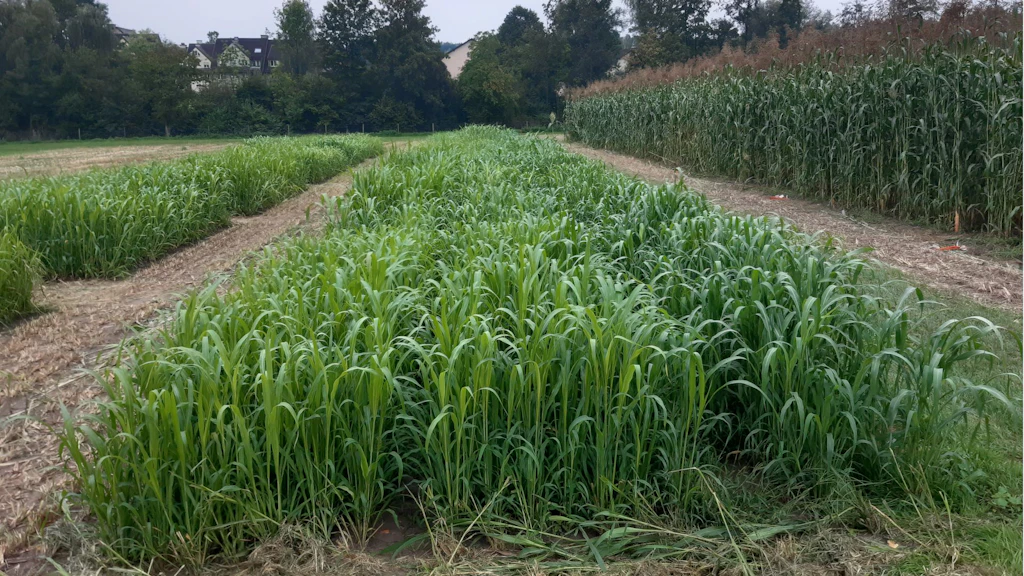
Sorghum can also be cultivated in multi-cut treatments. Here, slightly different characteristics are sought after than with single-cut use. Rapid resprouting after the cut, stable yields over several cuts, good digestibility and low prussic acid content are key criteria here. A range of varieties were studied at the Posieux, Zurich and Changins sites as part of multi-cut trials (with up to three cuts) in terms of their agronomic characteristics and fodder quality.
Suitability of grain sorghum for pasta production (2024-2028)
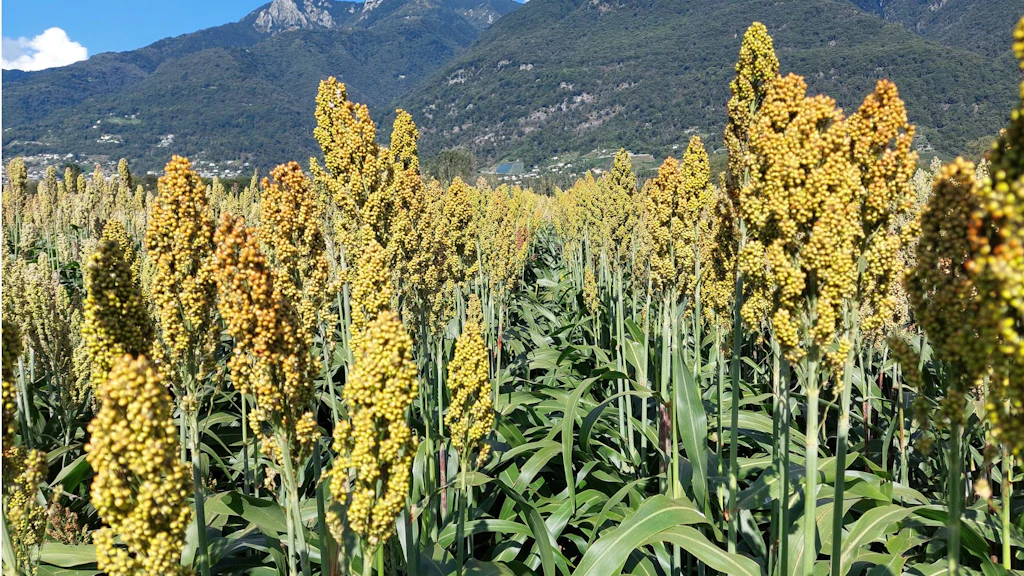
The RiSorgo Project (“From pitchfork to plate: variety testing and pasta production of grain sorghum in Ticino”) was launched with first preliminary trials in 2024. From 2025 to 2028, selected grain sorghum varieties will be cultivated in the field and agronomically characterised, and their suitability for pasta production will be assessed according to various quality parameters. Pasta will also be made from several varieties and organoleptic tests will be used to determine consumer acceptance. Lastly, the production costs will be analysed. The project has largely been made possible through the financial support of the FOAG (Article 140 of the Federal Law on Agriculture) and supported as part of a consortium consisting of Agroscope, Agridea, the Canton of Ticino, the international syndicate Sorghum ID, the Sustainable Food researcher Monia Caramma, as well as farmers from Ticino and the pasta industry of Ticino.
Grain sorghum variety trials (2009-2011)
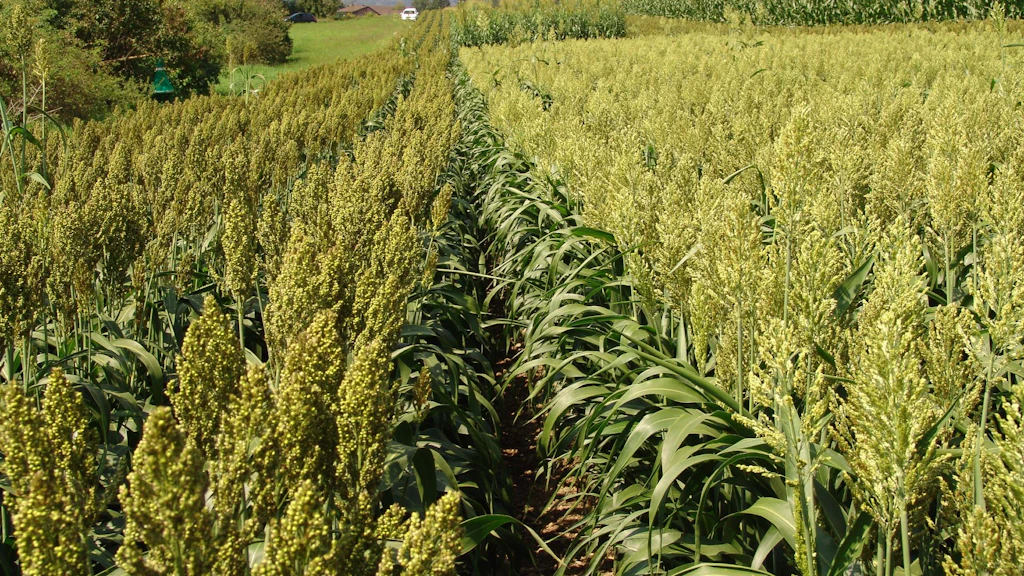
Between 2009 and 2011, trials with different varieties of grain sorghum were conducted in various regions of Switzerland to supplement what little information was available on grain-sorghum cultivation in the country.
In small-plot trials and with good environmental conditions, the earliest-maturing varieties achieved yields of up to 110 dt ha-1 with a water content of 16% at the time of harvest. Because of sorghum’s greater need for warmth compared to maize, hollows and cold-air sites as well as too-early sowings are to be avoided. This ensures relatively rapid juvenile development and full fertilisation. A feeding trial with piglets showed that domestically produced sorghum is qualitatively comparable to imported produce and meets the requirements for livestock feed. Initial infection trials with Fusarium led to low infestation and low deoxynivalenol levels. As shown by this successful cultivation of Sorghum bicolor on good maize sites in Switzerland, changing climatic conditions mean that there is an urgent need to provide the Swiss agricultural sector with more-detailed information on other varieties of millet and sorghum.