
Smart Farming
Agroscope’s aim is to increase the competitiveness of Swiss agriculture through the inclusion of smart-farming technologies by offering decision-making aids for practitioners, with the focus remaining on people in all cases.
News
Topics
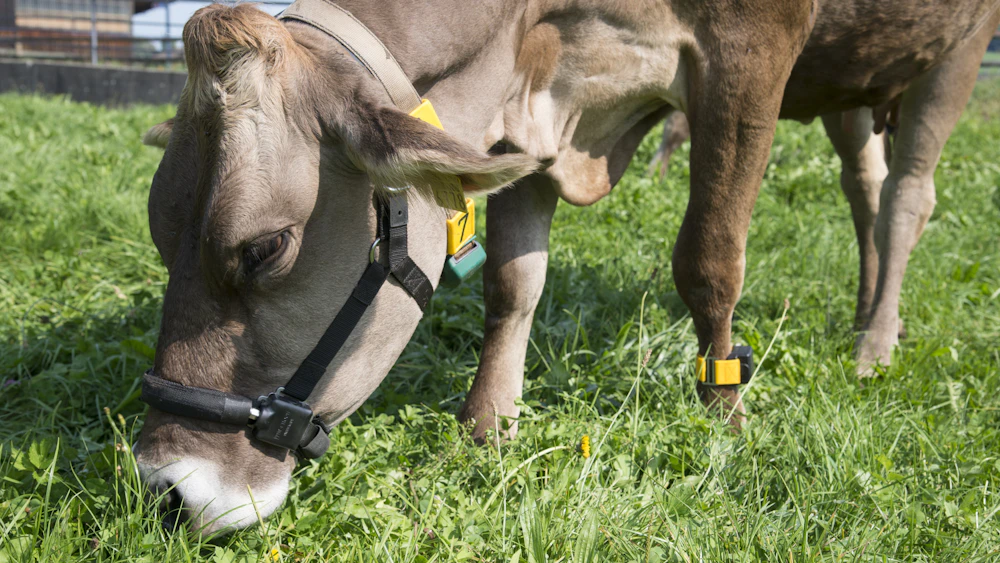
Commercially Available Digital Systems in Livestock Husbandry
Livestock husbandry boasts an ever-increasing range of commercially available digital systems. These consist primarily of a hardware component (sensor) for data acquisition and a software component for data analysis and backup.

Swiss Future Farm
A project of the canton of Thurgau in partnership AGCO and GVS Agrar AG, the Swiss Future Farm on Agroscope’s Tänikon site is to be a demonstration farm for Smart Farming technologies – the only one of its kind in Europe.

Smart Weed Control
Controlling broad-leaved dock (Rumex obtusifolius) on organic farms is a laborious, time-consuming manual process, whilst on conventional farms it requires the use of plant-protection products. Artificial intelligence, sensor- and drone technology and robotics should in future enable us to eliminate rumex.
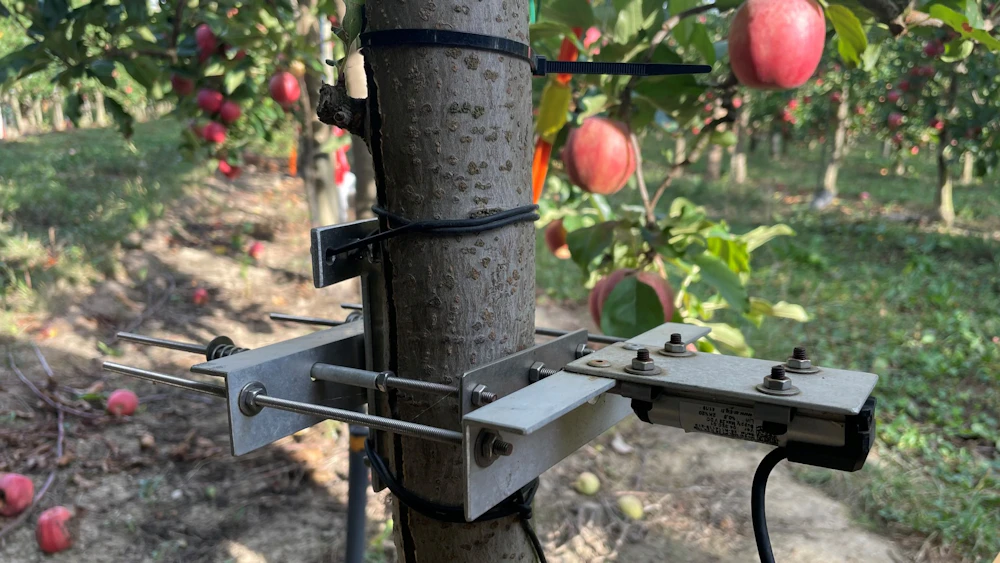
Self-irrigating apple trees
Climate change has made the sparing use of water increasingly important. We are therefore studying the possibility of reducing water consumption in orchards through prudent management. To this end, we use the natural reactions of trees to manage irrigation.
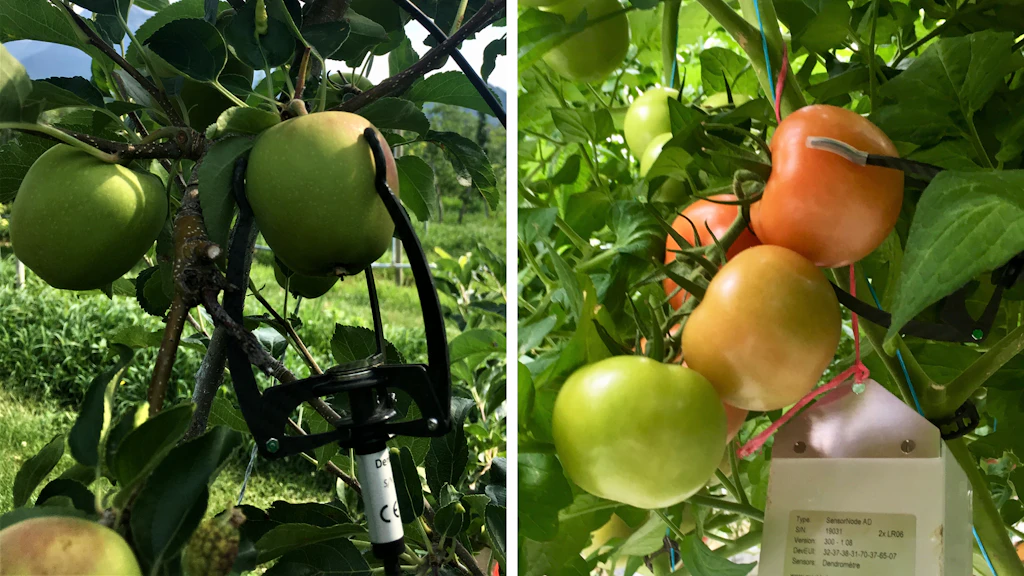
Smart Dendro - Monitoring fruit growth online with smart farming
Internet connected sensors measure fruit growth in real time. These data will be used to optimise the management of orchards and greenhouses.
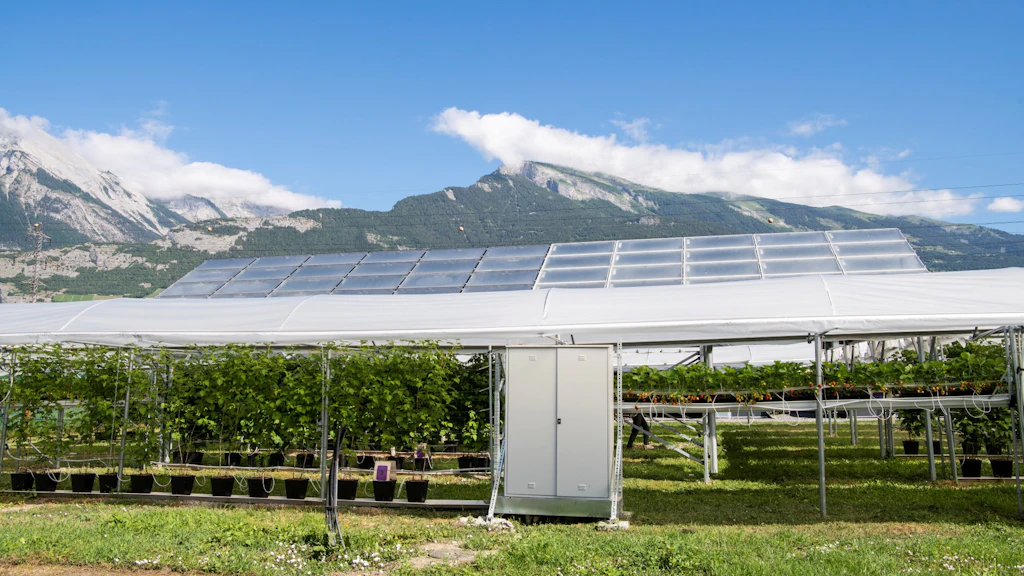
Insolagrin: Experimental Agrivoltaic Plant
Is it possible to feed the population and supply the grid at the same time? The innovative Insolagrin solar installation at Agroscope Conthey provides an answer to this question. The installation is equipped with a new technology which is being launched as part of a large-scale pilot project. The aim of the four-year programme is to analyse and optimise electricity generation in addition to agricultural yields. The results could highlight opportunities for wider use of solar installations with no increase in land requirement.

Vertical farming
Vertical Farming allows vegetables and herbs to be grown in vertically arranged layers with up-to-200-times- greater yields and an up-to-250-times-lower water consumption than for field-grown crops.

