
Sesame (Sesamum indicum L.)
Sesame (Sesamum indicum L.) is among the oldest known oilseed plants, domesticated around 4000 years ago. Although its precise origin is unclear, it is thought to have stemmed from the African or Asian continent. Sesame is valued worldwide for its high-quality oil, and the seeds are a common ingredient in various traditional cuisines.
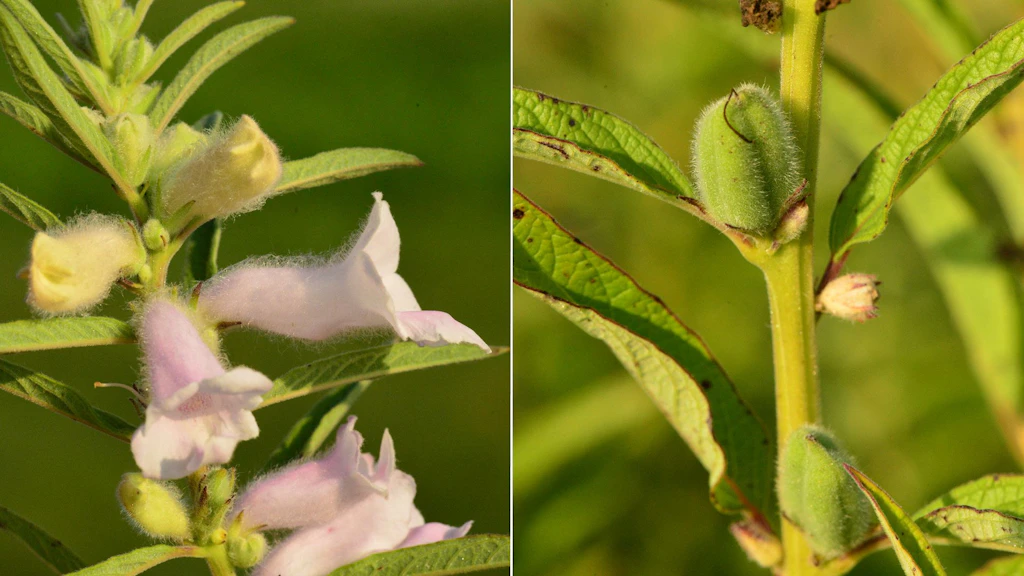
Sesame is not grown to a large extent in Switzerland. However, between 1000 and 1400 t of sesame seed are imported annually and often used in bakery products. As a heat-loving crop, sesame could become increasingly relevant even in Switzerland as climate change progresses.
Trials
Various aspects of sesame cultivation were tested under Swiss conditions between 2022 and 2025 in a series of trials funded by Bio Suisse. This has provided valuable experience of growing different varieties in the Zurich region using different cultivation methods and harvesting techniques. Since low temperatures are a limiting factor for sesame field emergence, some varieties were grown on ridges or under fleece. This was also done in an attempt to shorten the growing time required for the trialed varieties to ripen.
In 2025, around 0.4 t/ha were harvested across all varieties and methods. However, yields were lower in other years and in some cases the trials had even to be abandoned. By comparison, the global average yield is around 0.5 t/ha.
Harvesting poses a major hurdle on top of the challenge of obtaining optimal soil and weather conditions for consistent, rapid field emergence. The seed pods should be dry at the harvest day, but not open. Autumn rain and even fog are not conducive to ripening, and if they remain too long in the field, the pods live up to their name: ‘Open, sesame!’ – bursting open and scattering the seeds on the ground. If this happens, a substantial amount of the harvest is lost. The fluctuating yields observed during the project to some extent reflect the challenges of growing sesame under Swiss conditions, although the inexperience of the project participants may also have played a part.
Challenges
The biggest limiting factors are cold and wet conditions during field emergence and crop establishment, as well as poor ability to compete with weeds during early growth. Varieties adapted to Swiss conditions combined with appropriate harvesting methods are considered key factors for successful sesame cultivation in Switzerland.