
Plant-Soil Interactions
Soil organisms play a key role in agroecosystems. A healthy soil system is crucial for efficient and sustainable agriculture. We investigate the interactions between plants and soil organisms to broaden our knowledge of the role they play in the provision of ecosystem services.
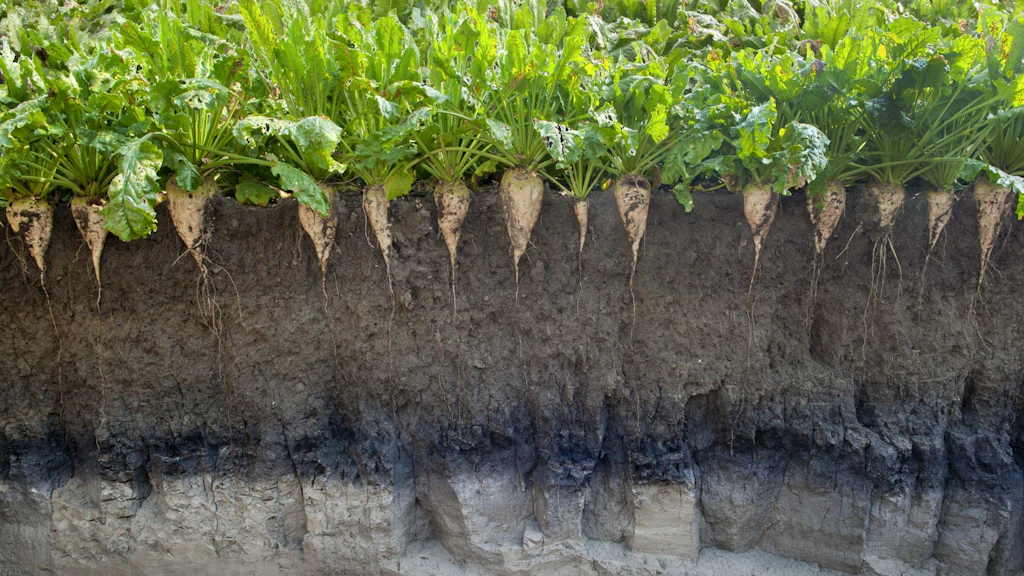
The soil forms an important basis for agricultural production. Soil organisms play a key role in the sustainable use of natural resources and in the improvement of production systems. There are still gaps in our knowledge of their impact on important soil ecosystem services such as nutrient and carbon cycling, soil structure and water-retention capacity. Moreover, there is still great uncertainty as to how best to use soil life to develop agroecosystems more sustainably. If in future we were faced with a shortage of resources, the importance of these microorganisms would increase considerably, since among other things they help crops efficiently absorb nutrients and water from the soil. Our Research Group therefore investigates the following main issues:
- How are beneficial soil organisms and soil ecosystem services affected by different cropping systems and practices (organic vs. non-organic farming, ploughing vs. conservation tillage, use of green manures)?
- What is the influence of a wide variety of soil organisms (soil biodiversity, microbiomes) on important soil ecosystem services such as yield, nutrient uptake and loss, and resistance to abiotic and biotic stress?
- Can the sustainability of agroecosystems be promoted through the targeted strengthening of soil ecosystems (e.g. inoculation with mycorrhizal fungi) and the improvement of soil ecosystem functions?
Our research results show people from agriculture, extension and policy-making how soil life can be promoted and what benefits are associated with greater soil biodiversity.
Mycorrhizal fungi, for example, can help plants absorb nutrients, thereby contributing to a more sustainable use of natural resources. Our long-term trial, in which we compare the main Swiss cultivation systems (organic, PEP, no-till, conservation tillage) shows different stakeholders (people from agriculture, extension, society and policy-making) how specific cultivation methods impact soil diversity, soil fertility, soil carbon content, nutrient efficiency, life-cycle assessments, yields and farmers‘ income (system approach).
A further long-term trial (Ehrendingen compost experiment) investigates how compost application and biogas digestate affect yields, soil biodiversity and soil carbon.