
New Leafhopper Potentially Problematic for Grapevine Detected in Switzerland
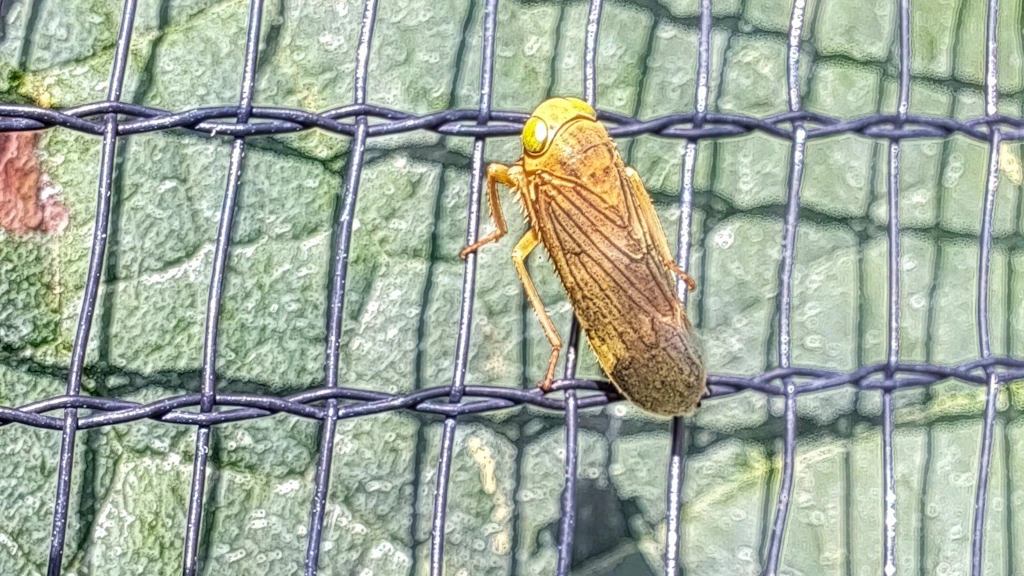
Native to North and Central America, the leafhopper Jikradia olitoria is a potential vector of flavescence dorée (grapevine yellows). Recently reported in several European countries, the presence of this pest has now been confirmed in Ticino.
Ulteriori informazioni
A study conducted by Agroscope and the Federal Research Institute for Forest, Snow and Landscape WSL at the Neobiota Competence Center shows that Jikradia olitoria is now established in Ticino. In its native region, this leafhopper is a vector of phytoplasmas responsible for certain grapevine yellows (North American Grapevine Yellows, NAGY).
Published in the Journal of Applied Entomology, the findings of the Swiss study describe the spread of the insect and assess its current potential as a vector of flavescence dorée.
Presence confirmed in Ticino
Trapping campaigns conducted in 2023 and 2024 on seven sites in the Canton of Ticino confirmed the presence of the insect both in the vineyards and in the fringes of the adjoining forests.
Nevertheless, the abundance of the species varies strongly from site to site. Thus, the Giornico site in northern Ticino accounted for a full 83.8% of all captures in 2023 and 78.5% in 2024. Located close to the motorway and to an HGV traffic control centre, it could be the initial point of introduction of the insect, probably through freight transport.
Moreover, a hatching experiment conducted at Cadenazzo using grapevine wood sampled at Giornico has confirmed that the grapevine – particularly the trunk wood – can be used by the insect for egg-laying. The grapevine can thus support the complete life cycle of Jikradia olitoria.
Continuation of monitoring
This discovery is important, since the establishment of a new potential vector could constitute an additional risk for viticulture. The arrival of J. olitoria in Switzerland recalls the arrival of Scaphoideus titanus, also native to North America, and the main vector of flavescence dorée in Europe.
To date, molecular analyses performed on the trapped leafhoppers have not revealed any infection by phytoplasmas associated with flavescence dorée.
Nevertheless, the researchers stress the importance of continued strict monitoring to allow for rapid detection of any new vector liable to jeopardise Swiss and European viticulture.
Flavescence dorée
Flavescence dorée is a severe and incurable disease of grapevine that causes the death of the affected vines. Belonging to the ‹grapevine yellows› category, it is associated with phytoplasmas (wall-less bacteria).
Any symptomatic grapevine must be reported to the competent plant-health authorities, as the disease is associated with a quarantine organism in Switzerland and Europe.
The main vector of flavescence dorée is the leafhopper Scaphoideus titanus, which is subject to mandatory control measures in infested areas.
The disease appeared in Ticino in 2004, in the Canton of Vaud in 2015, in the Canton of Valais in 2020 and in the Canton of Geneva in 2021.
Further information
Index
Kompetenzzentrum Neobiota
Das Kompetenzzentrum Neobiota in Cadenazzo (TI) entwickelt Bekämpfungsmethoden, um die Ausbreitung neuer Krankheitserreger, Schädlinge und invasiver Pflanzen zu verhindern und einzudämmen. Der Druck dieser unerwünschten gebietsfremden Organismen nimmt zu und stellt eine potenzielle Bedrohung für die Schweizer Landwirtschaft dar.