
Millet (Panicum miliaceum L.)
Millet (Panicum miliaceum L.) was cultivated in Switzerland back in the times of the Pile Dwellers, and was also a valuable food in the Middle Ages. In more recent times, this crop has been supplanted by wheat and other high-yielding cereals. Present-day millet varieties are potentially high-yielding, however, as well as boasting a high energy and protein content. Moreover, as a C4 plant it is ideally suited to dry sites, and because of its short growing season it is also a worthwhile crop-rotation element. Undemanding in terms of nutrients and not susceptible to any major diseases or pests, millet is therefore nowadays an obvious candidate for organic cultivation. In addition, there is a brisk demand for organically produced food-grade millet.
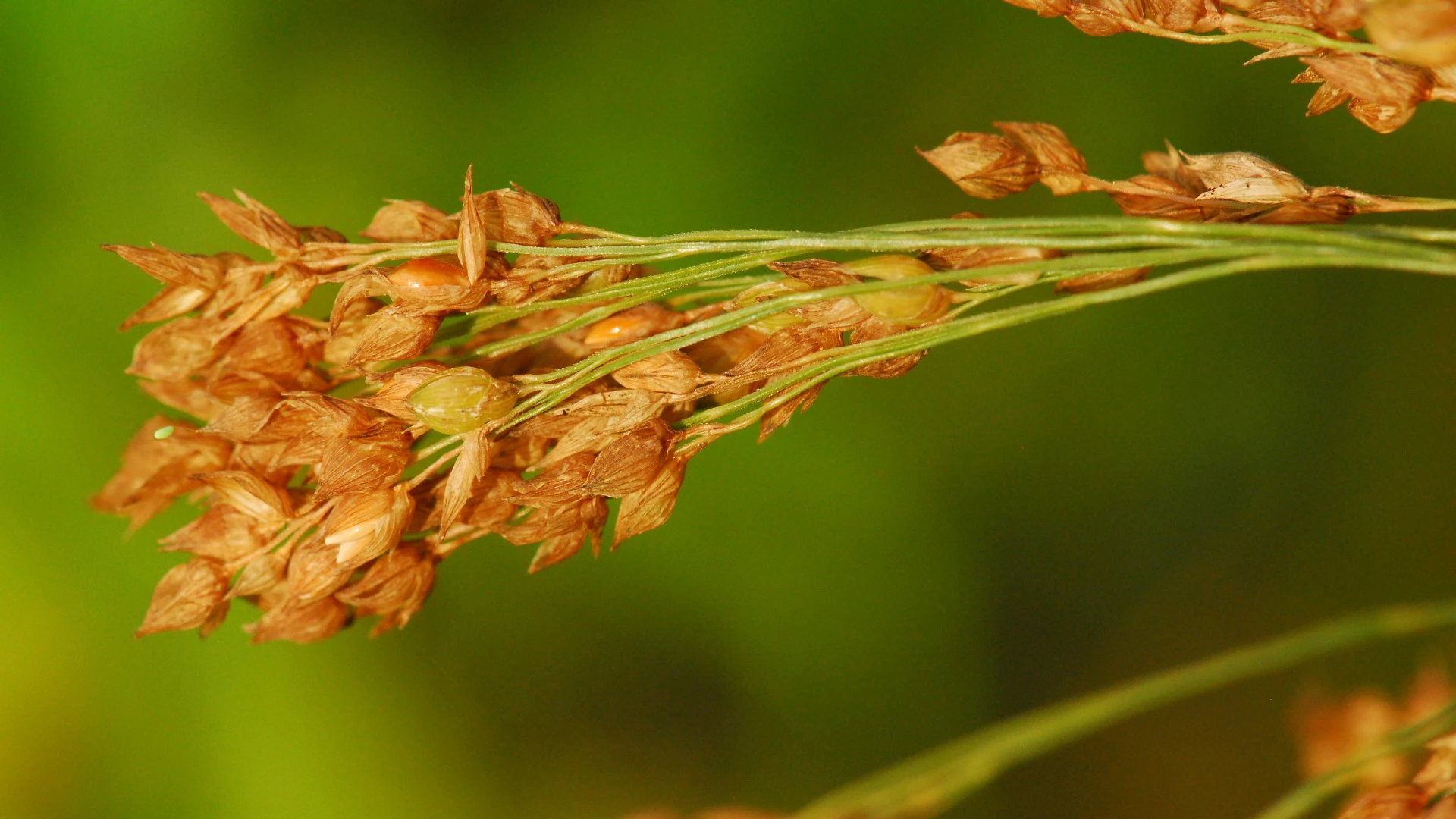
In recent years the area under millet cultivation has grown steadily, reaching 378 ha in 2023. After this, however, the area varied from year to year, depending on harvest size and sales.
Although there were two varieties of seed produced and made available for cultivation when millet production was first resumed in Switzerland, at present only seed from the Russian variety 'Quartett' is commercially available.
Small-plot and strip trials
In a first experimental cycle (up to 2012), the available varieties were analysed in cultivation and exact trials as to their suitability for organic cultivation. In addition, the impact of mechanical weed control via harrowing and hoeing, as well as the response to different amounts of nitrogen were investigated.
Because of increasing demand, the breeding of new varieties in recent years, and the ‘discovery’ of new millet-breeding programmes, a second variety testing cycle was carried out from 2018-2020. This involved the testing of new Russian and American varieties on small plots under Swiss growing conditions and the collecting of information on agronomic properties, potential yield, and quality.
One of the new varieties could substantially simplify the refining process (husking), since it consists for the most part of free-threshing grains. Another variety has a comparatively low amylose content, and could therefore be promising for the development of new, millet-based products.