
Lysimeters – Exploring Soils from Below
Studying infiltration and leaching processes in soil is an intricate matter. The two lysimeter facilities in Zurich-Reckenholz contain 12 and 72 vessels in which soil bodies can be studied from every angle. They shed light on the percentage of precipitation that re-evaporates, and the amount of water, nutrients and pollutants that enter the groundwater.
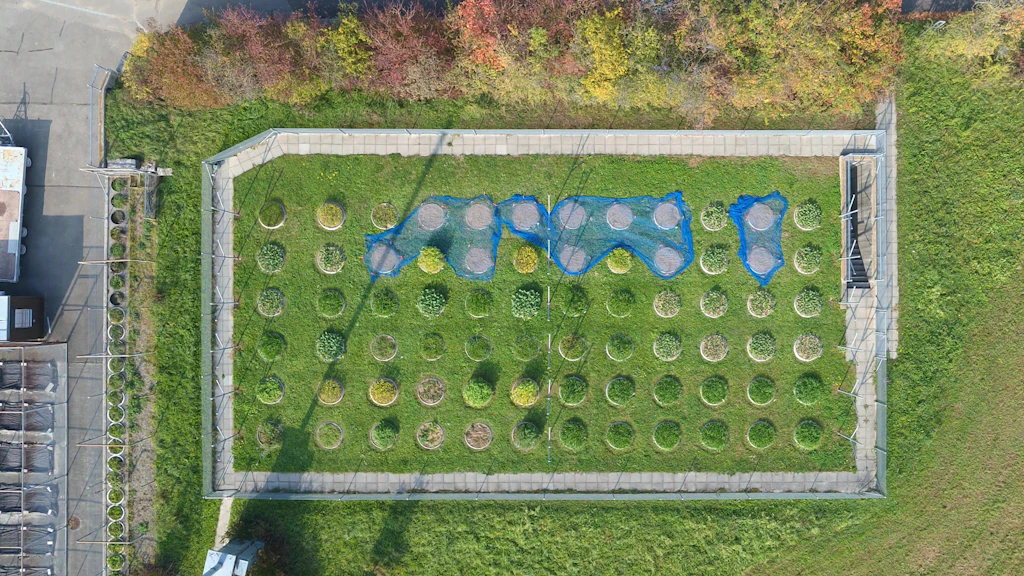
For research questions of nutrient efficiency and losses, it is particularly important to study processes of substance turnover and transport in undisturbed soils. With the aid of lysimeters, we are able to take a close look at these very processes. The lysimeter facilities in Zurich-Reckenholz, with their 12 and 72 lysimeters, respectively, serve primarily as a means of studying infiltration-water transport and nitrate leaching in various farming systems, tillage practices, fertilisation treatments and soil types.
Trial Design
The 12-lysimeter facility was constructed in 1979/1980. Six of the vessels with a depth of 2.5 m and a surface area of 3 m2 contain a sandy-loamy Cambisol on top of gravel, the other six a loamy Cambisol on moraine loam. The soil material of this facility was filled into the vessels in layers. It is currently used for experiments on nitrate leaching in vegetable production.
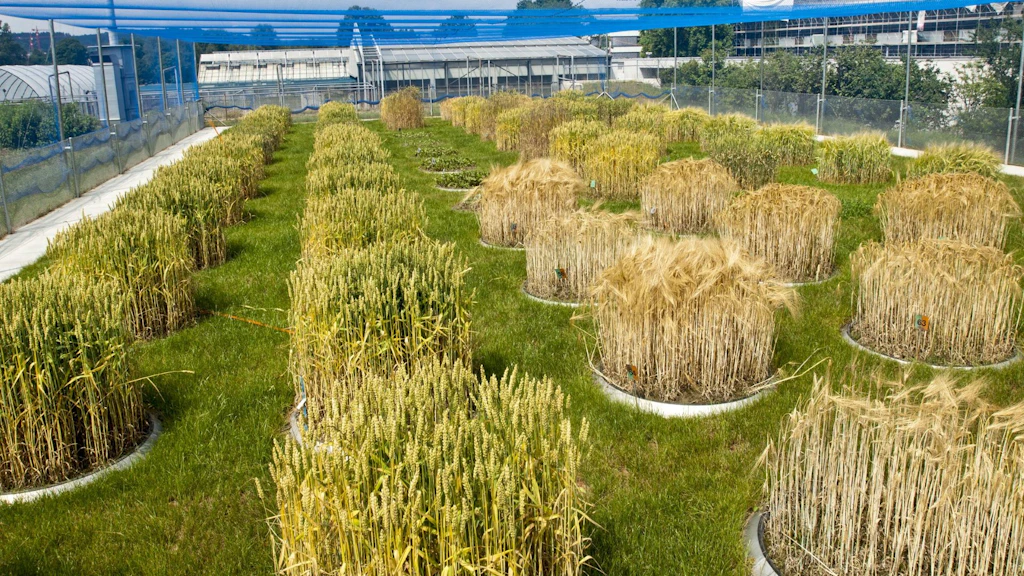
The 72-lysimeter facility was completed in 2009, and is the largest lysimeter facility in Europe. The vessels with a depth of 1.5 m and a surface area of 1 m2 contain monolithic soil bodies of a loamy Luvisol from Schafisheim (12), sandy-loamy Cambisol from Grafenried (48) and loamy-silty pseudogleyic Cambisol from Zurich-Reckenholz (12). Various experiments with different arable crops, catch crops and running times – usually as multiyear rotations – are conducted in this facility.
Measurements
In all lysimeter vessels, the amount of infiltration water is measured via 100 ml tilting scales and the concentrations of nitrate, potassium, calcium, magnesium and other substances in the infiltration water are measured at 14-day intervals. All of the vessels of the 12-lysimeter facility as well as 12 vessels of the 72-lysimeter facility are weighable, and the weight is recorded every five minutes. Sensors record soil temperature, water tension and water content at different soil depths in duplicate.
Infiltration-water quantity and evapotranspiration vary strongly both between years as a function of weather and within years as a function of the crop. In addition, soil type and soil properties have been shown to have a major effect on how quickly pesticides enter the groundwater.
Further information
Index
Read more

Publications Long-Term Trials
You’ll find publications on this topic here.
Long-Term Trials – What We Can Read Between the Lines
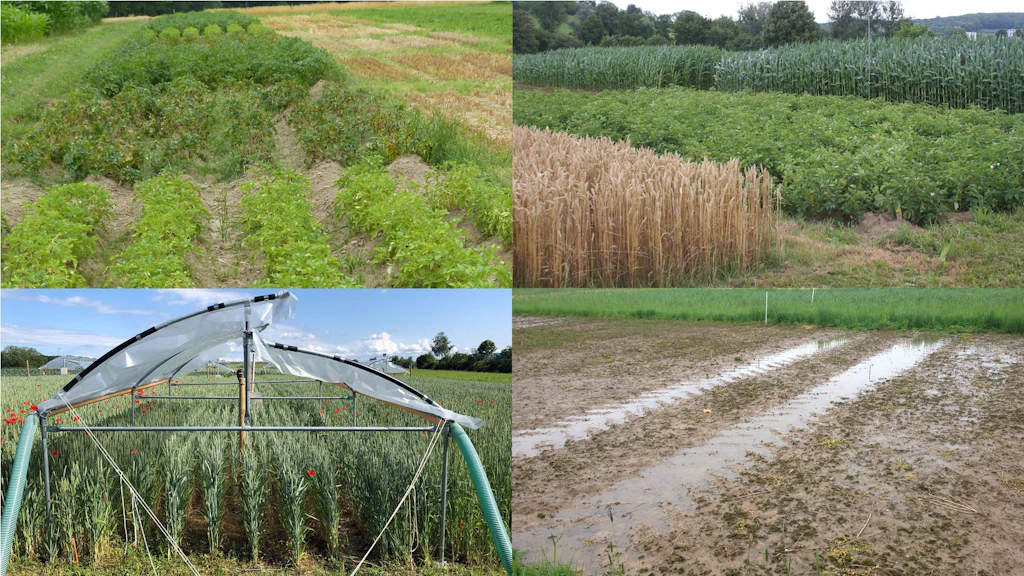
Agroscope maintains and supervises several long-term trials in Switzerland to enable the investigation of longer-term changes in soil quality and in the soil functions that depend on these.
Leaching / Lysimeter
Lysimeters are cylindrical containers filled with natural soil. The water percolating into the soil can be collected at the bottom of these containers. Agroscope’s lysimeters are used to study the water- and mass balance of agricultural soils.