
Cotton Bollworm Moving Northwards
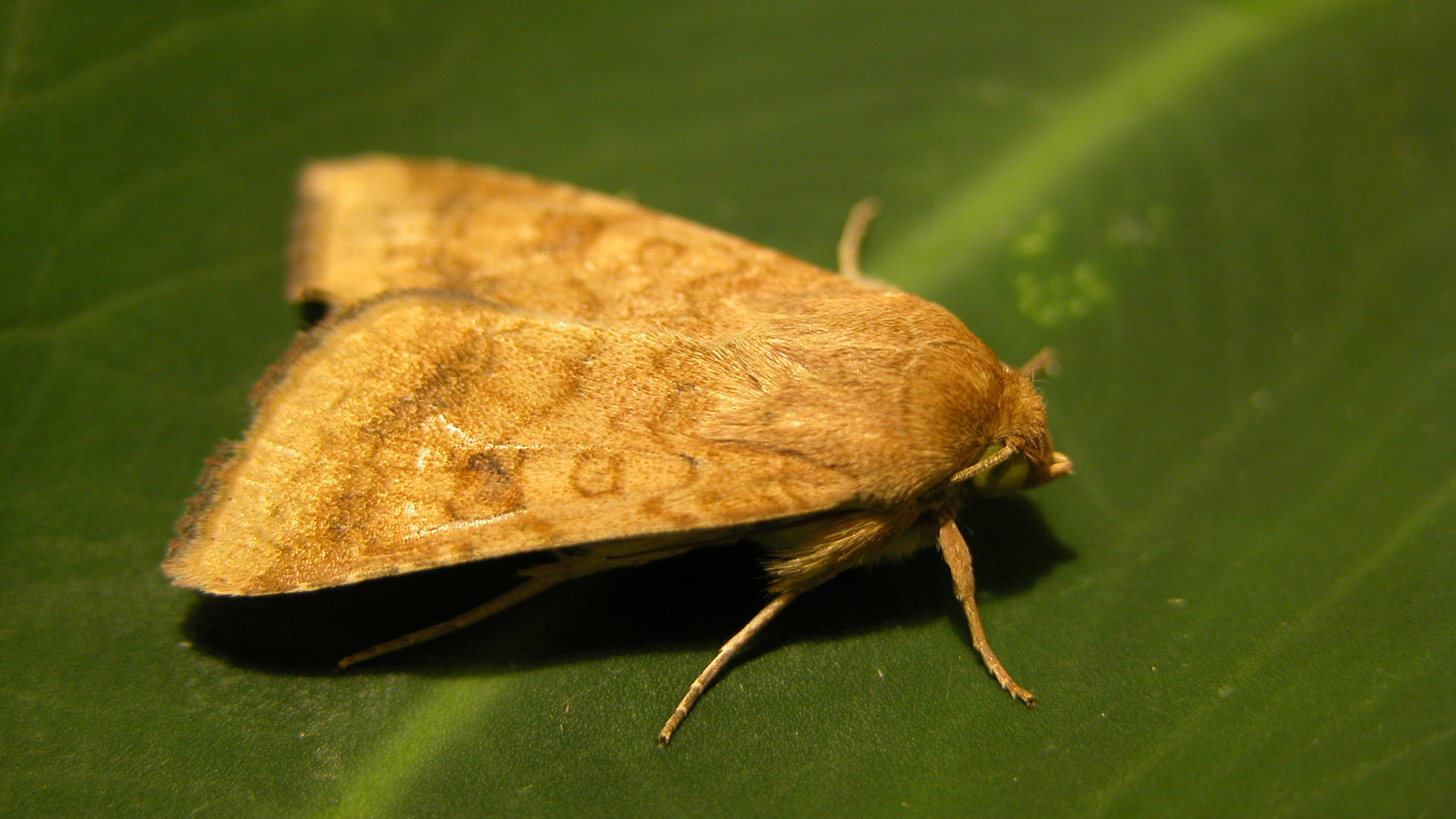
The cotton bollworm is a major pest in vegetable crops. This tropical migrant butterfly has made it as far as northern Europe due to climate change. Population numbers have currently reached their peak. Agroscope monitors the insects and identifies countermeasures.
_1920x1080.jpg?w=1920&auto=format)
The cotton bollworm and its caterpillars belong to the owlet moth family (Noctuidae). This pest has a high damage potential owing to its wide host-plant range. In Switzerland the caterpillars of this moth sometimes cause significant damage to beans, peas and chickpeas, as well as to field-grown maize and sweetcorn. Leafy vegetables such as salads and chard are also attacked, however. In greenhouses it is primarily tomatoes, but also aubergines and peppers that are affected. Even the young caterpillars do not feed exclusively on the leaves, but quickly bore into pods and fruits. Here it is the older larval stages that cause susbstantial damage.
Current situation
In the second half of July 2025, many regions experienced a large flight of cotton bollworms until the onset of the current rainy period. Only central areas of the Swiss Plateau such as the Seetal (Aargau and Lucerne Cantons), the Baden region (Aargau Canton) and Wädenswil (Zurich Canton) have so far had low trap catches. Damage has been identified in individual field crops.
Prevention through monitoring and field hygiene
Because it is hard to forecast which growing regions might be affected and precisely when, monitoring with pheromone traps is important. This allows us to recognise the occurrence of the pest at an early stage and to take targeted precautionary measures.
After an infestation, good field hygiene is crucial. Crushing and incorporating crop residues into the soil can destroy developing larvae and pupae.
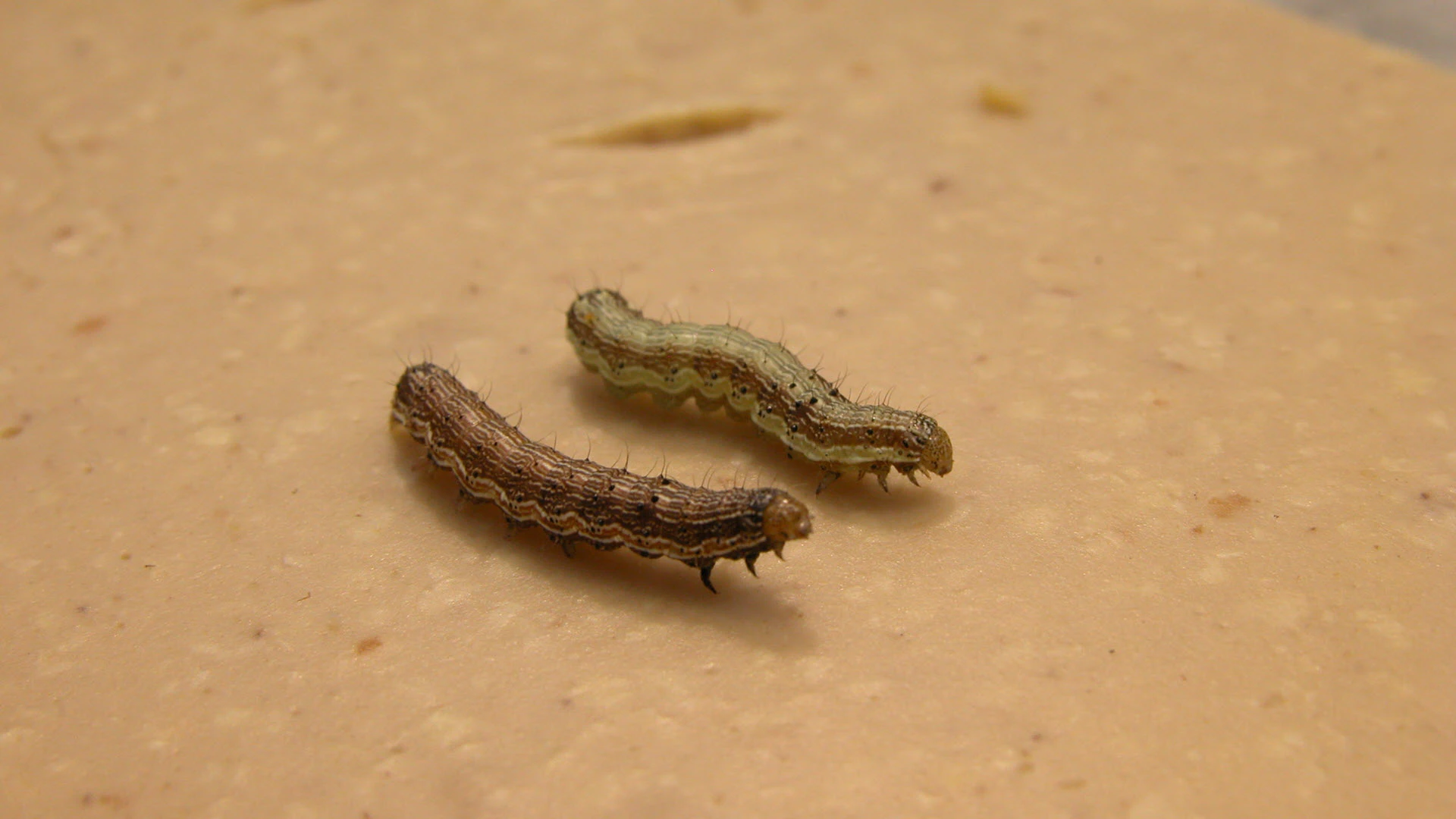
Agent against caterpillars approved for certain crops
In vegetable production, the following insecticides are currently approved in the respective listed crops for controlling caterpillars or the cotton bollworm.
The bacterial preparations Bacillus thuringiensis var. aizawai and Bacillus thuringiensis var. kurstaki are authorised for use in tomato, pepper, bean, sweetcorn and lettuce crops. For tomatoes, there is also the cotton bollworm nucleopolyhedrovirus, as well as Spinosad. For lettuce, only Spinosad is authorised in addition to the bacterial preparations.
For beans there is an emergency approval of insect viruses until 30 November 2025, and for sweetcorn until 31 October 2025.
Some of the listed control measures are beneficial- insect-friendly, especially with regard to the native parasitic wasps, which can parasitise the caterpillars of the cotton bollworm.
Research on biological methods
Initial tests have been conducted with Trichogramma wasps (egg parasitoids) by Dr. Olaf Zimmerman in cooperation with the Julius Kühn-Institute in Germany. In these tests, a mixture of three different wasp species is recommended.
Further Information
Index
Read more
Successful Monitoring of a Vegetable Pest
The cotton bollworm is an invasive pest in vegetable crops. In 2024, Agroscope and partners have launched a national monitoring programme to detect the occurrence of the pest at an early stage, optimise the use of insecticides and avoid higher yield losses.

WhatsApp channel for practitioners
Aimed at agricultural practitioners, the information is shared on our WhatsApp channels 'Agroscope_fr' (French) and 'Agroscope_de' (German).