
Microbiological and Molecular Assessments
Microorganisms represent half of the biomass worldwide. A handful of soil contains more of these minute life forms than humans inhabit the Earth. These organisms make important contributions to soil functions and are involved in many substance cycles. However, most of their biology is presently unexplored and unknown: Who dwells in the soil? How well are the soil-dwelling organisms? A few years ago, the National Soil Monitoring Network NABO began to assess microbiological parameters and analyse fungal and bacterial communities on the molecular level.
NABObio – biological soil monitoring of NABO
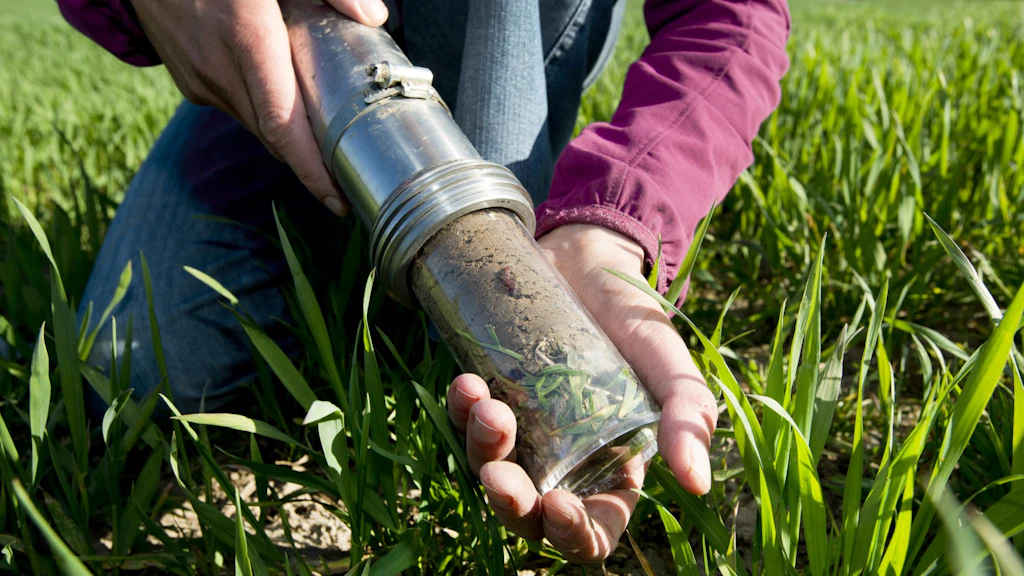
Besides the earthworm, numerous small creatures and microorganisms inhabit the soil. As small as the organisms are, so great is their importance to the entire ecosystem. Through the construction and dismantling of biomass they are mainly responsible for the provision of nutrients for plant growth in food production. They keep pathogens in check and clean our groundwater. Soil organisms cement ground crumbs into a stable structure with a pore system that can also absorb large quantities of precipitation and allow them to seep away. These ecosystem services are fundamental and absolutely worthy of protection for the continued existence of humanity.
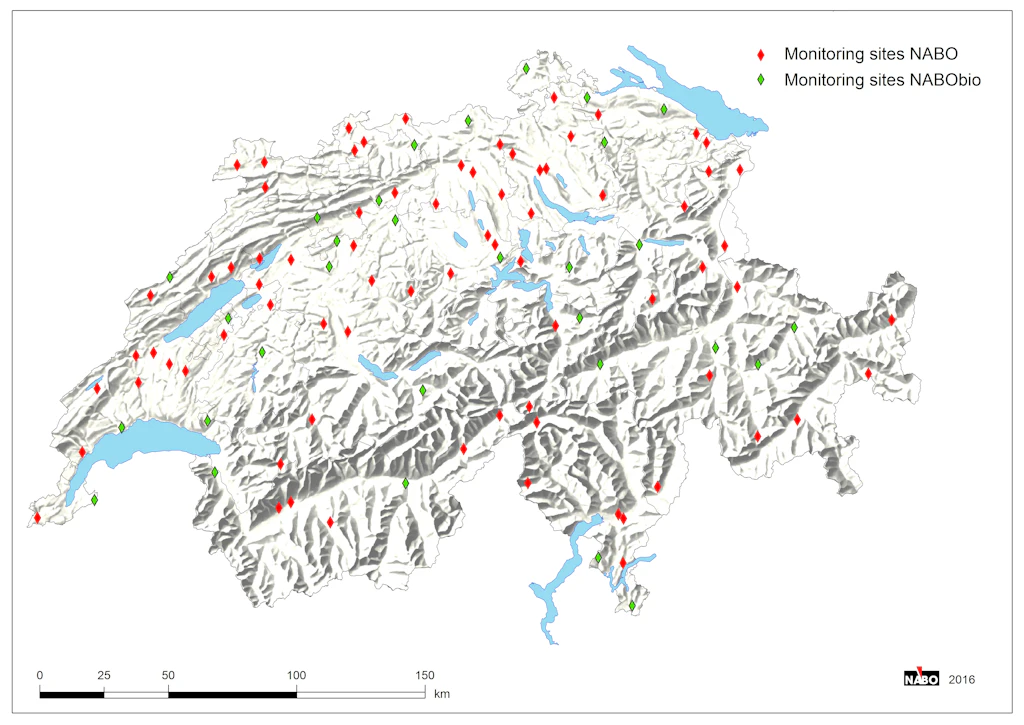
Hence in 2012, NABO began to assess 30 selected NABO sites (Figure) on the microbiological and molecular levels. Classical microbiological parameters, such as microbial biomass and soil respiration, provide information about the amount of microorganisms and their activity respectively. The composition of fungal and bacterial communities is determined with molecular methods. These allow us to genetically describe and quantify microorganisms and to understand the complexity of microbial communities and their functions in soils. The DNA extracts are stored frozen and can later be reused for further research.
The recording of multi-year data series provides NABO with site-typical values with the associated variabilities. For a more comprehensive interpretation of the biological soil measurements, we determine chemical and physical accompanying parameters, as well as information about the temperature and cultivation.
With NABObio, we also want to further develop and review the necessary methodological criteria for longterm monitoring purposes. The long-term goals of soil biology studies will be
- the development of soil biological reference values and
- instruments for assessing observed changes in microbial communities. We want to know how the condition of our soil organisms is - the main contributors to many important soil functions.
Essentially, all life depends on the soil ... There can be no life without soil and no soil without life; they have evolved together.