
Bee Research Centre
The superordinate objective is the realisation of ecological and economical beekeeping for plant pollination and the production of high quality bee products.
A practical objective for apicultural counselling is: every beekeeper knows the Good Apicultrual Practice. Other objectives are: professional harvesting of honey and the maintainance of healthy bee colonies.
The aim of the activity of the Swiss Bee Research Centre is to meet the expectations of practical beekeeping and of other important institutions and interest groups of the country. The Swiss Bee Research Centre carries out field and laboratory trials for practical application in beekeeping. Also, it collects scientific know-how by national and international networking.
In the article below, the typical activities of the members of the Swiss bee research center are described in detail.
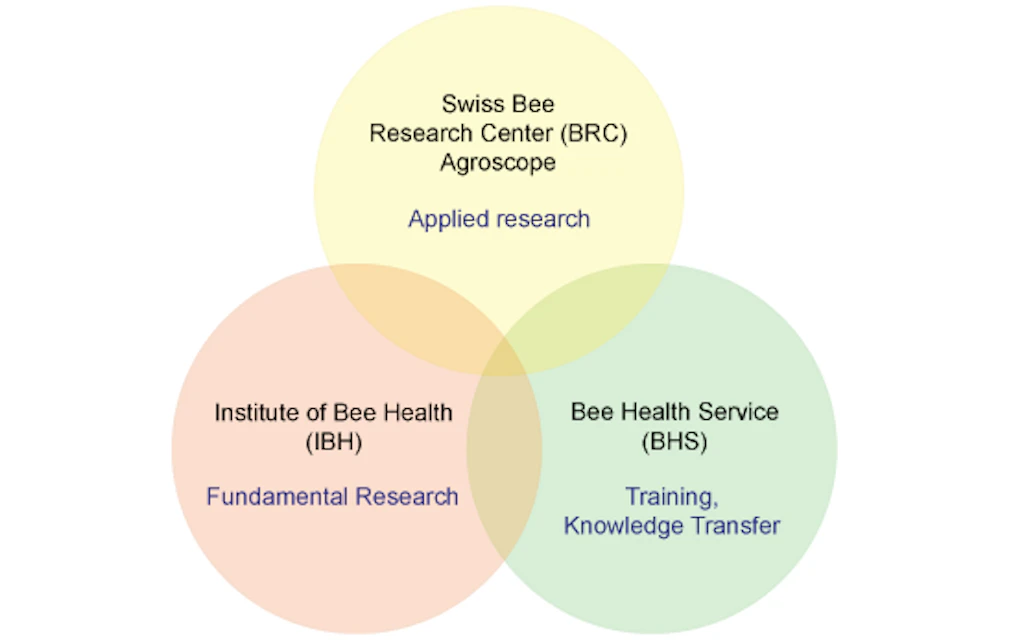
For many years after the founding of the Centre for Bee Research in 1907, ‘Liebefeld’ was the only institution in Switzerland dedicated exclusively to bee research. After the founding of the Bee Health Centre (BHC) in 2013 and the Institute for Bee Health (IBH) at the University of Bern (VetSuisse), responsibilities were redistributed. Since then, the CBR concentrates on applied research, remaining in close contact with the other units. The IBH deals with basic research and the training of veterinary-medicine and biology students at the University of Bern.The BHC supports the training and continuing education of the beekeepers, the dissemination of scientific findings, and the management of bee-colony poisoning incidents, in addition to running the beekeepers’ advice hotline. All three institutions are independent of one another at an organisational level, but work together at the Liebefeld site for the good of bees and beekeeping.
- Beekeepers and Beekeeping organisations
- Governemental offices for: FOAG, FSVO, FOPH, Swissmedic, FEON Cantonal services for: Veterenary and Food Inspection
- Federal Research Institutes, Universities and Technical Colleges
- EU and world-wide organisations
- Media
- Consumers, general public
No informations available in this language.
Please switch to another language.There were no bee scientists in the newly founded "Swiss Dairy and Bacteriological Institute" which was installed in the attractive, new brick building in 1901.
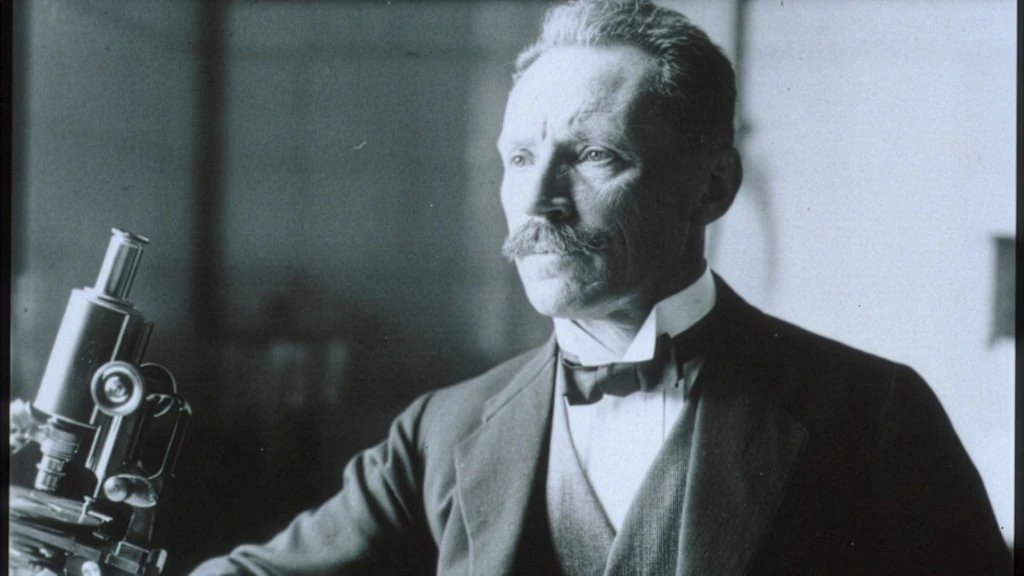
Robert Burri — © Agroscope The beginning of bee research in Liebefeld was initiated by the meritorious beekeeper Ulrich Krämer. As president of the "Association of Swiss Bee Friends" he confronted the young professor Robert Burri from the "Federal Polytechnical High School" in Zurich with beekeeping problems. One year later, at the meeting of Swiss beekeepers on the 28th of August 1904 in Sarnen, Burri presented his results on American foul brood. By means of a bacteriological test he was able to show, that the so called foul brood disease consisted in fact of two different diseases, American and European foul brood, both caused by specific bacteria.
It was important for the foundation of the bee research unit in Liebefeld, that Robert Burri, the discoverer of the European foul brood, was nominated head of the Liebefeld Research Institute in 1907. In the same year, a new research field, Research and Control of Bee Diseases, was founded. One year later, a new, finely decorated bee house was built next to the main building and put into operation.
Those who would like to know more about the history of the Swiss Bee Research Centre can look at the following documents: