

Time Travel through the Lens of Cheese: An Alpine cheese from Valais Recounts 142 Years of Microbial History
An international research team headed by Agroscope examined cheeses produced at an alpine cheese dairy in Valais between 1875 and 2017. The microorganisms found in these cheeses are a unique testimony to the evolution of agriculture and food technology over time.
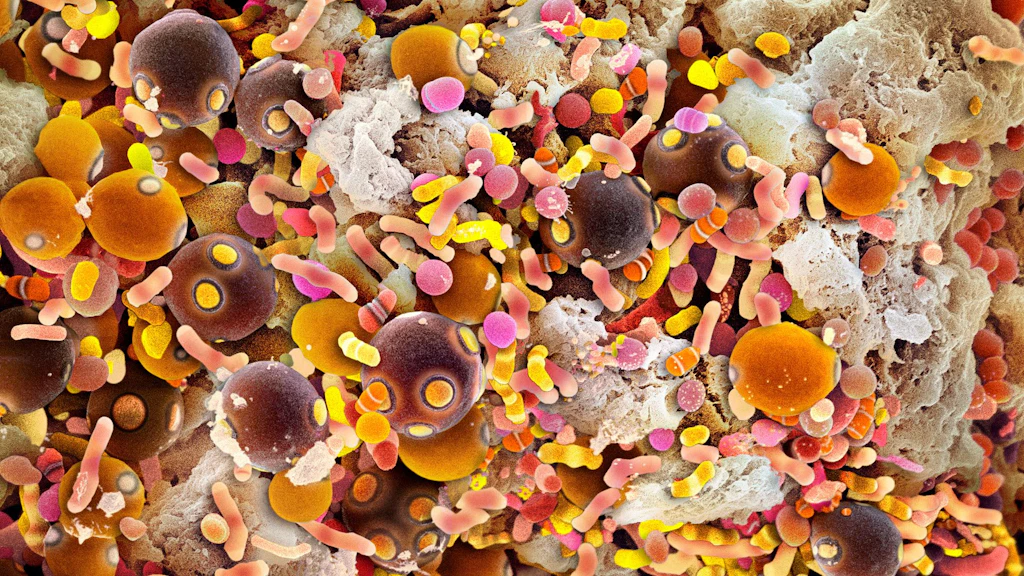
A wedge of Raclette du Valais can do much more than simply taste good – it can also write history. For the first time, and with the aid of modern DNA analyses, the Agroscope-led research team was able to understand how the microorganisms in the cheese – the bacteria and bacteriophages examined in this study – have changed over a period of 142 years. These microorganisms bear powerful witness to how cheesemaking and agriculture have evolved.
From spontaneous fermentation to controlled production
The oldest cheese examined dates back to 1875 and exhibits a strikingly different bacterial composition to its modern counterparts. Lactic acid bacteria and certain viruses, known as bacteriophages, were already detectable in this oldest sample – dating back more than 150 years. Some of the lactic acid bacteria species present at that time no longer occur in the more recent samples, while others are still present today. In those days, bacteria typically responsible for spontaneous fermentation – i.e. processes taking place without the use of intentionally added cultures – predominated.
Taken as a whole, the microbiome was not necessarily more diverse, but was significantly different it its composition, containing numerous accompanying bacteria from the surrounding environment, including potentially pathogenic species.
Improved hygiene and production standards
With the modernisation of cheese production, the picture changed: Today, intentionally used bacteria – so-called ‘starter cultures’ – ensure consistent quality and safety. This development has left a lasting impact on the microbial composition of cheese. Throughout the entire time frame, researchers observed how the microbiome increasingly shifted towards beneficial microorganisms – a development that can be traced back to standardisation of production, improved hygiene and the use of starter cultures. This also explains why undesirable and potentially pathogenic accompanying bacteria now rarely occur in modern samples.
Cheese as a reflection of social change
Intriguingly, cheese does not simply tell the story of its own production, but also that of agriculture in general. Thus, the researchers found increased numbers of antibiotic resistance genes (ARGs) in the bacteria of the cheese samples of the second half of the 20th century – testimony to the intensive use of antibiotics of that period, e.g. to promote growth in livestock, and to the associated spread of ARGs, which have even reached remote alpine regions. These traces later declined again, suggesting changed guidelines and practices.
Cheese has thus unexpectedly become a reflection of the impact of human interventions in agricultural systems.
A glimpse into both the future and the past
The findings are not only intriguing from a scientific perspective, but also provide a valuable basis for potential future applications. Modern methods of analysis such as sequence-based metagenomics allow us to better understand the complex microbial communities in cheese, shaped by humans, animals and the environment, and to control them in a deliberate manner.
The observed decline in antibiotic resistance genes over the final quarter of the 20th century highlights the effectiveness of regulatory measures, suggesting that targeted provisions for curbing antibiotic use have measurable effects on microbial ecosystems.
A further remarkable finding is the high proportion of species such as Pseudolactococcus laudensis and Latiplantibacillus paraplantarum in the 1875 sample. These species could assume a stabilising role within the cheese microbiome during fermentation. Their exact function in cheese ripening and consistency, however, remains to be investigated.
Building on this dataset, future research could attempt to reproduce cheeses resembling those produced 150 years ago as well as to experimentally reproduce historic production conditions to further clarify how human innovations shape the microbial ecosystems of fermented foods.
A unique archive
The study was made possible by a special tradition in Val d’Anniviers (Valais): Whole cheeses were stored over years or even decades so that they could be served at a funeral banquet to mourners who had come from all parts of the valley on foot. Drawing from this tradition, the cheeses examined in this study were set aside for purposes of remembrance, instead of being consumed. This custom created a globally unique pool of historic cheese samples – a time series extending over 151 years (since 1875), founded by Jules Zufferey and today carried on by his sons Jean-Jacques and Jules Maurice Zufferey in Grimentz. This is a godsend for research: whereas individual archaeological finds only furnish snapshots, this collection allows us for the first time to trace the transformation of microorganisms across the key phase of modernisation.